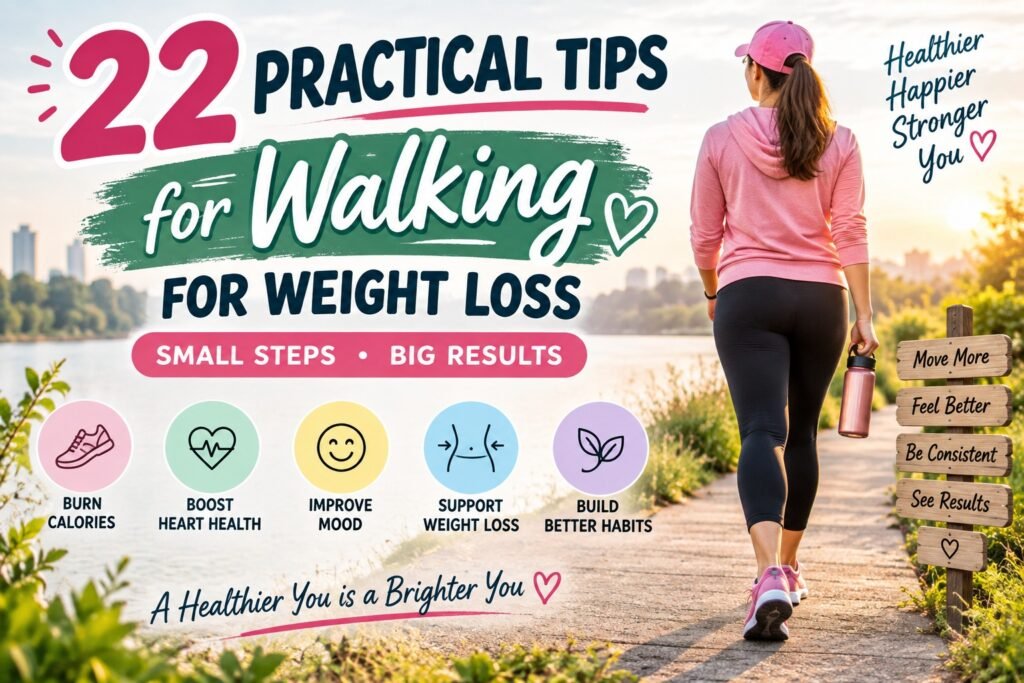
22 Walking for Weight Loss Tips for Faster Results
Introduction
Walking for weight loss does not have to mean spending hours on a treadmill or pushing yourself through exhausting workouts. Small changes to your daily walks can make movement more purposeful, enjoyable, and easier to maintain.
Whether you’re just getting started or your usual walks have stopped feeling challenging, the right strategy can help you make better use of your time. This guide shares 22 practical ideas covering pace, steps, hills, intervals, hydration, recovery, posture, and daily routines.
In my experience, the biggest challenge is often not knowing what to do, but finding a routine that fits real life. A short walk before work, a few minutes after dinner, or a longer weekend route can all contribute to a consistent movement habit. Use these ideas to build a walking routine that feels realistic and keeps you moving toward your goals.
Brisk Walking Pace
Image Description: Bright outdoor walking path surrounded by green trees, warm morning sunlight, athletic woman walking briskly in comfortable sneakers, simple fitness clothing, subtle water bottle, soft golden glow, natural textures, clean wellness aesthetic, dynamic side-angle photography, crisp details, Pinterest-friendly composition.
A brisker pace can turn an ordinary walk into a more purposeful workout. Aim for a speed that raises your breathing slightly while still allowing you to speak in short sentences. Keep your shoulders relaxed, swing your arms naturally, and let your feet roll smoothly from heel to toe.
In my experience, people often walk too slowly at first because they are focused on covering distance. Instead, pay attention to effort. A steady, moderate pace can make a shorter walk more productive while still feeling manageable enough to repeat several days each week.
Daily Step Target
Image Description: Minimal home fitness scene with a smartwatch displaying daily steps, white walking shoes beside a yoga mat, pale blue and green accents, soft natural window light, clean wooden floor, small water bottle, overhead camera angle, fresh organized Pinterest wellness aesthetic.
- Set a realistic starting target based on your current activity level.
- Increase your daily steps gradually rather than making a huge jump overnight.
- Check your step count at the same time each evening.
- Use short walks after meals or during breaks to build extra movement.
- Focus on your weekly pattern instead of worrying about one low-step day.
A consistent step routine makes daily movement easier to manage. Rather than chasing an arbitrary number, find a target that fits your schedule and gradually build from there. I’ve noticed that people stick with walking longer when their goal feels achievable instead of exhausting, especially during busy workweeks.
Post-Meal Walks
Image Description: Peaceful residential sidewalk during late afternoon, adult woman walking after a meal, casual athletic outfit, leafy trees, warm sunlight, soft shadows, neutral homes in background, comfortable sneakers, gentle golden-hour lighting, realistic lifestyle photography, inviting Pinterest fitness composition.
Quick Tip:
Start with a comfortable 10 to 15 minute walk after a meal rather than waiting for a large block of free time. Keep the pace moderate and focus on consistency. A short walk can fit naturally into your routine without requiring a full workout session.
Post-meal walks are especially useful for people who struggle to schedule exercise before or after work. Keep your route simple, such as around your block or through a nearby park. The goal is to make movement automatic. Once the habit becomes familiar, extending the walk becomes much easier.
Incline Walking
Image Description: Outdoor uphill walking trail with gentle incline, fit woman in black leggings and light green top walking uphill, tall trees, textured pavement, bright natural daylight, soft shadows, reusable water bottle, realistic fitness photography, low side-angle perspective, energetic yet approachable Pinterest aesthetic.
BEFORE:
A completely flat route may feel comfortable, but your muscles receive the same level of demand throughout the walk. After a while, the routine can start feeling repetitive.
AFTER:
Adding a gentle incline increases the effort without requiring you to walk much faster. Your legs work harder, and your heart rate can rise naturally while you maintain controlled movement.
Start with a modest hill or treadmill incline rather than choosing the steepest route available. Walk uphill for a few minutes, return to level ground, and repeat. Keep your posture upright instead of leaning heavily forward. I’ve noticed that gradual inclines are easier to maintain consistently than sudden, intense climbs.
Walking Intervals
Image Description: Modern park pathway divided visually into walking intervals, athletic woman alternating between relaxed and brisk walking, smartwatch visible, lush green trees, bright morning light, neutral sportswear, subtle motion blur, realistic lifestyle photography, eye-level camera angle, clean Pinterest fitness aesthetic.
- Warm up: Walk comfortably for 5 minutes to prepare your muscles.
- Pick up the pace: Walk briskly for 1 to 2 minutes while keeping your breathing controlled.
- Recover: Return to an easy pace for 2 to 3 minutes.
- Repeat: Complete several brisk and easy intervals based on your fitness level.
- Cool down: Finish with 5 relaxed minutes instead of stopping abruptly.
Alternating speeds gives a regular walk more structure and variety. Beginners can start with just three brisk intervals, while experienced walkers can gradually add more rounds. The faster periods should feel challenging but controlled, not like an all-out sprint. This approach works well when longer steady walks begin to feel monotonous.
Route Variety
Image Description: Collage-style outdoor walking route showing park trail, neighborhood sidewalk, gentle hill, and waterfront path, cohesive green and beige palette, sunny natural lighting, comfortable walking shoes, smartwatch and water bottle, clean textures, overhead and eye-level perspectives, polished Pinterest fitness photography.
| Comparison | Familiar Route | Varied Route |
|---|---|---|
| Terrain | Mostly predictable | Different surfaces and inclines |
| Motivation | Can become repetitive | Offers visual variety |
| Planning | Very simple | Requires occasional route changes |
| Effort | Usually consistent | Can naturally vary |
Changing your walking environment can keep the routine interesting while introducing different terrain and movement demands. Rotate between a neighborhood loop, park trail, gentle hill, or longer scenic route. Keep safety in mind, especially with traffic, uneven surfaces, weather, and low-light conditions. Choose routes you can comfortably repeat.
Arm Swing
Image Description: Athletic woman walking briskly along a clean park path, arms bent naturally at approximately 90 degrees, relaxed shoulders, fitted neutral workout clothes, white sneakers, lush green foliage, bright morning sunlight, soft shadows, realistic lifestyle photography, side-view camera angle, crisp Pinterest fitness aesthetic.
DO:
- Keep your elbows comfortably bent.
- Swing your arms forward and backward naturally.
- Relax your hands instead of clenching your fists.
- Keep your shoulders down and away from your ears.
DON’T:
- Swing your arms aggressively across your body.
- Shrug your shoulders while walking.
- Carry heavy objects in both hands during brisk walks.
- Force an exaggerated arm movement.
A natural arm swing helps your walking rhythm feel smoother and more coordinated. Keep the movement controlled rather than trying to make it dramatic. Your arms should support your stride, not distract from it. Once your posture and rhythm settle into place, brisk walking often feels more comfortable and efficient.
Walking Consistency
Image Description: Weekly fitness planner beside walking sneakers and smartwatch on a light wooden desk, soft cream and sage palette, natural window lighting, small water bottle, simple calendar marked with walking days, clean organized background, overhead photography, calm Pinterest wellness aesthetic.
Time: 20 to 45 minutes per session
Skill Level: Beginner friendly
Best For: Building a sustainable routine
Works In: Parks, neighborhoods, treadmills, walking tracks
Difficulty: Easy to moderate
Consistency matters more than occasional exhausting sessions. Schedule walks at times you can realistically protect, such as before breakfast, during lunch, or after dinner. I’ve seen people make faster progress simply by treating their walks like appointments. A manageable routine repeated regularly gives your body more opportunities to benefit from daily movement.
Longer Weekend Walks
Image Description: Scenic weekend walking trail beside trees and open grass, couple walking comfortably in casual athletic clothing, light backpacks and water bottles, warm golden morning sunlight, earthy green and beige palette, natural textures, wide-angle lifestyle photography, peaceful Pinterest wellness aesthetic.
A longer weekend walk can add meaningful movement without making every weekday session lengthy. Choose a route that feels enjoyable enough to sustain for 45 to 60 minutes, depending on your current fitness level. Bring water, wear supportive shoes, and keep the pace comfortable enough to finish without excessive fatigue.
Use weekends to explore a different park, walking trail, or neighborhood loop. Break the distance into manageable sections if needed, with brief pauses for water. The goal is not to compensate for missed workouts with an exhausting session. A pleasant longer walk should leave you feeling active, not completely drained.
Comfortable Walking Shoes
Image Description: Clean fitness setup with supportive walking shoes on a light wooden bench, neutral white and beige sneakers, soft green towel, reusable water bottle, bright natural window light, subtle shadows, textured floor, realistic lifestyle photography, close three-quarter camera angle, polished Pinterest wellness aesthetic.
- Choose shoes with a comfortable fit and enough room for your toes.
- Look for cushioning that feels supportive without being excessively soft.
- Wear the socks you normally use for walking when checking the fit.
- Replace worn shoes when the sole becomes uneven or the cushioning noticeably breaks down.
Foot comfort can influence how consistently you move. Shoes that pinch, rub, or feel unstable may make longer walks unpleasant and encourage you to cut sessions short. Your footwear does not need to be expensive. A comfortable, well-fitting pair that suits your walking surface is the practical priority.
Hydration Routine
Image Description: Stylish outdoor fitness scene with clear reusable water bottle beside walking shoes on a park bench, fresh green trees, blue sky, soft morning sunlight, light neutral workout clothing, natural wood and grass textures, crisp realistic photography, eye-level perspective, refreshing Pinterest wellness aesthetic.
Quick Tip:
Carry water when your walk is long, the weather is hot, or you expect to sweat more than usual. Take small drinks as needed instead of waiting until you feel extremely thirsty. During warm conditions, plan your route around shaded areas and consider walking during cooler parts of the day.
Staying hydrated supports normal physical function during exercise, particularly in hot or humid conditions. Your needs vary with temperature, duration, body size, and individual factors. For most everyday walks, simple water is sufficient. Very long or strenuous sessions may require a different hydration strategy based on your circumstances.
Incline Intervals
Image Description: Modern treadmill in a bright home gym, woman alternating between level and inclined walking, black leggings and white athletic top, digital incline display, warm natural window light, neutral walls, wooden flooring, realistic fitness photography, side perspective, clean Pinterest workout aesthetic.
BEFORE:
Walking at one steady incline can eventually feel predictable. You may finish the session without much variation in effort, especially after becoming accustomed to the route.
AFTER:
Alternating gentle inclines with level walking creates noticeable changes in intensity. Your legs and cardiovascular system work differently during the uphill portions while recovery periods keep the session manageable.
Start with a few minutes on a level surface, then add a gentle incline for 1 to 3 minutes before returning to an easier setting. Repeat according to your fitness level. Hold the treadmill rails only when necessary for balance, because leaning heavily on them can change your natural walking mechanics.
Morning Walk Routine
Image Description: Peaceful early morning walking scene with woman in comfortable athletic clothing on a tree-lined sidewalk, soft golden sunrise, pale blue sky, white sneakers, lightweight water bottle, long natural shadows, fresh green foliage, realistic lifestyle photography, eye-level perspective, clean and uplifting Pinterest fitness aesthetic.
- Prepare at night: Place your shoes, clothes, and water bottle where you can see them.
- Start gently: Spend the first 5 minutes walking at an easy pace.
- Build your rhythm: Increase to a comfortable brisk pace once your body feels warmed up.
- Finish gradually: Slow down for several minutes before returning home.
A morning routine removes some of the scheduling decisions that can derail exercise later. Keep the first sessions short enough to feel manageable. If mornings are rushed or your sleep suffers, another consistent time may work better. The most useful routine is the one that fits naturally into your regular day.
Treadmill Walking
Image Description: Bright minimalist home gym featuring a modern treadmill, woman walking comfortably while checking a smartwatch, neutral beige and white palette, soft daylight through large windows, small towel and water bottle nearby, clean wooden floor, realistic photography, front three-quarter angle, Pinterest fitness aesthetic.
| Option | Outdoor Walking | Treadmill Walking |
|---|---|---|
| Weather | Depends on conditions | Controlled environment |
| Surface | Roads, paths, trails | Consistent belt |
| Planning | Route required | Start immediately |
| Incline | Natural hills | Adjustable setting |
A treadmill can make regular movement easier when weather, traffic, or limited daylight interferes with outdoor plans. Keep the speed appropriate for your fitness level and maintain an upright posture. If you increase the incline, reduce the speed when needed so you can maintain controlled steps without gripping the rails.
Walking Breaks
Image Description: Modern office setting with woman taking a short walking break, comfortable sneakers, smartwatch, laptop and desk visible in background, soft daylight, neutral gray and warm wood palette, indoor plants, clean textures, candid lifestyle photography, slightly wide camera angle, Pinterest wellness aesthetic.
DO:
- Walk for 5 to 10 minutes during available breaks.
- Take stairs or longer routes when practical.
- Keep comfortable shoes available at work.
- Use phone calls as opportunities to walk when appropriate.
DON’T:
- Wait for a full free hour before moving.
- Turn every break into an intense workout.
- Ignore fatigue, dizziness, or pain.
- Skip regular work responsibilities to complete extra steps.
Short movement breaks can quietly increase your total daily activity. A few minutes here and there may seem insignificant, but repeated throughout the week they add up. For people with desk-based routines, these brief walks can be easier to maintain than relying entirely on one long exercise session.
Recovery Walks
Image Description: Calm evening walking path through a quiet green park, adult woman strolling slowly in comfortable athletic clothing, soft sunset light, warm beige and muted green palette, trees and textured pavement, relaxed posture, subtle golden glow, realistic lifestyle photography, rear three-quarter camera angle, peaceful Pinterest wellness aesthetic.
Time: 15 to 30 minutes
Intensity: Easy
Best For: Active recovery days
Surface: Flat, comfortable paths
Result: Gentle movement with lower fatigue
Not every walk needs to feel challenging. Easy recovery walks keep you moving while giving your body a break from harder sessions. Keep your pace relaxed, shorten your route when needed, and focus on smooth steps. These lighter days can help make your overall routine more sustainable.
Weekly Walking Plan
Image Description: Open weekly fitness planner beside white walking sneakers, smartwatch, pen, and water bottle on a light wooden table, cream and sage color palette, soft natural window lighting, subtle shadows, clean organized textures, overhead photography, minimalist Pinterest wellness aesthetic.
A simple weekly schedule turns good intentions into actual walking time. Start by choosing three or four realistic sessions and place them around your existing commitments. Add shorter movement breaks on other days. I’ve noticed that writing down the plan makes skipped sessions easier to spot and helps prevent unrealistic goals.
Monday: 25-minute brisk walk
Tuesday: Short walking breaks
Wednesday: 30-minute steady walk
Thursday: Easy recovery walk
Friday: 25-minute brisk walk
Saturday: Longer relaxed walk
Sunday: Rest or gentle movement
Your schedule does not need to look exactly like this. Adjust duration, pace, and frequency based on your current fitness level, recovery, and daily responsibilities. A flexible plan is easier to maintain than a rigid routine that leaves no room for busy days.
Walking With Weights
Image Description: Woman walking outdoors with light hand weights, athletic black leggings and neutral top, tree-lined path, green foliage, bright natural daylight, subtle shadows, small water bottle, realistic fitness photography, side-angle perspective, clean modern Pinterest workout aesthetic.
BEFORE:
A regular walk may become familiar as your fitness improves. Increasing speed or distance is not always comfortable, especially when your joints or schedule limit how much you can add.
AFTER:
Adding resistance can increase the challenge, but it should be introduced carefully. Light weights may change your walking mechanics, so controlled movement matters more than choosing heavy loads.
For most people focused on building a walking routine, increasing pace, duration, or incline is simpler than carrying weights. If you do use light hand weights, keep them manageable and maintain normal arm movement. Stop if you notice joint pain, altered posture, or discomfort in your shoulders, wrists, or back.
Hydration Timing
Image Description: Bright outdoor walking setup with reusable water bottle placed beside clean white sneakers on a wooden bench, leafy park background, soft morning sunlight, fresh green and blue palette, subtle shadows, realistic lifestyle photography, close three-quarter camera angle, crisp Pinterest wellness aesthetic.
Time: Before longer walks and as needed during activity
Best For: Warm weather and extended sessions
Amount: Based on thirst, conditions, and individual needs
Works In: Outdoor routes, treadmills, walking tracks
Water needs can change with temperature, humidity, walking duration, and how much you sweat. For a short, comfortable walk, you may not need to carry a large bottle. Longer or hotter sessions deserve more attention to fluids, especially when you notice increased thirst.
Avoid forcing excessive amounts of water simply because you are exercising. Instead, keep a bottle available when practical and drink according to your body’s needs. During very hot conditions, schedule walks for cooler hours and choose shaded routes whenever possible.
Calorie Awareness
Image Description: Clean kitchen counter with smartwatch showing walking activity, simple balanced meal, water glass, walking shoes nearby, warm natural window light, cream and green palette, wooden textures, realistic lifestyle photography, overhead three-quarter perspective, polished Pinterest wellness aesthetic.
A walk supports energy expenditure, but food intake still plays an important role in overall weight management. Rather than trying to calculate every calorie burned, focus on repeatable habits such as regular walks, balanced meals, adequate protein, vegetables, whole grains, and sensible portions.
Weight changes happen over time, not from a single walk. I’ve noticed that focusing only on exercise calories can become frustrating when the rest of the routine receives little attention. Think of daily movement as one part of a broader lifestyle pattern, not a way to compensate for every meal.
Read Also: Ginger Tea for Bloating, Benefits, Recipe, and Best Time to Drink It
Posture Check
Image Description: Adult woman walking confidently on a sunny park pathway, upright posture, relaxed shoulders, neutral head position, comfortable sneakers, fitted athletic clothing, lush green trees, warm natural daylight, soft shadows, realistic fitness photography, side profile camera angle, clean Pinterest wellness aesthetic.
- Keep your head comfortably aligned instead of looking constantly downward.
- Relax your shoulders and avoid lifting them toward your ears.
- Let your arms swing naturally beside your body.
- Keep your torso upright without forcing your chest forward.
- Look several steps ahead to maintain awareness of your surroundings.
Good walking posture should feel natural rather than rigid. A simple posture check can help you notice unnecessary tension in your neck, shoulders, or lower back. Every few minutes, relax your hands, drop your shoulders, and reset your gaze. Small adjustments can make longer walks feel considerably more comfortable.
Conclusion
Walking can become a simple, flexible part of a healthier routine when you focus on consistency instead of perfection. From brisk intervals and incline routes to recovery walks and daily step goals, these ideas give you practical ways to make your movement more purposeful.
Choose one or two strategies that fit your current schedule and start there. I’ve noticed that small adjustments are often easier to maintain than dramatic changes, especially over several weeks. Save this post on Pinterest so you can return to these tips, and share it with someone who could benefit from a fresh walking routine. Put on your shoes, take that first step, and keep building from there.