23 Gut Health Food List for a Happier Digestive System
Introduction
Your digestive health deserves more attention, and small food choices can be a wonderful place to start.
From creamy yogurt to colorful berries, everyday ingredients can help you build meals that nourish your gut.
The best part? You don’t need complicated recipes or expensive ingredients to get started.
This gut health food list features 23 nourishing foods that can support digestion, encourage regular bowel movements, and help feed beneficial gut bacteria. You’ll discover fiber-rich fruits, whole grains, fermented foods, vegetables, and other practical options that fit into everyday meals. Whether you’re preparing a quick breakfast, packing a snack, or planning a comforting dinner, these ideas make healthy eating feel more manageable.
I’ve found that keeping simple ingredients within reach makes it easier to build balanced meals consistently. Start with foods you already enjoy, introduce new sources of fiber gradually, and pay attention to how your body responds. Everyone’s digestive system is different, so focus on variety, balance, and habits you can maintain.
1. Plain Greek Yogurt
Image Description: A creamy bowl of plain Greek yogurt on a light beige linen tablecloth, topped with fresh blueberries, sliced strawberries, and a sprinkle of chia seeds. Soft natural window light, warm cream and pastel pink tones, a small wooden spoon, subtle ceramic textures, clean kitchen background, overhead photography, bright Pinterest food styling.
A simple bowl of Greek yogurt can bring protein and beneficial bacteria to your daily routine. Choose plain yogurt labeled with live and active cultures, since some varieties contain added sugar without offering extra digestive benefits. Pairing yogurt with fresh fruit creates a satisfying snack that feels creamy, refreshing, and naturally sweet.
For a balanced breakfast, spoon yogurt into a small bowl and add sliced banana, oats, or berries. Start with a modest serving if dairy sometimes causes discomfort, and consider lactose-free yogurt if needed. Not every yogurt contains probiotics, so checking the label helps you make a more informed choice.
2. Fiber-Rich Oats
Image Description: A rustic ceramic bowl filled with creamy oatmeal, topped with banana slices, raspberries, ground flaxseed, and a light drizzle of honey. Pale wooden countertop, soft morning sunlight, neutral beige and muted green palette, folded cotton napkin, subtle grain textures, close-up overhead angle, cozy minimalist food photography.
Warm oatmeal offers a comforting way to increase your daily fiber intake without complicated meal preparation.
- Choose rolled oats: They provide soluble fiber, including beta-glucan, which supports digestive function.
- Add ripe fruit: Bananas or berries contribute additional fiber and natural sweetness.
- Include ground flaxseed: A small spoonful adds fiber and healthy fats.
- Keep toppings balanced: Use nuts or seeds for extra texture and staying power.
- Increase fiber gradually: Give your digestive system time to adjust and drink enough water.
For an easy breakfast, cook oats with water or milk until soft, then add your favorite toppings. Soluble fiber helps support regular bowel movements, while a gradual increase in fiber may reduce gas and bloating. This simple staple deserves a regular place in a varied, gut-friendly eating routine.
3. Fermented Sauerkraut
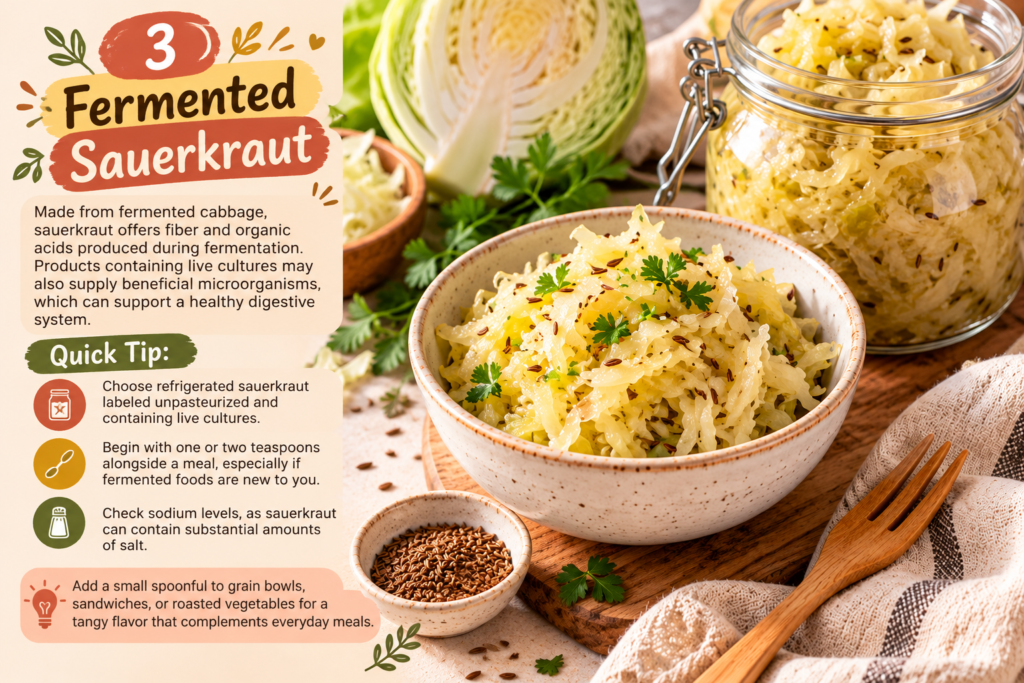
Image Description: A small white ceramic bowl of golden-green fermented sauerkraut beside a wooden fork, fresh cabbage leaves, and a glass jar on a pale stone countertop. Gentle natural daylight, soft sage green and cream colors, linen cloth, rustic kitchen textures, shallow depth of field, inviting editorial food photography.
Quick Tip:
Choose refrigerated sauerkraut labeled unpasteurized and containing live cultures if you want a fermented food with potentially beneficial microorganisms. Begin with one or two teaspoons alongside a meal, especially if fermented foods are new to your routine. Check sodium levels because sauerkraut can contain substantial amounts of salt.
Made from fermented cabbage, sauerkraut offers fiber and organic acids produced during fermentation. Products containing live cultures may also supply beneficial microorganisms, although processing methods determine whether those cultures survive. Add a small spoonful to grain bowls, sandwiches, or roasted vegetables for a tangy flavor that complements everyday meals.
For the best results, treat sauerkraut as one part of a varied diet rather than a guaranteed solution for digestive problems. If salty foods are restricted for you, check with your healthcare professional about suitable portions. Refrigerated varieties with live cultures are worth considering when shopping for fermented foods.
4. Chia Seed Pudding
Image Description: A clear glass jar filled with creamy chia seed pudding, layered with fresh raspberries, blueberries, and sliced kiwi. Set on a pale oak table with a small silver spoon, folded ivory linen, soft morning window light, muted pink and green accents, visible chia seed texture, close-up editorial food photography.
BEFORE
Breakfast can leave you hungry again quickly when it lacks fiber. Reaching for highly processed snacks throughout the morning may also mean missing opportunities to include nourishing plant foods.
AFTER
A chilled chia pudding provides fiber in a creamy, spoonable breakfast. When soaked, chia seeds absorb liquid and develop a soft, gel-like texture that works beautifully with fruit.
Prepare the pudding the night before by mixing two tablespoons of chia seeds with half a cup of milk or fortified plant milk. Refrigerate until thick, then add berries before serving. Chia seeds absorb substantial liquid, so allow them to soak fully rather than swallowing them dry. Increase portions gradually if your usual diet is low in fiber.
5. Ripe Bananas
Image Description: A bunch of ripe yellow bananas beside one sliced banana arranged on a light wooden cutting board. A small bowl of rolled oats and a glass of water sit nearby. Warm natural daylight, creamy beige background, soft yellow accents, subtle linen textures, clean overhead composition, fresh minimalist Pinterest food photography.
- Select your ripeness: Choose yellow bananas with a few brown spots for a softer, sweeter fruit. Slightly greener bananas contain more resistant starch.
- Slice into breakfast: Add banana rounds to oatmeal or plain yogurt for a naturally sweet combination.
- Blend a smoothie: Combine banana with milk or an unsweetened alternative and a spoonful of oats.
- Pair with protein: Enjoy banana with peanut butter or a handful of nuts for a more satisfying snack.
Bananas supply fiber that supports normal bowel function, and greener varieties contain resistant starch that can be fermented by gut bacteria. However, resistant starch decreases as bananas ripen. If you experience bloating easily, start with a small serving and notice how your body responds. A ripe banana is a convenient choice for busy mornings.
6. Kefir Smoothie
Image Description: A tall transparent glass of creamy kefir smoothie blended with strawberries and banana, topped with a single strawberry slice. Fresh berries, a small glass bottle of plain kefir, and a wooden spoon rest on a pale marble countertop. Soft daylight, blush pink and white palette, gentle shadows, airy styling, eye-level food photography.
| Comparison | Option A: Plain Kefir | Option B: Sweetened Kefir |
|---|---|---|
| Added sugar | Usually little or none | Often contains added sugar |
| Flavor | Tangy and mildly tart | Sweeter and fruitier |
| Best pairing | Fresh fruit or oats | Check the label and portion |
| Culture content | Depends on the product | Depends on the product |
Kefir is a fermented milk drink that may contain several types of live microorganisms. Choose a plain variety with live cultures and blend it with strawberries or banana for a refreshing smoothie. Unlike ordinary milk, kefir is fermented, and some people find it easier to tolerate. Individual responses vary, so start with a small glass if you are new to it.
7. Colorful Berries
Image Description: A shallow white ceramic bowl filled with fresh blueberries, strawberries, raspberries, and blackberries on a pale wooden breakfast table. A few berries are scattered beside the bowl, with soft cream linen and a small green plant in the background. Gentle natural window light, rich berry colors, overhead angle, fresh minimalist food photography.
DO:
- Add a handful of mixed berries to oatmeal or plain yogurt.
- Choose fresh or frozen berries without added sugar.
- Wash fresh berries thoroughly under running water.
- Combine berries with nuts or seeds for a more satisfying snack.
DON’T:
- Assume fruit juice provides the same fiber as whole berries.
- Add large amounts of sugar to sweeten your bowl.
- Increase your fiber intake dramatically overnight.
- Ignore personal food intolerances or digestive symptoms.
Berries provide fiber and polyphenols, plant compounds that are being studied for their effects on gut microbes and overall health. Their bright colors make breakfast more appealing, while their natural sweetness can help satisfy a craving for dessert. Keep a bag of frozen berries available for quick smoothies, overnight oats, or simple yogurt bowls.
8. Green Kiwi Fruit
Image Description: Fresh green kiwi halves and round slices arranged on a cream ceramic plate, with a small wooden bowl of whole kiwi fruits nearby. Pale sage green and warm ivory palette, natural morning sunlight, subtle linen texture, light stone countertop, tiny water droplets on the fruit, close-up overhead perspective, clean editorial food photography.
Cost: Affordable to moderate, depending on the season.
Time: About 2 minutes to prepare.
Skill Level: Beginner.
Best For: Breakfast, fruit bowls, and afternoon snacks.
Result: A refreshing fruit serving with fiber and vitamin C.
Kiwi offers a practical way to add fiber to your daily meals. Research suggests that eating green kiwifruit may help improve bowel regularity in some people, making it a useful option for those who occasionally experience constipation. Wash the skin thoroughly if you plan to eat it, or peel the fruit before slicing.
Enjoy one or two kiwis with breakfast, or combine them with plain yogurt and oats. Start with a comfortable portion and increase gradually if your current diet contains little fiber. Kiwi is not a treatment for every digestive concern, but its nutrients and fiber make it a valuable addition to a varied eating pattern.
9. Creamy Avocado
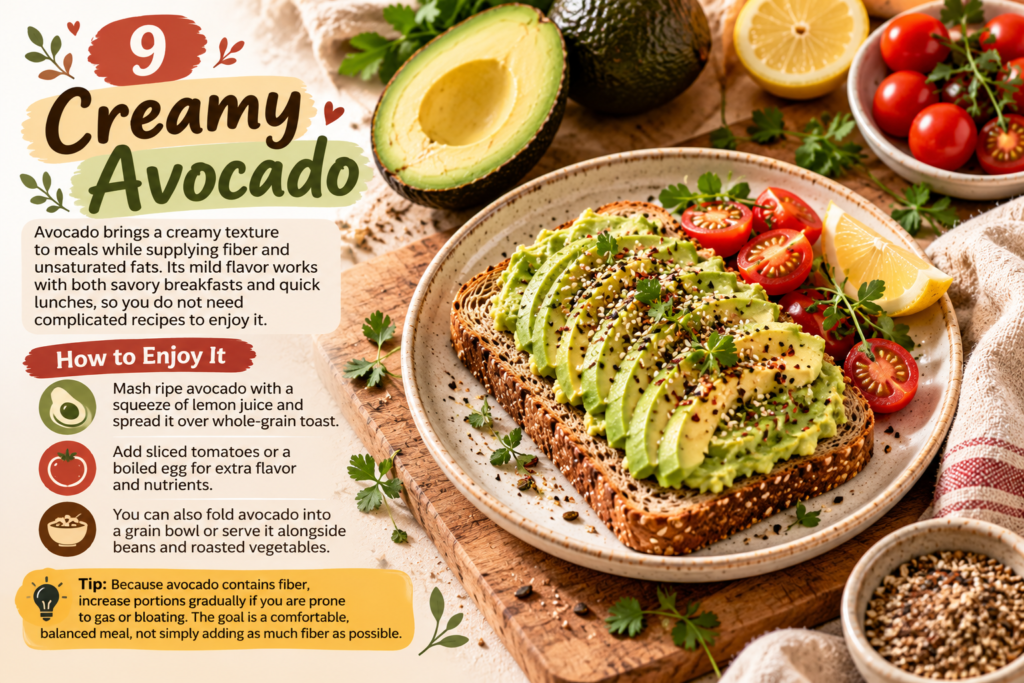
Image Description: Half an avocado with its seed removed beside neatly sliced avocado on a piece of whole-grain toast. A small plate of cherry tomatoes, a lemon wedge, and fresh herbs sit on a light oak table. Soft natural daylight, muted green and cream tones, textured linen napkin, rustic ceramic plate, overhead Pinterest-style food photography.
Avocado brings a creamy texture to meals while supplying fiber and unsaturated fats. Its mild flavor works with both savory breakfasts and quick lunches, so you do not need complicated recipes to enjoy it.
Mash ripe avocado with a squeeze of lemon juice and spread it over whole-grain toast. Add sliced tomatoes or a boiled egg for extra flavor and nutrients. You can also fold avocado into a grain bowl or serve it alongside beans and roasted vegetables. Because avocado contains fiber, increase portions gradually if you are prone to gas or bloating. The goal is a comfortable, balanced meal, not simply adding as much fiber as possible.
10. Lentil Vegetable Soup
Image Description: A rustic cream bowl filled with hearty lentil soup, featuring orange carrots, green spinach, red tomatoes, and golden lentils. The bowl rests on a light wooden table beside a linen napkin and a wooden soup spoon. Warm natural window light, earthy green and terracotta tones, visible vegetable textures, overhead food photography.
Why it works: Lentils provide plant-based protein and dietary fiber, including fermentable carbohydrates that gut microbes can use. This makes them a useful staple for supporting regular bowel movements and nourishing a diverse gut microbiome.
How to prepare it:
- Rinse one cup of dried lentils.
- Simmer with chopped carrots, tomatoes, onion, and vegetable broth until tender.
- Stir in spinach during the final few minutes.
- Season with cumin, black pepper, and lemon juice.
Serving tip: Start with a modest bowl if legumes often cause gas. Increase your portion gradually as your digestive system adjusts, and drink enough water throughout the day. Leftovers make a convenient lunch for busy weekdays.
11. Overnight Oats Jar
Image Description: A transparent glass jar layered with creamy overnight oats, plain yogurt, sliced strawberries, blueberries, and ground flaxseed. The jar sits on a pale marble countertop beside a small wooden spoon and folded beige linen. Soft morning light, pastel pink and cream palette, crisp ingredient details, clean minimalist styling, eye-level close-up.
Quick Tip:
Prepare your oats the night before using rolled oats and milk or an unsweetened plant-based alternative. Refrigerate them in a covered container for several hours, then add fruit and seeds before eating.
Overnight oats make it easier to include fiber in breakfast without cooking in the morning. Oats contain beta-glucan, a soluble fiber that supports digestive health, while fruit and seeds provide additional fiber. For a balanced jar, combine half a cup of rolled oats with liquid, then add your favorite toppings. Keep the mixture refrigerated and use clean utensils when serving. If you are increasing fiber, begin with smaller portions and adjust gradually to your comfort level.
12. Garlic-Roasted Vegetables
Image Description: A wide ceramic baking dish filled with roasted broccoli, carrots, cauliflower, red onion, and golden garlic cloves. Light olive oil glistens on the vegetables, with fresh parsley scattered across the top. Warm kitchen lighting, neutral stone countertop, wooden serving spoon, earthy orange and green palette, appetizing close-up angle, natural Pinterest food photography.
BEFORE
A plate built mainly around refined grains or meat can leave little room for fiber-rich plant foods. Skipping vegetables regularly also limits the variety of nutrients and plant compounds in your meals.
AFTER
A colorful tray of roasted vegetables adds fiber, flavor, and variety with minimal preparation. Garlic and herbs bring extra flavor without relying on heavy sauces.
Cut broccoli, carrots, cauliflower, and red onion into similar-sized pieces. Toss them with olive oil and herbs, then roast at 200°C until tender and lightly browned. Serve alongside chicken, fish, tofu, or lentils for a balanced meal. Garlic and onion contain fermentable carbohydrates that may trigger symptoms in people with irritable bowel syndrome, so adjust the ingredients if you have a known sensitivity.
13. Fermented Kimchi
Image Description: A small white ceramic bowl filled with vibrant red-orange kimchi, showing crisp napa cabbage, thin carrot strips, and flecks of chili. Fresh cabbage leaves and a glass fermentation jar sit on a pale wooden counter. Soft natural window light, warm cream and muted red palette, rustic linen textures, close-up overhead food photography.
- Choose a suitable product: Look for refrigerated kimchi labeled unpasteurized if you want to include live cultures.
- Start with a small serving: Try one or two tablespoons alongside lunch or dinner.
- Pair it with familiar foods: Add kimchi to rice bowls, eggs, or cooked vegetables.
- Check the sodium: Compare labels if you need to limit salt in your diet.
Kimchi is a traditional Korean fermented vegetable dish that can provide fiber and, depending on its preparation, live microorganisms. Fermentation also creates distinctive tangy flavors that make simple meals more interesting. Different products vary in their ingredients and culture content, so check the label rather than assuming every jar contains live bacteria.
Its spicy, salty taste works well as a small side dish instead of the main part of a meal. If chili, garlic, or fermented foods trigger digestive discomfort, choose another option or reduce your portion. Variety matters more than forcing yourself to eat a food that does not agree with you.
14. Whole-Grain Bread
Image Description: Two thick slices of golden whole-grain bread arranged on a wooden cutting board, one topped with mashed avocado and the other with almond butter and banana slices. A small bowl of oats and scattered wheat grains decorate the background. Natural morning light, warm beige and honey tones, soft linen, rustic textures, overhead editorial food photography.
Cost: Affordable and widely available.
Time: Less than 5 minutes for a simple snack.
Skill Level: Beginner.
Best For: Breakfast, sandwiches, and quick lunches.
Key Feature: Whole grains provide fiber and nutrients that refined grains may contain in smaller amounts.
Whole-grain bread can help you increase fiber without changing your meals dramatically. Choose products that list whole wheat or another whole grain as the first ingredient, and compare nutrition labels because fiber content varies between brands. A darker loaf is not necessarily whole grain, so the ingredient list is more reliable than color alone.
Top a slice with mashed avocado, hummus, or nut butter for a filling snack. You can also build a sandwich with eggs, leafy greens, and tomatoes. If you currently eat mostly refined bread, switch gradually and drink enough water as your fiber intake increases. This small change can make everyday meals more supportive of regular digestion.
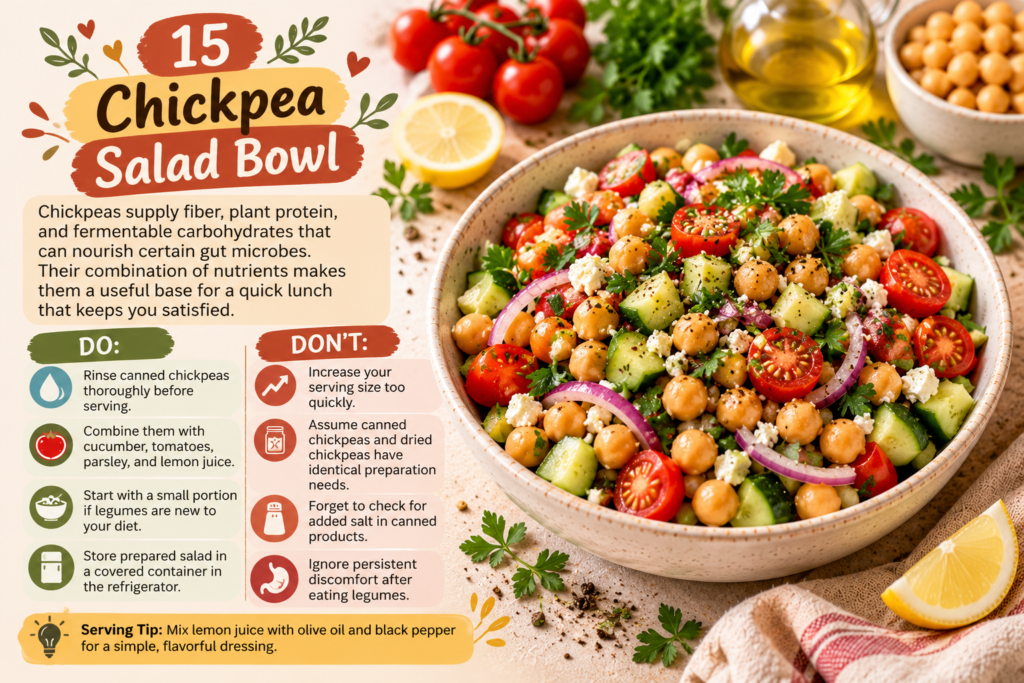
15. Chickpea Salad Bowl
Image Description: A wide, shallow cream bowl filled with golden chickpeas, diced cucumber, red cherry tomatoes, chopped parsley, and thin purple onion slices. Lemon wedges and a small glass dish of olive oil sit nearby on a pale stone countertop. Bright natural daylight, fresh green and coral accents, visible ingredient textures, overhead Pinterest food photography.
DO:
- Rinse canned chickpeas thoroughly before serving.
- Combine them with cucumber, tomatoes, parsley, and lemon juice.
- Start with a small portion if legumes are new to your diet.
- Store prepared salad in a covered container in the refrigerator.
DON’T:
- Increase your serving size too quickly.
- Assume canned chickpeas and dried chickpeas have identical preparation needs.
- Forget to check for added salt in canned products.
- Ignore persistent discomfort after eating legumes.
Chickpeas supply fiber, plant protein, and fermentable carbohydrates that can nourish certain gut microbes. Their combination of nutrients makes them a useful base for a quick lunch that keeps you satisfied. For a simple dressing, mix lemon juice with olive oil and black pepper. If chickpeas cause gas, try smaller servings and increase them slowly as tolerated.
16. Ground Flaxseed Sprinkle
Image Description: A small wooden bowl filled with finely ground flaxseed beside a glass jar of overnight oats topped with banana slices and blueberries. A wooden teaspoon, scattered flaxseeds, and folded ivory linen rest on a light oak countertop. Soft natural morning light, warm beige and muted blue tones, detailed seed textures, overhead minimalist food photography.
Cost: Low to moderate, depending on the brand.
Time: 1 minute to prepare.
Skill Level: Beginner.
Best For: Oatmeal, smoothies, yogurt, and homemade breakfast bowls.
Key Benefit: Provides fiber and plant-based omega-3 fatty acid ALA.
Ground flaxseed is an easy addition to a daily eating routine because a small spoonful can increase the fiber content of familiar foods. Its soluble and insoluble fibers help support normal bowel function, while its healthy fats contribute to a balanced diet. Ground flaxseed is generally easier to digest than whole seeds because the nutrients are more accessible.
Stir one teaspoon into oatmeal or plain yogurt, then increase the amount gradually if you tolerate it well. Drink enough fluids as you increase your fiber intake, and store ground flaxseed in an airtight container according to the package instructions. Its mild, nutty flavor blends easily into breakfast without overpowering other ingredients.
17. Tender Steamed Broccoli
Image Description: Bright green steamed broccoli florets arranged in a shallow white ceramic bowl with lemon wedges and a light sprinkle of black pepper. A wooden fork and folded cream linen sit on a pale stone countertop. Soft natural window lighting, fresh green and ivory palette, delicate steam, clean styling, close-up overhead food photography.
A few tender broccoli florets can bring more fiber and variety to an ordinary dinner plate.
- Wash thoroughly: Rinse broccoli under running water before cutting.
- Cut evenly: Separate the florets into similar-sized pieces for consistent cooking.
- Steam until tender: Cook for about 5 to 7 minutes, adjusting for floret size.
- Add simple seasoning: Finish with lemon juice, black pepper, or a small drizzle of olive oil.
- Serve with protein: Pair broccoli with fish, eggs, tofu, chicken, or beans.
Broccoli contains dietary fiber and plant compounds that contribute to a varied, nutrient-rich diet. Steaming until tender can make it easier to chew than eating large amounts raw. However, broccoli may cause gas in some people, particularly in large portions. Begin with a small serving, then adjust based on your comfort and individual tolerance.
18. Walnut Snack Mix
Image Description: A small cream ceramic bowl filled with walnut halves, pumpkin seeds, and a few dried cranberries on a light wooden table. A clear glass of water and folded beige linen sit beside the bowl. Warm afternoon sunlight, natural brown and muted green colors, tactile nut textures, shallow depth of field, elegant Pinterest snack photography.
Quick Tip:
Keep a small container of unsalted walnuts ready for busy afternoons. Pair a modest handful with fresh fruit or plain yogurt for a snack that combines healthy fats, fiber, and other useful nutrients.
Walnuts contain plant-based omega-3 fatty acid ALA, along with fiber and polyphenols. Research into how walnuts influence the gut microbiome is promising, but the effects vary, and they should not be treated as a digestive remedy. Their rich flavor and satisfying texture make them a convenient alternative to highly processed snack foods.
For an easy portion, measure about 28 grams of walnuts rather than eating directly from a large bag. Add them to oatmeal, sprinkle chopped pieces over roasted vegetables, or combine them with an apple. If you have a tree nut allergy, avoid walnuts and choose a safe alternative that meets your nutritional needs.
19. Fresh Ginger Tea
Image Description: A clear glass cup of golden ginger tea with thin fresh ginger slices and a lemon wheel floating on top. Fresh ginger root, a small wooden honey dipper, and a cream ceramic plate sit on a pale oak countertop. Warm natural window light, soft amber and beige palette, delicate steam, cozy minimalist styling, close-up food photography.
Fresh ginger tea offers a warming drink with a gentle, spicy flavor that fits easily into a daily routine. Ginger contains natural compounds called gingerols, which have been studied for their effects on nausea and digestive function. However, ginger tea is not a proven treatment for every digestive complaint, and individual responses vary.
To prepare it, slice a small piece of fresh ginger and simmer it in water for 5 to 10 minutes. Strain into a cup and add lemon if desired. Sip slowly after a meal and notice how you feel. Ginger tea contains little fiber, so enjoy it as a complementary drink rather than a replacement for fiber-rich foods.
20. Sweet Potato Mash
Image Description: A rustic cream bowl filled with smooth orange sweet potato mash, topped with chopped parsley and a light sprinkle of black pepper. A halved roasted sweet potato, a wooden spoon, and a folded beige linen napkin sit on a pale oak table. Warm natural light, earthy orange and green colors, soft food textures, overhead photography.
BEFORE
Meals built around refined starches alone may provide less fiber than meals that include a variety of vegetables and whole grains. You might also miss opportunities to enjoy naturally sweet foods without relying on sugary desserts.
AFTER
A serving of sweet potato adds color, fiber, and naturally sweet flavor to lunch or dinner. Its soft texture makes it easy to mash, roast, or fold into a balanced meal.
Wash a medium sweet potato, pierce its skin, and bake at 200°C until tender, usually 40 to 50 minutes depending on size. Scoop out the flesh and mash with a little olive oil, black pepper, and cinnamon if desired. Sweet potatoes provide fiber and nutrients, including beta-carotene. Keep the skin when practical for additional fiber, and increase portions gradually if you are sensitive to dietary changes.
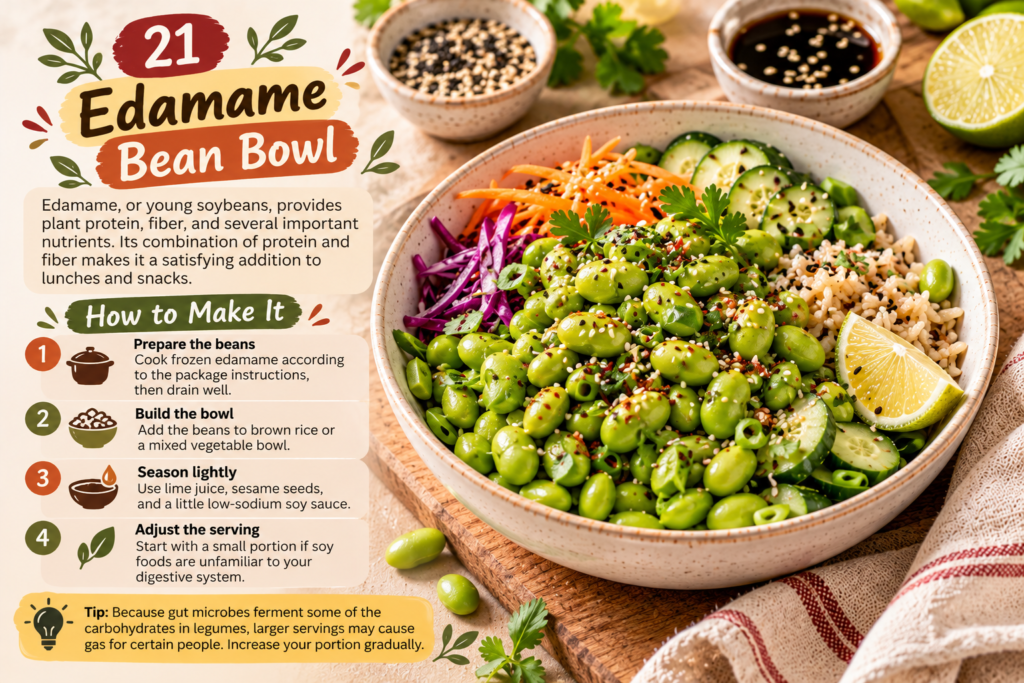
21. Edamame Bean Bowl
Image Description: A shallow white bowl filled with bright green shelled edamame beans, lightly sprinkled with sesame seeds and served beside fresh lime wedges. A small ceramic dish of sesame dressing and a folded ivory linen napkin sit on a pale wooden countertop. Soft daylight, fresh green palette, crisp textures, overhead minimalist food photography.
- Prepare the beans: Cook frozen edamame according to the package instructions, then drain well.
- Build the bowl: Add the beans to brown rice or a mixed vegetable bowl.
- Season lightly: Use lime juice, sesame seeds, and a little low-sodium soy sauce.
- Adjust the serving: Start with a small portion if soy foods are unfamiliar to your digestive system.
Edamame, or young soybeans, provides plant protein, fiber, and several important nutrients. Its combination of protein and fiber makes it a satisfying addition to lunches and snacks. Because gut microbes ferment some of the carbohydrates in legumes, larger servings may cause gas for certain people. Increase your portion gradually and choose other protein sources if soy does not agree with you.
22. Apple Slices with Peanut Butter
Image Description: Crisp red and green apple slices arranged in a fan beside a small cream bowl of smooth peanut butter. A few apple wedges, scattered cinnamon, and a wooden butter knife rest on a light oak board. Soft natural window light, warm red and beige palette, subtle linen textures, fresh fruit details, overhead Pinterest-style food photography.
DO:
- Wash the apple thoroughly and keep the skin on for additional fiber.
- Slice it into wedges for an easy afternoon snack.
- Pair it with a spoonful of peanut butter for healthy fats and protein.
- Choose peanut butter without unnecessary added sugar when possible.
DON’T:
- Peel every apple if your goal is to maximize its fiber content.
- Eat a large portion quickly if raw fruit causes discomfort.
- Choose peanut butter containing ingredients that conflict with your dietary needs.
- Ignore a known peanut allergy.
Apples contain pectin, a type of soluble fiber that gut bacteria can ferment. The skin also contributes insoluble fiber, which supports normal bowel function. Pairing apple slices with peanut butter adds protein and fat, making this snack more satisfying than fruit alone. If apples trigger bloating, try a smaller portion or choose another fruit that you tolerate comfortably.
23. Traditional Bone Broth
Image Description: A warm ceramic mug filled with clear golden bone broth, garnished with fresh parsley and a few thin carrot slices. A small pot, wooden ladle, fresh herbs, and folded cream linen sit on a rustic wooden countertop. Soft golden window light, earthy brown and sage green tones, gentle steam, cozy kitchen styling, close-up food photography.
Cost: Varies by brand or homemade ingredients.
Time: A few minutes to reheat prepared broth.
Skill Level: Beginner when using ready-made broth.
Best For: A warm drink or savory addition to soups.
Key Feature: Provides fluid and varying amounts of protein, depending on preparation.
Bone broth is often included in discussions about digestive wellness because it contains water, protein, and varying amounts of gelatin and amino acids. However, strong evidence that drinking bone broth directly repairs the gut lining or improves gut health in otherwise healthy people remains limited. It is best viewed as a comforting food rather than a special digestive treatment.
Warm a small cup and season it with herbs, or use the broth as a base for vegetable soup. Check the sodium content on packaged varieties, since some contain considerable amounts of salt. For a more fiber-rich meal, add lentils, beans, carrots, or leafy greens. These additions provide nutrients that broth alone does not supply.
Conclusion
Supporting your digestive health doesn’t require changing everything you eat overnight. These 23 ideas offer practical ways to add more fiber, explore fermented foods, and bring greater variety to your daily meals. This gut health food list is a helpful starting point for discovering foods that suit your preferences and digestive needs.
Choose one new food to try this week, whether it’s overnight oats, a colorful berry bowl, or a serving of lentil soup. Increase fiber gradually and drink enough water. Save this article on Pinterest for easy inspiration, and share it with someone who appreciates simple, nourishing food ideas. Small, consistent choices can help you build a healthier relationship with food, one meal at a time.