23 Walking Plan Ideas for Steady
Here is Batch 1 with the first three ideas, following your structure and rotation exactly.
Introduction
A better walking routine does not have to mean longer workouts or complicated schedules. Sometimes, a few small changes can make your regular walks feel more purposeful and easier to maintain.
A walking plan can help you build consistency while gradually improving your pace, distance, endurance, and daily movement. This guide brings together 23 practical ideas you can adjust to fit your schedule, fitness level, and everyday life. You will find simple options for mornings, evenings, hills, intervals, recovery days, indoor sessions, and more.
In my experience, the routines that last are usually the ones that feel realistic. A 20-minute walk you can repeat consistently often serves you better than an ambitious routine you quickly abandon. These ideas give you plenty of ways to keep moving without making every session feel the same.
Morning Power Walk
Image Description: Woman walking briskly along a leafy park pathway at sunrise, wearing a coral athletic top, olive leggings, and white sneakers, golden natural light filtering through trees, soft green and peach palette, clean pavement, subtle morning mist, realistic fitness photography, side-angle perspective.
A morning walk can set a steady rhythm for the rest of the day. Start with 5 easy minutes, then increase your pace until your breathing feels stronger but controlled. Keep your shoulders relaxed and let your arms swing naturally. Aim for 20 to 30 minutes at first.
The walking plan works best when it feels realistic enough to repeat. I’ve noticed that choosing the same morning window removes much of the daily decision-making. Keep your shoes ready by the door, drink some water, and head outside before other tasks take over. Consistency matters more than starting fast.
Short Walk Blocks
Image Description: Active woman completing several short walking sessions around a bright residential neighborhood, wearing a soft blue athletic shirt, charcoal leggings, and white sneakers, warm daylight, tidy sidewalks, green lawns, modern homes, fresh airy palette, realistic lifestyle photography, eye-level street perspective.
- Break a longer goal into 10-minute walks during morning, lunch, and evening.
- Walk at a comfortable pace during the first few minutes of each block.
- Add a slightly faster pace during the middle portion when your body feels ready.
- Use everyday transitions, such as walking after meals or during work breaks.
- Track completed walks rather than focusing only on total minutes.
Short walking sessions can make regular movement easier for people with busy schedules. Three 10-minute blocks can feel far less demanding than finding one uninterrupted 30-minute period. Keep the effort moderate and repeat the routine across the week. This approach also gives you several small opportunities to move instead of waiting for a perfect time.
Hill Walking
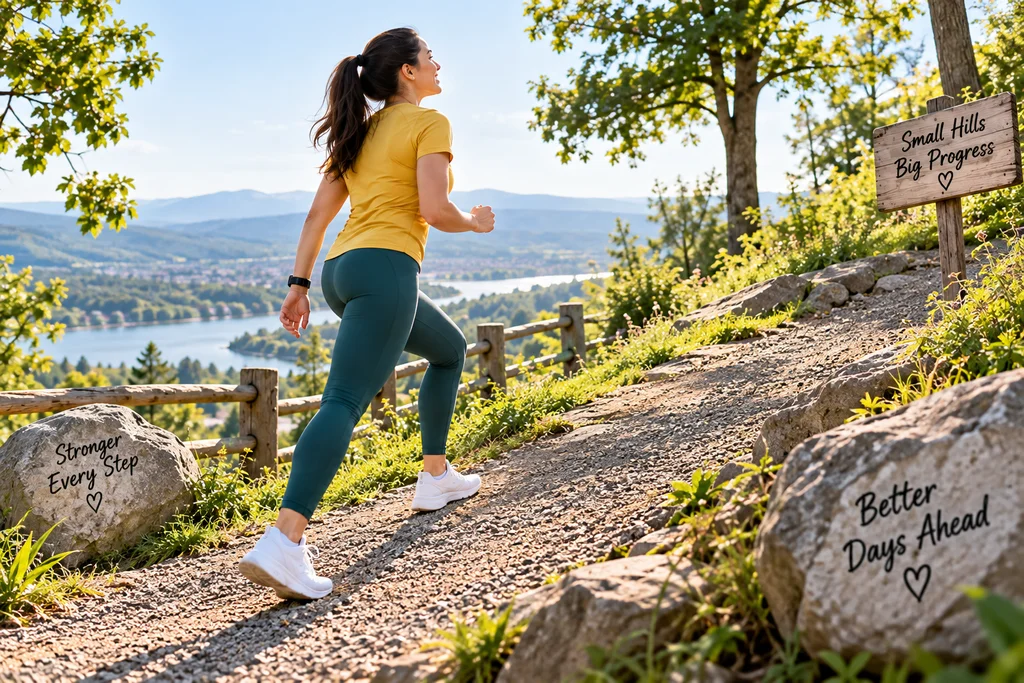
Image Description: Woman walking uphill on a gently sloped park trail, wearing a mustard athletic shirt, deep teal leggings, and white sneakers, bright natural sunlight, textured gravel path, green trees and distant hills, warm earthy palette, realistic outdoor fitness photography, low side camera angle.
Quick Tip: Start with a gentle incline rather than a steep hill. Walk uphill for 30 to 60 seconds, then recover on level ground or a gentle downhill section. Repeat several times without sacrificing comfortable posture or controlled breathing.
Hill walking adds resistance without requiring complicated equipment. Your legs and glutes work harder as the incline increases, while your pace naturally slows. In my experience, short uphill sections are easier to manage than trying to maintain a fast pace for the entire walk. Begin with two or three climbs and build gradually.
Interval Pace Changes
Image Description: Woman alternating between comfortable and brisk walking on a modern park trail, wearing a peach athletic shirt, dark teal leggings, and white sneakers, crisp morning sunlight, leafy trees, smooth pathway, soft urban background, energetic natural palette, realistic fitness photography, low side perspective.
BEFORE: A steady pace can become familiar, especially after several weeks of regular walking. You may finish your usual route without feeling much change in effort.
AFTER: Short bursts of faster walking add variety and challenge without requiring a longer workout. Walk comfortably for 3 minutes, increase your pace for 1 minute, then return to an easy pace.
This simple rhythm gives your walk distinct sections and keeps your attention on the next interval. Start with four faster segments during a 20 to 30-minute session. As your fitness improves, gradually extend the brisk periods rather than making every interval faster.
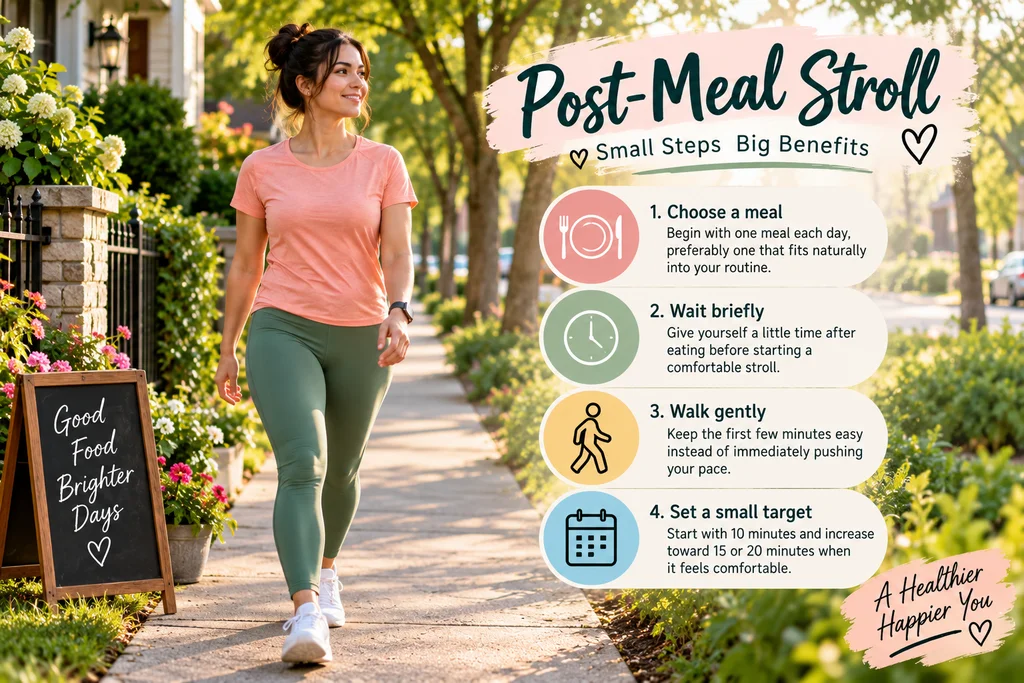
Post-Meal Stroll
Image Description: Woman taking a relaxed walk along a tree-lined sidewalk after a meal, wearing a light coral top, sage green leggings, and white sneakers, soft late-afternoon sunlight, warm residential setting, subtle greenery, clean pavement texture, calm lifestyle aesthetic, realistic photography, eye-level perspective.
- Choose a meal: Begin with one meal each day, preferably one that fits naturally into your routine.
- Wait briefly: Give yourself a little time after eating before starting a comfortable stroll.
- Walk gently: Keep the first few minutes easy instead of immediately pushing your pace.
- Set a small target: Start with 10 minutes and increase toward 15 or 20 minutes when it feels comfortable.
Short post-meal walks are easy to attach to an existing daily habit. The goal is not a hard workout. It is consistent movement that fits naturally into your schedule. I’ve noticed routines become easier to maintain when they are connected to something already happening each day, such as finishing lunch or dinner.
Route Variety
Image Description: Split-style visual showing two walking routes, one through a leafy park and another along a bright urban sidewalk, woman wearing a lavender athletic shirt and navy leggings, natural daylight, varied textures, trees and buildings, realistic fitness photography, elevated three-quarter perspective.
| Comparison Point | Option A: Same Route | Option B: Varied Routes |
|---|---|---|
| Terrain | Familiar and predictable | Different surfaces and inclines |
| Motivation | Easy to plan | Adds visual variety |
| Effort | Usually consistent | Can naturally vary |
| Planning | Very simple | Requires occasional route choice |
Changing your route can keep regular walking from feeling repetitive. Rotate between a quiet neighborhood, park loop, trail, or shopping area when practical. Keep safety and comfortable surfaces in mind. A familiar route is useful for consistency, while occasional changes can refresh your routine and introduce different walking conditions.
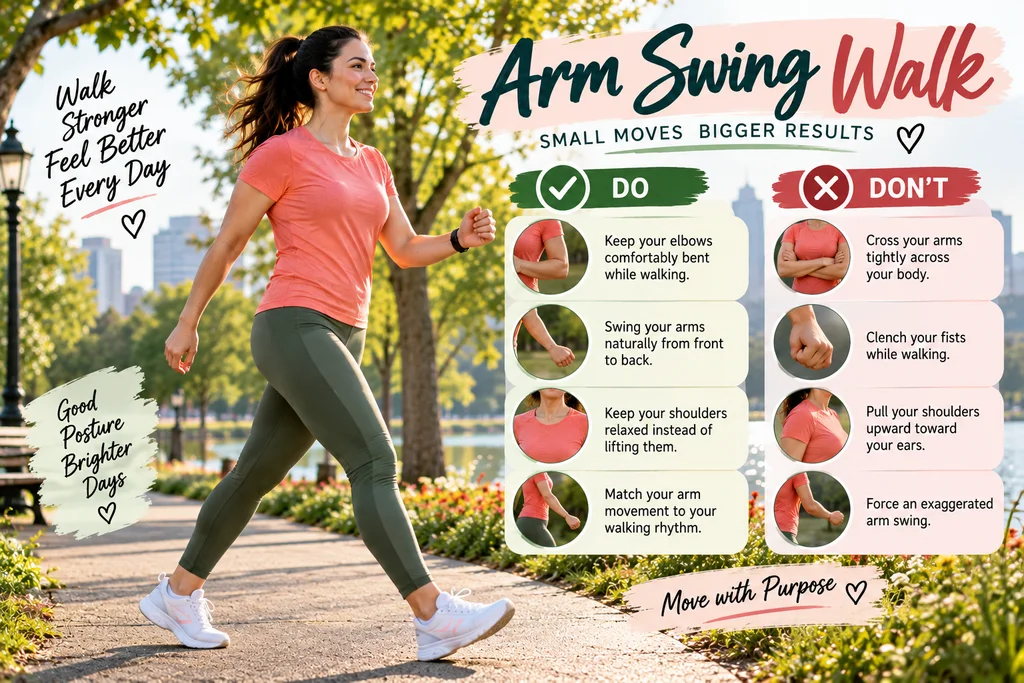
Arm Swing Walk
Image Description: Woman walking briskly through a sunny city park wearing a coral athletic shirt, olive leggings, and white sneakers, arms swinging naturally beside her body, leafy trees, smooth pathway, soft morning sunlight, warm green and peach palette, realistic fitness photography, waist-level side camera perspective.
DO
- Keep your elbows comfortably bent while walking.
- Swing your arms naturally from front to back.
- Keep your shoulders relaxed instead of lifting them.
- Match your arm movement to your walking rhythm.
DON’T
- Cross your arms tightly across your body.
- Clench your fists while walking.
- Pull your shoulders upward toward your ears.
- Force an exaggerated arm swing.
Natural arm movement helps create a smoother walking rhythm and supports efficient movement. Keep the motion relaxed rather than trying to swing as far as possible. A comfortable arm pattern can also make brisk walking feel more coordinated. Focus on rhythm, posture, and steady steps instead of making the movement overly complicated.
Fast Feet Intervals
Image Description: Bright urban walking path with a woman moving through quick-foot intervals, wearing a peach athletic shirt, dark teal leggings, and white sneakers, modern buildings softened in the distance, clear morning light, crisp pavement texture, energetic yet clean aesthetic, realistic fitness photography, low side camera angle.
Time: 15 to 25 minutes
Skill Level: Beginner to intermediate
Best For: Adding short bursts of quicker movement
Surface: Flat, stable walking path
Difficulty: Moderate
Quick feet intervals focus on shorter, faster steps rather than taking unusually long strides. Start with several minutes of comfortable walking before adding 20-second bursts. Return to an easy pace between efforts. Keep your feet light and controlled, especially when increasing speed for the first time.
Park Loop Repeats
Image Description: Woman completing repeated loops around a spacious green park, wearing a sky-blue athletic shirt, plum leggings, and white sneakers, tall trees surrounding a smooth circular path, gentle afternoon sunlight, fresh green and blue palette, realistic fitness photography, elevated wide-angle perspective.
A familiar loop makes progress easier to measure because the distance stays consistent. Walk the first lap at an easy pace, settle into a purposeful pace on the second, then decide whether another lap feels appropriate. Keeping the route simple also reduces planning time and makes regular movement easier to repeat.
For variety, change the purpose of each lap rather than constantly changing the route. One lap can focus on posture, another on pace, and another on relaxed breathing. I’ve seen this approach work well for walkers who lose interest on straight out-and-back routes because each loop has a clear focus.
Lunchtime Walking Break
Image Description: Woman walking outdoors during a bright midday break, wearing a soft yellow athletic shirt, forest-green leggings, and white sneakers, modern office buildings and leafy trees in the background, natural sunlight, clean sidewalk, fresh green and golden palette, realistic fitness photography, eye-level side perspective.
- Set aside 10 to 20 minutes during your lunch break for purposeful walking.
- Keep comfortable shoes nearby if your usual footwear is not suitable.
- Start with an easy pace, then walk briskly once your body feels warmed up.
- Use a familiar route that fits comfortably within your available break.
- Return with enough time to eat, hydrate, and prepare for the rest of your day.
A midday walk can break up long periods of sitting while adding useful movement to your routine. Keep the distance modest so you are not rushing back. If your schedule changes often, focus on completing the walk rather than hitting an exact distance. A consistent short session still contributes to weekly activity.
Weekend Long Walk
Image Description: Woman enjoying a longer weekend walk along a scenic riverside path, wearing a terracotta athletic top, navy leggings, and white sneakers, soft morning sunlight, mature trees, calm water, textured pathway, warm earthy colors, realistic outdoor fitness photography, wide rear three-quarter perspective.
Quick Tip: Let your weekend session be longer than your weekday walks, but increase duration gradually. Add about 5 to 10 minutes when your current distance feels comfortable instead of suddenly doubling your walking time.
A longer weekend session gives you more time to explore a park, trail, waterfront, or quiet neighborhood. Keep the first portion relaxed and settle into a sustainable rhythm. Bring water when needed and choose supportive footwear. The goal is to finish feeling pleasantly worked, not exhausted or unable to recover comfortably afterward.
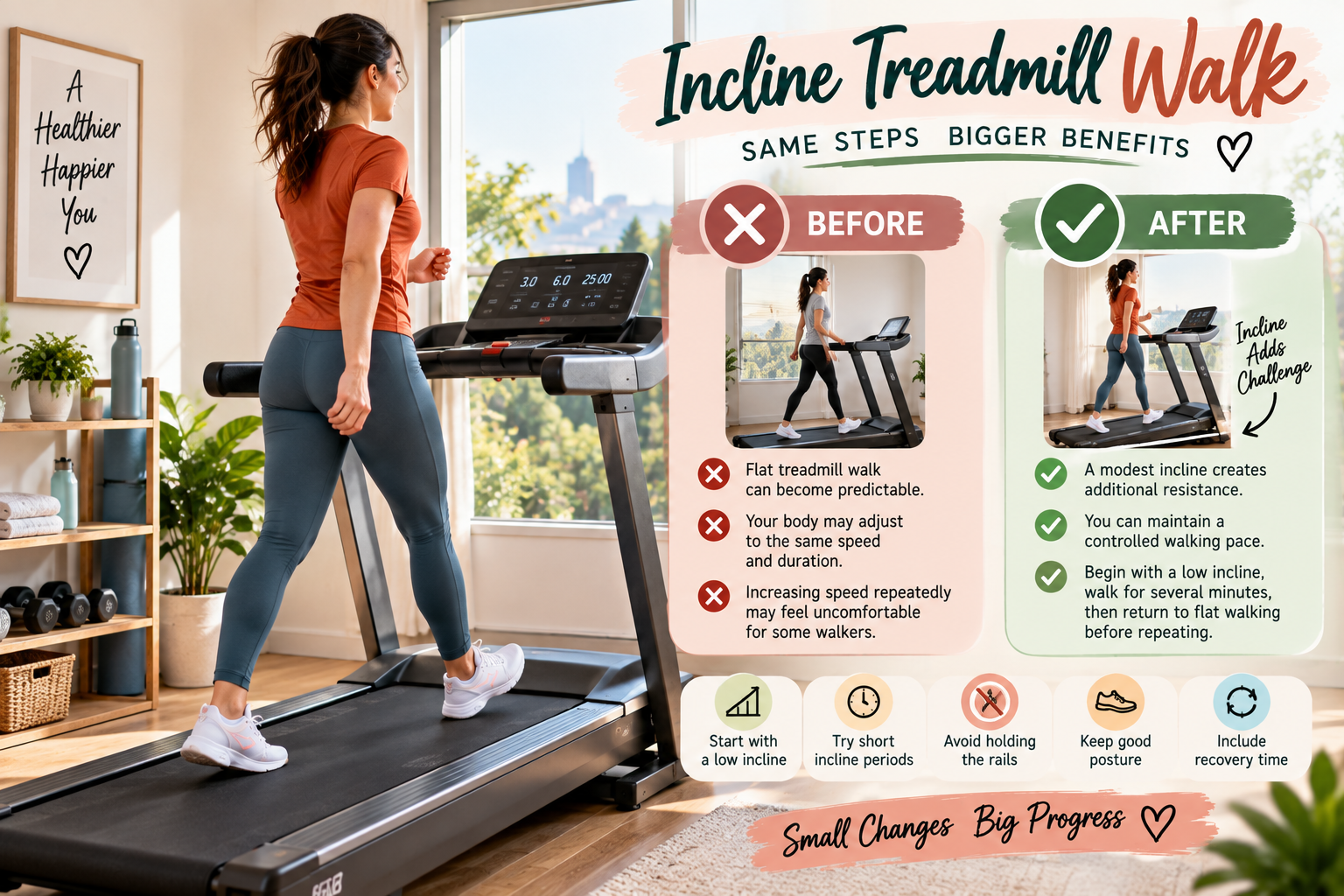
Incline Treadmill Walk
Image Description: Woman walking on a modern treadmill in a bright home fitness room, wearing a rust-orange athletic shirt, slate-blue leggings, and white sneakers, large windows with natural daylight, light wood flooring, minimal equipment, soft neutral palette, realistic fitness photography, three-quarter side angle.
BEFORE: A flat treadmill walk can become predictable once your body becomes accustomed to the same speed and duration. Increasing speed repeatedly may also feel uncomfortable for some walkers.
AFTER: A modest incline creates additional resistance while allowing you to maintain a controlled walking pace. Begin with a low incline, walk for several minutes, then return to flat walking before repeating.
Keep the incline modest enough that your posture stays upright and your steps remain controlled. Avoid holding the treadmill rails while walking uphill, because doing so changes your natural movement pattern. Start with short incline periods and give yourself recovery time between them. This approach adds variety without requiring a complicated workout.
Step Count Ladder
Image Description: Woman checking a simple fitness tracker while walking on a bright neighborhood pathway, wearing a soft pink athletic shirt, deep green leggings, and white sneakers, morning sunlight, leafy trees, clean pavement, subtle residential background, fresh pastel palette, realistic fitness photography, close three-quarter side angle.
- Find your baseline: Track your usual daily steps for several days without trying to increase them.
- Choose a small increase: Add a manageable amount of walking rather than making a dramatic jump.
- Hold the target: Keep the new level for several days while paying attention to energy and recovery.
- Increase gradually: Add another small amount only when your current level feels comfortable.
A step ladder gives you a flexible way to build more daily movement without chasing an arbitrary number. Your starting point may be very different from someone else’s. In my experience, gradual increases are easier to maintain because they fit around normal work, family, and household responsibilities.
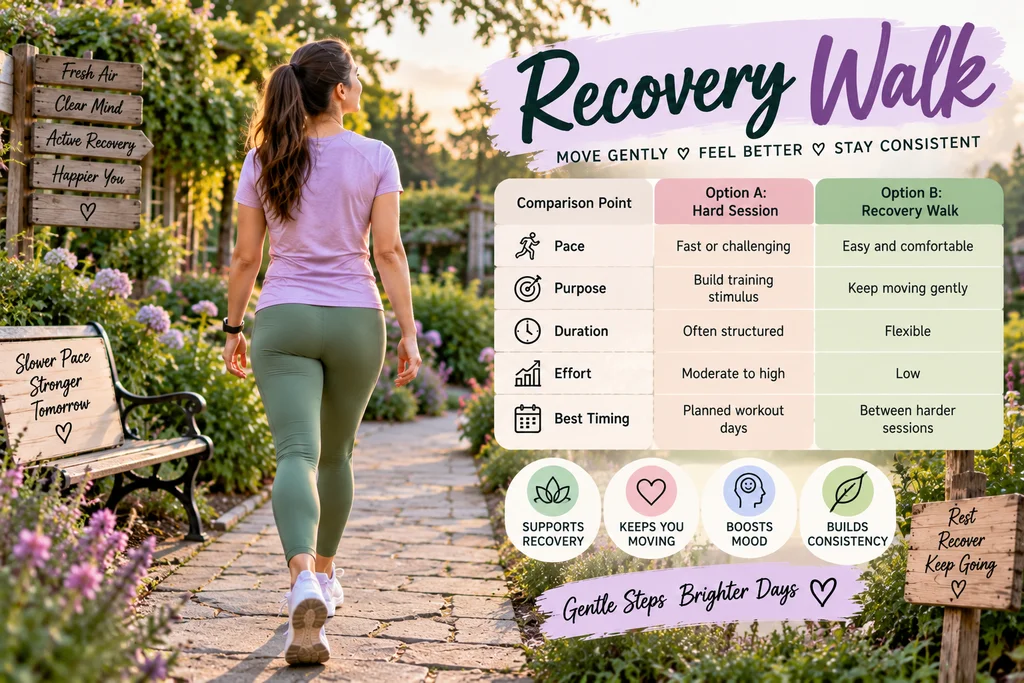
Recovery Walk
Image Description: Woman taking a gentle recovery walk through a quiet botanical garden, wearing a pale lavender athletic shirt, sage leggings, and white sneakers, soft early-evening glow, lush plants, smooth stone pathway, muted green and lavender palette, peaceful realistic fitness photography, rear three-quarter perspective.
| Comparison Point | Option A: Hard Session | Option B: Recovery Walk |
|---|---|---|
| Pace | Fast or challenging | Easy and comfortable |
| Purpose | Build training stimulus | Keep moving gently |
| Duration | Often structured | Flexible |
| Effort | Moderate to high | Low |
| Best Timing | Planned workout days | Between harder sessions |
A recovery walk keeps your body moving without adding another demanding workout. Choose a pace where conversation feels easy and keep the route relatively flat. This approach can be especially useful after a challenging walking session or on a day when your energy feels lower than usual.
Friend Walking Date
Image Description: Two friends walking side by side through a sunny tree-lined park, wearing coordinated coral and teal athletic tops with dark leggings and white sneakers, warm natural light, leafy background, smooth pathway, cheerful realistic lifestyle photography, medium-distance eye-level perspective.
DO
- Choose a regular day and time that works for both people.
- Pick a route where conversation feels comfortable.
- Start at a pace that both walkers can maintain.
- Keep the first meeting short enough to feel manageable.
DON’T
- Turn every walk into a competition.
- Choose a pace that leaves one person struggling to talk.
- Cancel simply because you cannot complete a long route.
- Ignore weather or surface conditions that make walking unsafe.
Walking with a friend can make consistency feel more social and less like another task on your schedule. Keep the focus on regular movement and enjoyable conversation. A 20-minute walk that happens consistently is more useful than an ambitious outing that becomes difficult to repeat. Choose companionship over pressure.
Evening Neighborhood Walk
Image Description: Woman walking through a peaceful neighborhood at sunset, wearing a dusty-rose athletic shirt, navy leggings, and white sneakers, warm golden light, tree-lined sidewalk, softly illuminated homes, subtle evening shadows, calm peach and blue palette, realistic lifestyle fitness photography, rear side-angle perspective.
Time: 20 to 30 minutes
Best For: Evening movement and routine building
Pace: Comfortable to brisk
Surface: Smooth sidewalks or paths
Equipment: Supportive walking shoes
An evening walk can create a clear transition between daytime responsibilities and personal time. Keep the first few minutes relaxed, then settle into a comfortable pace. If your route becomes darker later in the evening, choose a well-lit area and wear visible clothing. A predictable route can make this habit easier to repeat.
Audio-Paced Walk
Image Description: Woman walking with wireless earbuds along a leafy urban trail, wearing a turquoise athletic shirt, charcoal leggings, and white sneakers, bright natural daylight, textured pathway, modern buildings blurred behind trees, clean blue and green palette, realistic fitness photography, side profile perspective.
Music or audio can give your walk a useful rhythm, especially on familiar routes. Choose a playlist, podcast, or audiobook before leaving so you are not distracted by your phone during the walk. Start at a comfortable pace, then let the rhythm encourage consistent steps without forcing your speed beyond what feels controlled.
For outdoor walking, keep enough awareness of your surroundings to notice vehicles, cyclists, other pedestrians, and changes in the path. I’ve noticed that audio works best as a background tool rather than the main focus. Keep the volume moderate and use a familiar route when you want a relaxed, enjoyable session.
Progress Check-In
Image Description: Woman sitting on a wooden bench after walking, reviewing simple activity notes on a smartphone, wearing a coral athletic shirt, olive leggings, and white sneakers, sunny park setting, soft natural light, green foliage, warm neutral palette, realistic fitness photography, over-the-shoulder perspective.
Quick Tip: Review your walking routine once each week instead of judging every individual session. Note how often you walked, how long you stayed active, how the pace felt, and whether recovery was comfortable.
A weekly check-in shows patterns that are easy to miss from day to day. Maybe morning sessions feel easier, or shorter walks fit your schedule better. Adjust one element at a time based on what you observe. Progress is not only about adding minutes; feeling more consistent and capable matters too.
Weather Backup Walk
Image Description: Woman walking indoors through a bright shopping center on a rainy day, wearing a teal athletic shirt, burgundy leggings, and white sneakers, large windows showing soft rainfall outside, polished floor, warm indoor lighting, clean modern background, realistic fitness photography, wide side perspective.
- Keep an indoor route available for rainy or extremely hot days.
- Place your walking shoes where they are easy to reach.
- Have a short treadmill or indoor walking routine ready as a backup.
- Check the weather before choosing your route and clothing.
- Adjust the session rather than forcing an unsafe outdoor walk.
A backup option protects your routine from becoming dependent on perfect weather. The goal is to maintain regular movement while respecting heat, storms, slippery surfaces, and poor visibility. Keep a simple indoor alternative that requires little preparation. That way, an unexpected weather change does not automatically turn into a missed day.
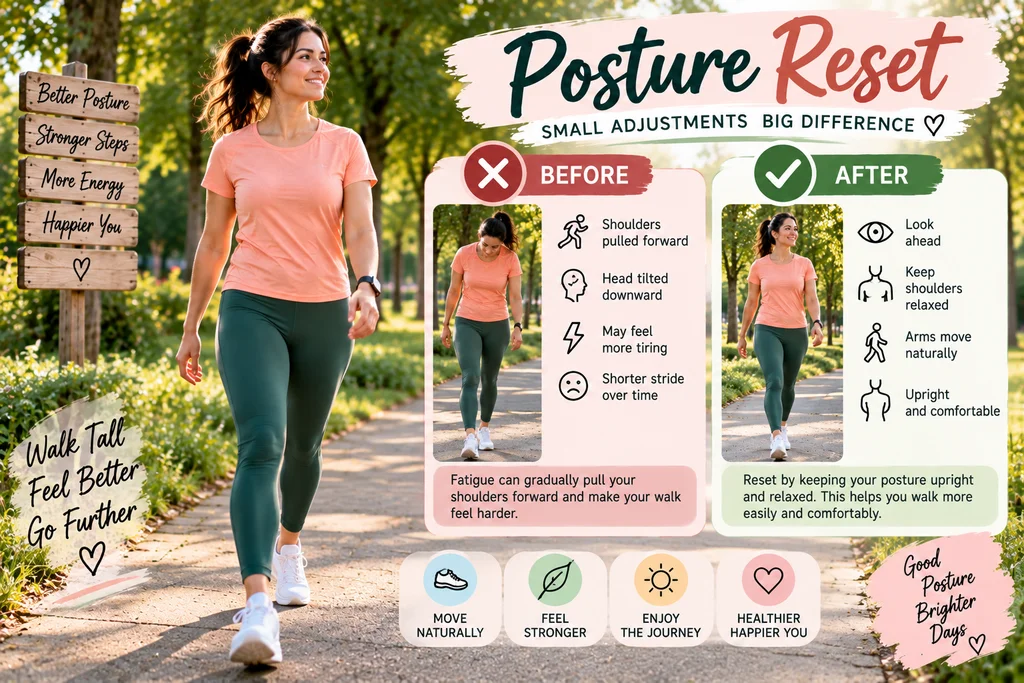
Posture Reset
Image Description: Woman walking upright along a sunlit park path, wearing a soft peach athletic shirt, forest-green leggings, and white sneakers, relaxed shoulders, natural arm position, tall trees and grass in background, warm morning light, fresh earthy palette, realistic fitness photography, front three-quarter camera angle.
BEFORE: Fatigue can gradually pull your shoulders forward, shorten your stride, or make your head tilt downward. Poor walking posture may also make a comfortable route feel more tiring.
AFTER: Reset by looking ahead, keeping your shoulders relaxed, and allowing your arms to move naturally. Keep your torso comfortably upright without stiffening your back.
Use a simple posture check every few minutes rather than holding one rigid position throughout the entire walk. Your body should feel relaxed, not forced into a military stance. If discomfort continues despite adjusting your movement, reduce the intensity and consider discussing persistent pain with a qualified healthcare professional.
Distance Ladder
Image Description: Woman walking progressively farther along a scenic paved trail, wearing a mustard-yellow athletic shirt, navy leggings, and white sneakers, bright morning sunlight, distant trees and rolling hills, textured pathway, warm green and golden palette, realistic outdoor fitness photography, long perspective view.
- Choose a starting distance: Pick a route you can finish comfortably without feeling depleted.
- Repeat it: Complete that distance several times before making it longer.
- Add a small amount: Extend the route gradually rather than making a large jump.
- Recover: Give your body enough time between longer sessions.
- Repeat the cycle: Increase again only when the current distance feels manageable.
A distance ladder gives you a clear progression without requiring every walk to be longer. Keep most sessions comfortable and reserve gradual increases for selected days. This structure works well for walkers who enjoy measurable goals but do not want to focus exclusively on speed. The next milestone should feel challenging, not overwhelming.
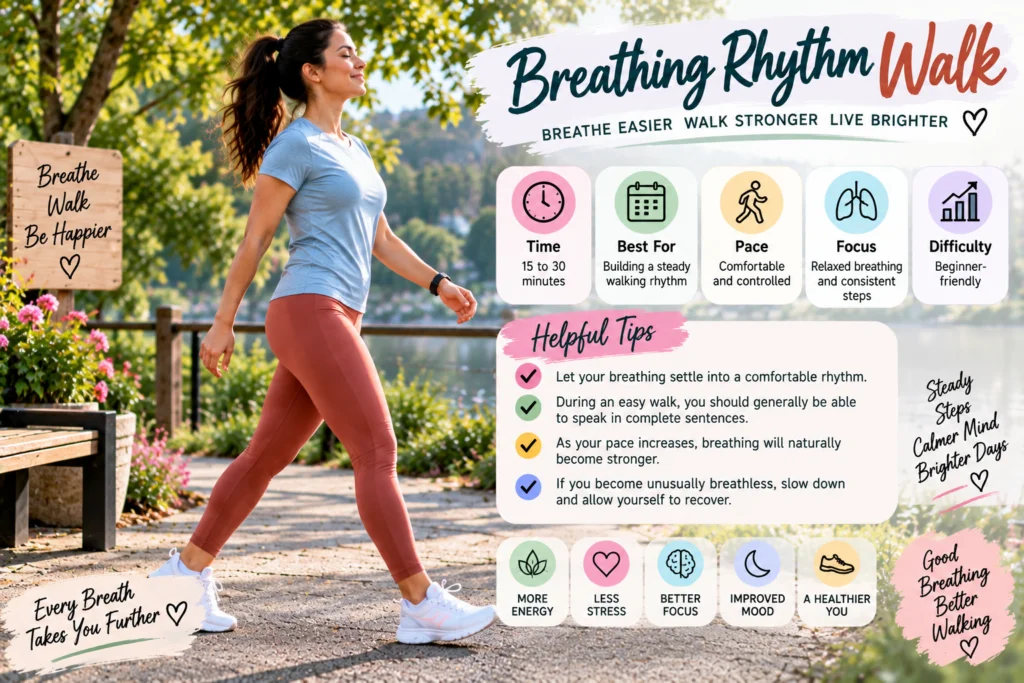
Breathing Rhythm Walk
Image Description: Woman walking calmly along a tree-lined park path, wearing a soft blue athletic shirt, terracotta leggings, and white sneakers, gentle morning sunlight, lush green foliage, smooth pathway, airy blue and earthy palette, relaxed realistic fitness photography, side profile camera perspective.
Time: 15 to 30 minutes
Best For: Building a steady walking rhythm
Pace: Comfortable and controlled
Focus: Relaxed breathing and consistent steps
Difficulty: Beginner-friendly
Let your breathing settle into a comfortable rhythm instead of trying to force a specific pattern. During an easy walk, you should generally be able to speak in complete sentences. As your pace increases, breathing will naturally become stronger. If you become unusually breathless, slow down and allow yourself to recover.
Sunrise Route
Image Description: Woman walking along a quiet lakeside pathway at sunrise, wearing a coral athletic shirt, deep teal leggings, and white sneakers, golden sunlight reflecting on calm water, soft mist, trees in the distance, warm peach and blue palette, realistic fitness photography, wide rear perspective.
Early morning light can make a familiar route feel fresh while giving your routine a clear starting point. Choose a safe, well-maintained path and check visibility before heading out. Keep the first few minutes gentle, especially after waking, then settle into your normal comfortable pace. A consistent start can make regular movement easier.
Keep your essentials simple: supportive shoes, suitable clothing, water when needed, and a phone for safety. If the route is quiet or poorly lit, choose a busier area instead. The best morning routine is one that fits your schedule and allows you to walk safely and comfortably.
Weekly Walking Mix
Image Description: Active woman walking through a varied park environment with sections of flat path, gentle incline, and shaded trail, wearing a lavender athletic shirt, sage leggings, and white sneakers, soft natural daylight, lush greenery, textured surfaces, balanced pastel palette, realistic fitness photography, elevated three-quarter perspective.
- Easy days: Use relaxed walks for recovery and everyday movement.
- Brisk days: Add periods of faster walking when your body feels ready.
- Long day: Include one gradually longer session during the week.
- Variety day: Change the route, surface, or setting to keep your routine interesting.
- Rest day: Leave room for recovery when your body needs it.
A weekly mix keeps every walk from having the same purpose. Instead of pushing for maximum effort each day, give different sessions different roles. This makes your routine easier to sustain and gives you room to adjust based on energy, schedule, and recovery. Steady progress comes from repeating manageable habits over time.
Conclusion
Progress does not require making every walk harder. The most useful routine is one you can repeat, adjust, and enjoy as your fitness develops. These 23 ideas give you practical ways to add variety, build endurance, increase daily movement, and stay consistent.
Choose one idea that fits your life this week and start there. I’ve noticed that small changes often make regular movement feel much easier to maintain. Save this post on Pinterest so you can return to it when your routine needs a fresh idea, and share it with someone who could benefit from a simpler approach to walking. Keep moving, keep building, and let steady progress add up.