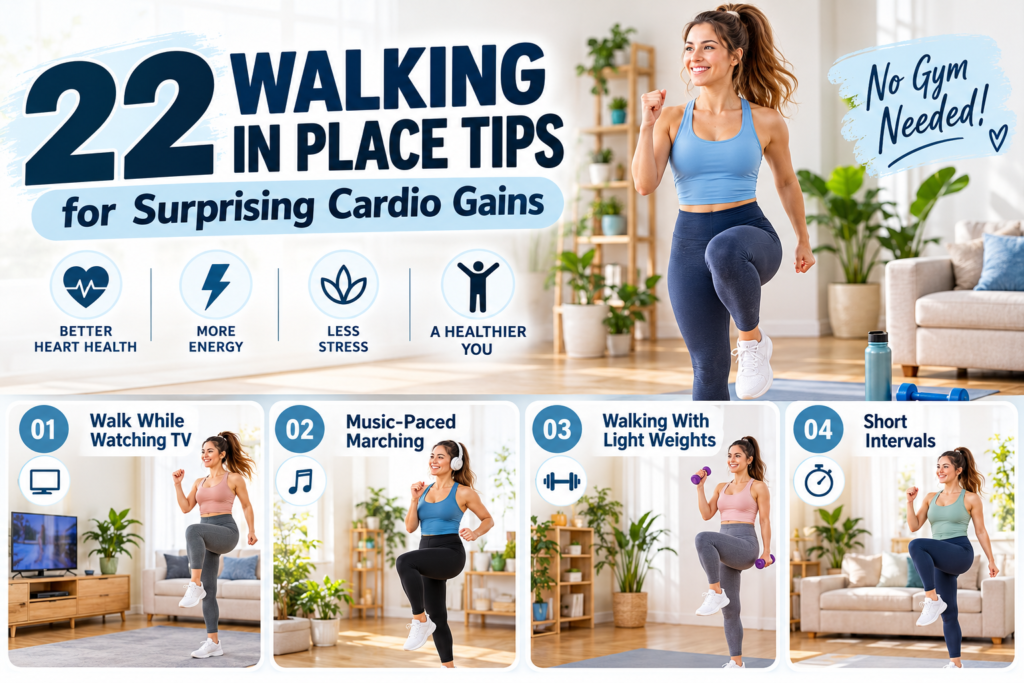
22 Walking in Place Tips for Surprising Cardio Gains
Introduction
No treadmill? No gym membership? No problem! You can get your body moving, build stamina, and make your daily routine more active without leaving home.
Walking in place is a simple, beginner-friendly way to add cardio to your day, even when the weather is unpleasant or your schedule feels packed. Whether you’re working from home, watching your favorite show, or taking a quick break between chores, a few minutes of movement can help you feel more active and energized.
The best part is that you can adjust your pace, movement, and workout length to suit your fitness level. From gentle marching and high knee lifts to music-paced steps and short walking intervals, these 22 practical ideas offer plenty of ways to keep your routine fresh. You’ll discover how to make indoor exercise more enjoyable, stay consistent, and gradually improve your endurance without complicated equipment. Start with one idea that feels comfortable, and build from there.
1. Marching in Place
Image Description: Bright home workout corner with a woman marching in place on a light beige exercise mat, wearing sage green activewear and white sneakers. Soft natural window light, warm wooden flooring, cream walls, a small green plant, neutral fitness accessories, clean minimalist decor, full-body front view, realistic photography.
Marching in place is a simple way to get your heart pumping without needing a treadmill or outdoor route. Stand tall, lift one knee at a time, and swing your arms naturally. Start at a comfortable pace, then gradually increase your speed as your body warms up.
The beauty of this movement is its flexibility. You can fit a few minutes between household chores, during a work break, or while waiting for dinner to cook. Keep your feet landing softly, breathe steadily, and focus on consistent movement rather than trying to move as fast as possible.
2. Arm Swing Walking
Image Description: Realistic home fitness scene featuring a woman performing an indoor walking workout with energetic arm swings, wearing dusty blue leggings and a white athletic top. Airy living room, pale oak floor, soft morning sunlight, muted neutral furnishings, subtle green plants, eye-level full-body camera angle, fresh Pinterest fitness aesthetic.
Your arms can help turn a gentle indoor stroll into a more engaging cardio session. Bend your elbows approximately 90 degrees and swing them forward and backward in opposition to your legs. Keep your shoulders relaxed, wrists loose, and hands unclenched as your pace increases.
- Start naturally: Walk at an easy pace for one minute.
- Bend your elbows: Keep your forearms moving comfortably beside your body.
- Increase your rhythm: Swing your arms a little more briskly without tensing your neck.
- Maintain good posture: Look ahead and keep your chest open.
- Check your breathing: Slow down if you cannot speak comfortably.
Coordinating your upper and lower body recruits more muscles than moving your legs alone. It also encourages a steady rhythm that makes short workouts feel more purposeful. Begin with small, controlled arm movements, especially if your shoulders feel stiff, and increase the range only while remaining comfortable.
3. High Knee Marches
Image Description: Modern home workout setup showing a fit adult woman performing controlled high knee marches on a charcoal exercise mat, dressed in black leggings and a coral sports top. Bright natural daylight, warm wooden floor, cream backdrop, neatly placed water bottle, soft shadows, realistic full-body side view, energetic minimalist fitness photography.
Quick Tip:
Lift each knee toward hip height only if your mobility and balance allow it. Keep your torso upright, engage your core gently, and use a wall or sturdy chair for support if needed. Lower each foot with control rather than stomping down.
Higher knee lifts can make your indoor cardio routine more challenging by increasing the movement range and engaging your hip flexors and abdominal muscles. Start with moderate lifts and alternate sides at a steady pace. As your fitness improves, add short intervals of higher marching, followed by easier movement to recover.
Should discomfort develop in your hips, knees, or lower back, reduce the height and speed. The goal is to find a controlled movement you can sustain, not to force your knees upward. Even a low-impact version can help you build a consistent exercise habit.
4. Side Step Walking
Image Description: Realistic fitness photograph of a woman performing gentle side steps in a bright modern living room, wearing lavender leggings and a white fitted workout shirt. Pale oak flooring, cream walls, soft natural daylight, a muted green plant, rolled exercise mat, uncluttered background, full-body three-quarter view, clean Pinterest wellness aesthetic.
BEFORE
Walking in a straight line can become repetitive, especially when you’re exercising in a small room. Your routine may also rely heavily on forward movement, leaving little variety in your workout.
AFTER
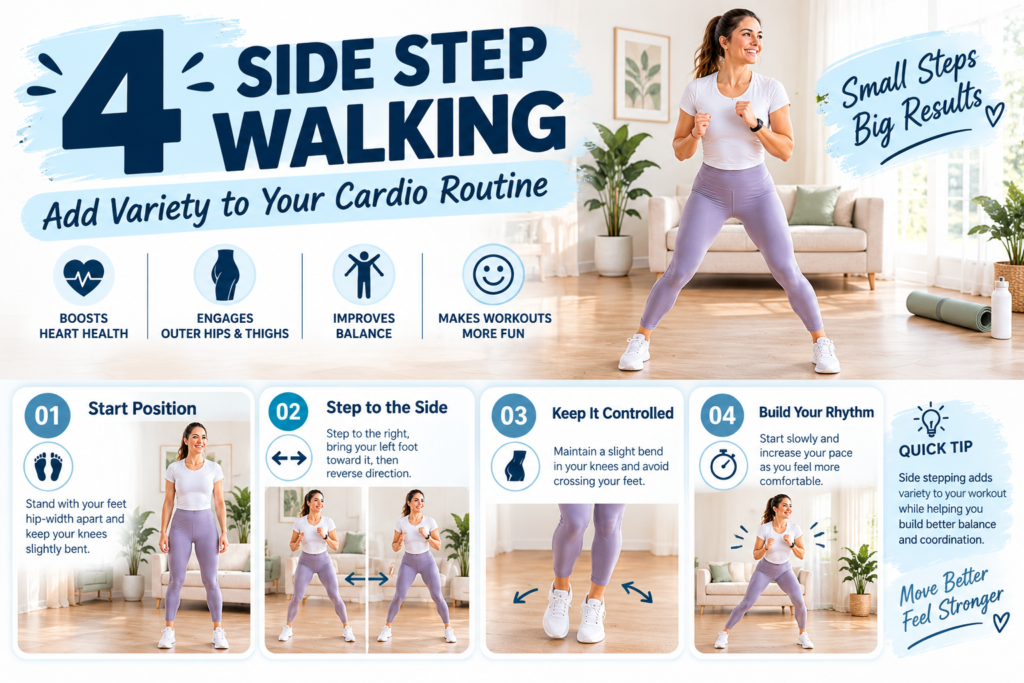
Side stepping introduces lateral movement and engages your outer hips and thighs. Your workout feels more varied without requiring extra equipment or much floor space.
Start with your feet hip-width apart. Step to the right, bring your left foot toward it, then reverse direction. Keep your knees slightly bent and your steps controlled. This movement adds variety to indoor cardio while helping you practice balance and coordination. Begin slowly, and avoid crossing your feet if that makes you feel unstable.
5. Interval Walking
Image Description: Bright home fitness space with a woman performing brisk indoor marching beside a digital interval timer on a small wooden table. Navy leggings, mint green athletic top, light beige mat, white walls, sunlit windows, subtle indoor greenery, water bottle nearby, realistic full-body photography, crisp and motivating workout aesthetic.
- Warm up: March gently for three minutes to prepare your muscles.
- Pick up the pace: Walk briskly for 30 seconds while maintaining control.
- Recover: Return to a comfortable pace for 60 seconds.
- Repeat: Alternate faster and slower intervals for five to ten rounds, adjusting to your fitness level.
- Cool down: Finish with two or three minutes of easy marching.
Short intervals make an indoor routine feel more structured and help you adjust the intensity to your current fitness level. Beginners can start with fewer rounds and longer recovery periods. As your stamina improves, gradually extend the brisk intervals rather than increasing speed and duration simultaneously. You should still be able to speak a few words during harder efforts.
6. Treadmill-Free Cardio
Image Description: Minimalist apartment workout corner featuring a woman walking briskly on a soft gray exercise mat without gym equipment. Warm neutral activewear, white sneakers, light oak flooring, cream sofa in the background, large window with diffused daylight, small water bottle and folded towel, realistic wide-angle interior photography, calm contemporary style.
| Walking at Home | Treadmill Walking |
|---|---|
| Equipment: Usually requires no machine | Equipment: Requires a treadmill |
| Space: A small clear area may be enough | Space: Needs room for the machine |
| Pace: Controlled through your steps | Pace: Adjusted with machine settings |
| Terrain: Flat indoor flooring | Terrain: Speed and incline options may be available |
| Convenience: Easy to fit into short breaks | Convenience: Depends on treadmill access |
You don’t need a treadmill to get moving indoors. Marching, alternating knee lifts, and brisk arm swings can raise your heart rate while keeping your routine simple. Choose a clear, nonslip surface and wear supportive footwear. Remember that intensity depends on your pace, movement, and fitness level, not on whether you own exercise equipment.
7. Music-Paced Marching
Image Description: A woman marching energetically in a sunlit apartment workout space, wearing teal leggings and a blush pink athletic top, with wireless headphones and a smartphone resting on a small shelf. Warm wooden floors, cream walls, soft daylight, green potted plants, realistic full-body photography, upbeat and inviting Pinterest fitness aesthetic.
DO
- Choose upbeat music with a steady rhythm that feels comfortable to follow.
- Match your steps to the beat without forcing your legs to move too quickly.
- Swing your arms naturally and keep your shoulders relaxed.
- Alternate faster songs with slower tracks to manage your effort.
DON’T
- Increase your pace so much that your steps become unstable.
- Wear headphones so loudly that you cannot hear important sounds around you.
- Ignore pain, dizziness, or unusual shortness of breath.
- Keep pushing at a high intensity when you need recovery.
Music can make repetitive movements feel more enjoyable and help you maintain a consistent rhythm. Create a playlist of three to five songs for a short session, then gradually extend it as your endurance improves. Choose familiar tracks you enjoy, because a routine you look forward to repeating is easier to maintain.
8. Seated Walking Moves
Image Description: An older adult performing seated marching in a sturdy upholstered chair in a bright, accessible living room, wearing comfortable blue exercise clothes and supportive sneakers. Feet lifted gently above a nonslip rug, natural window light, warm neutral palette, wooden side table with water glass, realistic side-angle photography, welcoming wellness atmosphere.
Cost: Free, using a sturdy chair
Skill Level: Beginner-friendly
Space: A stable chair and room for leg movement
Best For: People who need a lower-impact alternative or cannot comfortably stand for long periods
Seated marching offers a practical way to stay active when standing exercise feels difficult. Sit upright toward the front of a stable chair, keep your feet planted initially, and lift one knee at a time. Swing your opposite arm if comfortable. Start with 30 to 60 seconds, rest, and repeat as tolerated. Keep the chair on a firm surface, and choose a movement range that feels safe for your body.
9. Walking Break Routine
Image Description: A woman taking an indoor movement break beside a home office desk, marching in place in comfortable gray leggings and a pale yellow workout shirt. Laptop, closed notebook, ergonomic chair, water bottle, bright window light, light wood flooring, neutral decor with a small leafy plant, realistic wide-angle photography, clean productivity-focused aesthetic.
Short movement breaks can make a sedentary day feel more active without requiring a dedicated gym session. Rather than waiting until evening to exercise, spread your steps throughout your daily schedule.
For example, march for three minutes after a work meeting, take another short session before lunch, and finish with five minutes after work. Set a reminder if you regularly lose track of time at your desk. Keep your walking area clear of cables and furniture, and increase your total activity gradually. Small sessions count toward your movement goals, even when you cannot fit in a longer workout.
10. Walking With Light Weights
Image Description: A fit woman performing indoor marching while holding two lightweight dumbbells, wearing black leggings and a muted sage green athletic top. Bright minimalist living room, pale wooden flooring, cream walls, soft natural window light, small green plant, neatly arranged exercise mat, realistic full-body front view, balanced composition, modern Pinterest fitness photography.
- Start without weights: March comfortably for two minutes to warm up.
- Choose light resistance: Hold small dumbbells that allow relaxed, controlled arm movements.
- Keep your posture upright: Relax your shoulders and avoid leaning backward.
- Move steadily: Continue marching without swinging the weights aggressively.
- Finish gradually: Put the weights down safely and walk slowly for recovery.
Light resistance can add an upper-body challenge to your cardio routine, but heavier weights are not necessary for effective movement. Begin with bodyweight marching until your coordination feels comfortable. If you introduce dumbbells, keep them light enough to maintain proper form, and stop if your grip, shoulders, or back become uncomfortable. People with balance concerns should skip the weights.
11. Low Impact Marching
Image Description: A woman demonstrating gentle low-impact marching on a cushioned exercise mat in a peaceful home studio, dressed in dusty rose leggings and a white athletic shirt. Soft beige walls, warm oak flooring, diffused daylight, a folded towel and water bottle nearby, minimal greenery, realistic full-body side view, soothing neutral color palette, clean wellness photography.
Quick Tip:
Keep at least one foot on the floor at all times, and land quietly with each step. Reduce your stride and knee height whenever the movement feels uncomfortable.
Low-impact movement can provide a manageable starting point for people building an exercise habit. It avoids the repeated jumping found in many high-intensity workouts while still allowing you to increase your breathing rate through faster steps and active arm swings. Begin at an easy pace, then progress gradually. Comfortable movement performed consistently is more useful than an intense routine you cannot sustain.
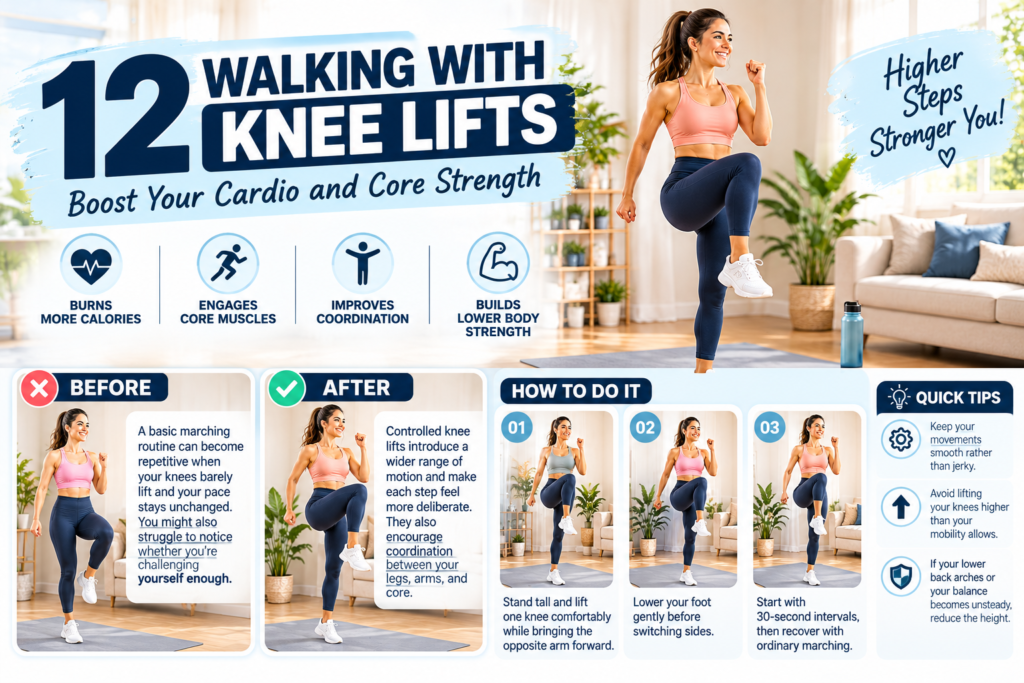
12. Walking With Knee Lifts
Image Description: Realistic fitness photograph of a woman alternating knee lifts during an indoor cardio session, wearing navy blue leggings and a soft peach sports top. Bright apartment interior, light wood floor, cream walls, natural morning sunlight, simple exercise mat, green potted plant and water bottle, full-body front three-quarter camera angle, fresh Pinterest workout aesthetic.
BEFORE
A basic marching routine can become repetitive when your knees barely lift and your pace stays unchanged. You might also struggle to notice whether you’re challenging yourself enough.
AFTER
Controlled knee lifts introduce a wider range of motion and make each step feel more deliberate. They also encourage coordination between your legs, arms, and core.
Stand tall and lift one knee comfortably while bringing the opposite arm forward. Lower your foot gently before switching sides. Start with 30-second intervals, then recover with ordinary marching. Keep your movements smooth rather than jerky, and avoid lifting your knees higher than your mobility allows. If your lower back arches or your balance becomes unsteady, reduce the height.
13. Walking With Resistance Bands
Image Description: A woman performing controlled indoor marching with a light resistance loop positioned above her knees, wearing charcoal leggings and a lavender athletic top. Bright home workout area, pale oak flooring, cream walls, natural window light, neutral exercise mat, small potted plant, realistic full-body side view, clean and modern Pinterest fitness aesthetic.
- Choose a light band: Select a resistance level that allows comfortable, controlled movement.
- Position it securely: Place the loop above your knees if appropriate for the band’s design.
- Begin marching: Lift each foot slightly while keeping your knees aligned.
- Maintain control: Avoid letting your knees collapse inward or your torso sway.
- Finish without resistance: Remove the band and march gently for recovery.
Resistance bands can add a strength component to an indoor walking routine, particularly around the hips. However, they are optional and should not interfere with your natural stride. Start with a few short intervals and check that the band stays securely in place. If it causes discomfort or changes your walking mechanics, remove it and return to ordinary marching.
14. Small Space Walking
Image Description: A compact apartment workout nook with a woman marching in place on a narrow gray exercise mat, wearing forest green leggings and a cream athletic shirt. Light oak floorboards, white walls, slim storage shelf, leafy indoor plant, soft daylight from a nearby window, realistic wide-angle interior view, uncluttered Scandinavian-inspired design.
| Setup | Small Space Walking |
|---|---|
| Floor area | Clear a stable area large enough for comfortable steps |
| Furniture | Move chairs, stools, and loose objects out of the way |
| Footwear | Wear supportive shoes or use suitable nonslip footwear |
| Movement | March vertically rather than traveling across the room |
| Safety | Keep cables and rugs from becoming tripping hazards |
Limited floor space does not have to prevent you from getting active. Marching in place needs far less room than walking laps, and you can adjust your arm movements to suit the available area. Check your surroundings before starting, especially if you exercise beside a desk or bed. A clear, stable surface helps you focus on your pace instead of worrying about obstacles.
15. Walking With Core Engagement
Image Description: A woman practicing upright indoor marching with gentle abdominal engagement, dressed in black leggings and a muted blue fitted workout top. Bright minimalist home studio, beige exercise mat, warm wooden floor, diffused natural light, cream walls, subtle green plant in the corner, realistic full-body side profile, crisp wellness photography with balanced composition.
DO
- Keep your ribs comfortably aligned over your pelvis.
- Gently tighten your abdominal muscles while continuing to breathe normally.
- Maintain an upright posture with your gaze forward.
- Lift each foot with control and land softly.
DON’T
- Hold your breath to tighten your core.
- Pull your stomach inward so forcefully that breathing becomes difficult.
- Lean backward as your knees rise.
- Continue through back pain or loss of balance.
Gentle core engagement can help you maintain a stable torso during repetitive leg movements. It does not require constant abdominal clenching or exaggerated posture. Start with a relaxed march and notice whether you can keep your upper body steady as your legs alternate. Over time, this awareness may improve movement control and make your indoor cardio sessions feel more comfortable.
16. Beginner Walking Intervals
Image Description: A beginner exercising in a bright living room, alternating between gentle marching and brisk indoor walking beside a small digital timer. Comfortable teal activewear, white sneakers, light beige exercise mat, warm wooden flooring, soft morning sunlight, cream sofa and leafy plant in the background, realistic full-body photography, welcoming and practical Pinterest fitness aesthetic.
Time: 10 to 15 minutes
Skill Level: Beginner
Intensity: Easy to moderate
Equipment: Comfortable shoes and a timer
A simple interval plan can help beginners build confidence without feeling overwhelmed. Start with two minutes of gentle marching, followed by 30 seconds of brisk steps and 90 seconds at an easier pace. Repeat the cycle three or four times, then finish with slow marching. Adjust the duration to your current fitness level, and increase only when the routine feels manageable. Consistency matters more than speed during the early stages.
17. Morning Indoor Marching
Image Description: A woman marching in place beside a sunlit bedroom window early in the morning, wearing soft lavender leggings and a white athletic top. Pale wooden flooring, neatly made cream bed, sheer curtains, warm natural sunlight, small green plant, rolled yoga mat, realistic full-body side view, peaceful minimalist home fitness photography.
Morning movement can help you establish a regular exercise habit before daily responsibilities take over. Start with gentle steps, relaxed arm swings, and comfortable knee lifts rather than immediately pushing your pace.
In my experience, attaching a short activity to an existing habit can make a routine easier to remember. For example, march for five minutes after brushing your teeth or before preparing breakfast. Keep your workout clothes nearby to reduce preparation time. If you feel stiff after waking, spend a few minutes warming up before moving more briskly, and drink water as needed.
18. Walking While Watching TV
Image Description: A woman marching comfortably in front of a television in a cozy modern living room, wearing navy leggings and a pale pink workout shirt. Neutral sofa, light oak flooring, soft warm lighting, cream rug positioned safely away from the exercise area, indoor greenery, realistic wide-angle composition, inviting Pinterest lifestyle photography.
BEFORE
Watching a favorite show often means sitting still for an entire episode. Even when you have time to move, the effort of starting a separate workout may feel inconvenient.
AFTER
Marching during a familiar program adds movement to an activity already built into your routine. You can alternate easy steps with brief periods of brisk marching while keeping the screen in view.
Clear enough floor space to move safely without stepping onto furniture or loose rugs. Keep your gaze mostly forward and avoid turning your head sharply to follow every scene. Start with one short segment of a show, then gradually extend your activity as your endurance improves. The television becomes a reminder to move rather than a reason to stay seated.
19. Walking With Side Reaches
Image Description: A woman performing gentle overhead side reaches while marching in a bright home workout space, wearing olive green leggings and a white fitted athletic shirt. Pale oak flooring, cream walls, soft natural window light, neutral exercise mat, small leafy plant, realistic full-body front view, airy minimalist decor, fresh Pinterest wellness photography.
- Stand with your feet hip-width apart and begin marching gently.
- Lift your right arm overhead while raising your left knee comfortably.
- Lower your arm and foot, then switch sides.
- Keep your movements controlled and your shoulders relaxed.
- Continue for 30 to 60 seconds before returning to ordinary marching.
Combining gentle reaches with alternating steps adds upper-body movement and variety to your cardio session. It also encourages coordination without requiring jumping or complicated choreography. Keep your reaching arm within a comfortable range, especially if your shoulders feel stiff. Move slowly enough to maintain your balance, and leave overhead movements out if they cause discomfort.
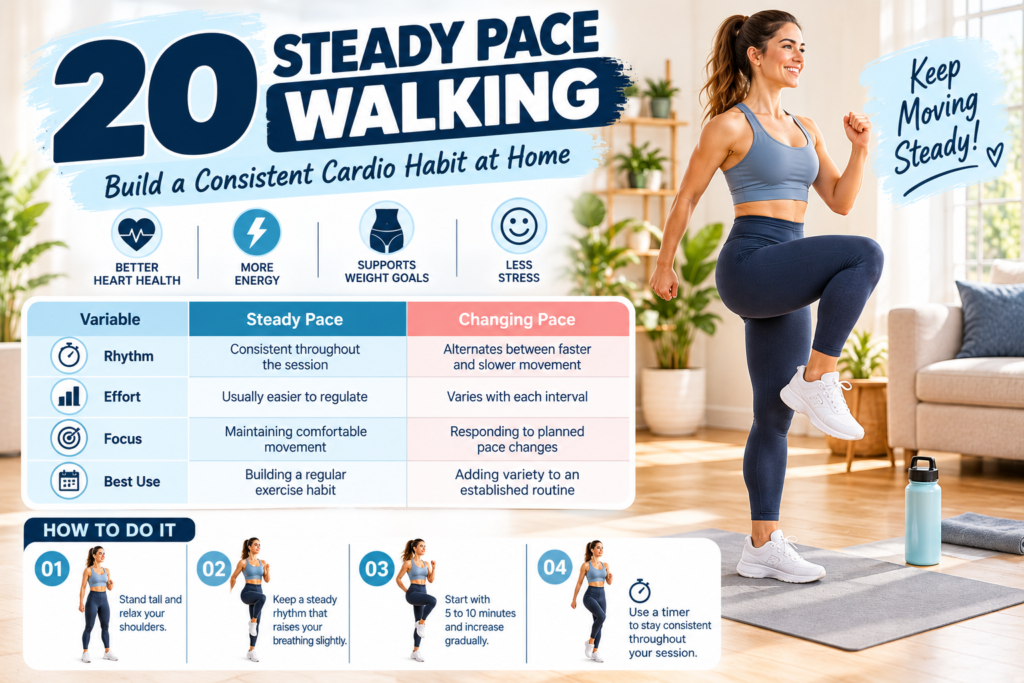
20. Steady Pace Walking
Image Description: A woman maintaining a consistent indoor marching rhythm on a light gray exercise mat, dressed in navy athletic leggings and a dusty blue sports top. Bright natural daylight, warm wood flooring, white walls, simple digital stopwatch, water bottle, small green plant, realistic side-angle full-body photography, calm and focused fitness aesthetic.
| Variable | Steady Pace | Changing Pace |
|---|---|---|
| Rhythm | Consistent throughout the session | Alternates between faster and slower movement |
| Effort | Usually easier to regulate | Varies with each interval |
| Focus | Maintaining comfortable movement | Responding to planned pace changes |
| Best Use | Building a regular exercise habit | Adding variety to an established routine |
A steady pace can make indoor cardio easier to manage, particularly when you are new to exercise. Choose a rhythm that raises your breathing slightly while allowing you to speak in complete sentences. Start with five to ten minutes and extend the session gradually. You do not need to move quickly throughout the workout to benefit from regular physical activity.
21. Walking With Deep Breathing
Image Description: A woman marching gently beside a bright living room window, wearing soft gray leggings and a sage green athletic top. Relaxed upright posture, warm wooden flooring, cream walls, diffused natural light, leafy indoor plant, neatly folded towel, realistic full-body side view, serene minimalist wellness photography with soft neutral colors.
Quick Tip:
Breathe naturally through each movement, allowing your abdomen to expand comfortably as you inhale. Exhale without forcing the air out, and slow your steps if you become breathless.
Coordinating relaxed breathing with a comfortable walking rhythm can help you monitor your effort and avoid unnecessary tension. Begin with easy marching for two minutes, paying attention to your shoulders, jaw, and breathing pattern. As your pace increases, let your breathing respond naturally rather than forcing a rigid inhale-and-exhale count. Stop and seek medical attention if you experience chest pain, faintness, or severe or unusual breathlessness.
22. Daily Step Goals
Image Description: A woman marching in place on a light beige exercise mat in a bright, organized home workout corner, wearing sage green leggings and a white athletic top. A smartwatch displays step progress, with a water bottle and small notebook on a wooden side table. Natural window light, warm oak flooring, cream walls, realistic full-body photography, clean Pinterest fitness aesthetic.
Daily movement goals can help you turn short indoor workouts into a consistent habit. Rather than aiming for a perfect number immediately, begin by tracking your usual activity and choosing a realistic increase. A smartwatch, phone pedometer, or simple notebook can help you monitor your progress.
- Check your baseline: Track your usual daily steps for several days.
- Choose a manageable target: Increase your activity gradually instead of chasing an arbitrary number.
- Schedule movement breaks: Add five-minute marching sessions during work or household breaks.
- Review your progress: Notice patterns each week and adjust your goal as needed.
Remember that step counts vary by device, and marching in place may not register every movement accurately. Use your numbers as a guide rather than a strict measure of success. Pair step tracking with how you feel, your consistency, and your ability to recover comfortably. Small, repeatable improvements can help you build a lasting exercise routine.
Conclusion
Building a more active lifestyle doesn’t require expensive equipment or hours at the gym. These 22 ideas show how simple indoor movements can help you work toward better stamina, consistent cardio, and a healthier daily routine.
Start with a few comfortable minutes of walking in place, experiment with different movements, and increase your effort gradually as your fitness improves. I’ve found that keeping exercise simple makes it easier to fit into everyday life.
Save this article on Pinterest for workout inspiration, try your favorite ideas this week, and share it with someone who wants to stay active at home. Every step counts, so start today!