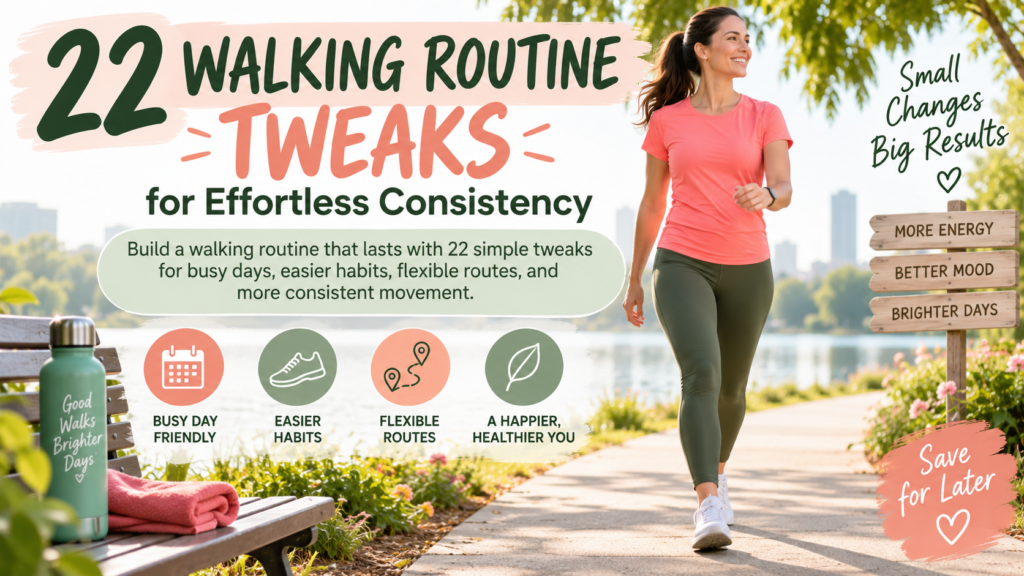
22 Walking Routine Tweaks for Effortless Consistency
Introduction
A walking habit should fit your life, not compete with it. Small changes can make getting outside feel simpler, more natural, and easier to repeat.
A consistent walking routine does not require long workouts, perfect weather, or a wide-open schedule. This guide shares 22 practical tweaks designed to help you remove common obstacles, prepare more easily, find realistic time slots, and keep moving even when your day changes. You will find simple ideas for shorter routes, flexible schedules, comfortable gear, social walks, indoor alternatives, and everyday movement.
In my experience, consistency often improves when the routine becomes easier to start rather than harder to complete. A 10-minute walk on a busy day can still support the habit. As you explore these ideas, choose the ones that match your schedule, energy, and surroundings. The goal is steady progress that feels realistic enough to keep.
Start With Ten Minutes
Image Description: Bright morning sidewalk with a woman in a coral athletic shirt, olive leggings, and white sneakers beginning a relaxed walk near leafy trees and small homes, warm natural sunlight, soft shadows, clean pavement texture, fresh green and peach palette, realistic Pinterest fitness photography, eye-level side perspective.
The easiest walking routine to maintain is often the one that feels almost too simple to skip. Start with just 10 minutes, especially on busy days. A short walk lowers the mental barrier of getting started and gives you a clear, manageable target instead of another demanding task on your schedule.
Once those 10 minutes become familiar, add time gradually rather than forcing longer sessions immediately. I’ve noticed that consistency becomes easier when the goal feels achievable even after a tiring workday. On especially hectic days, completing a short walk still keeps your movement habit active and protects your routine from disappearing.
Anchor Your Walk
Image Description: Woman preparing for a morning walk beside a bright entryway, coral athletic top, dark olive leggings, white sneakers, walking shoes placed near a small bench, leafy outdoor path visible through the doorway, soft golden daylight, warm neutral palette, realistic lifestyle photography, front three-quarter camera angle.
- Choose one daily cue: Pair your walk with breakfast, lunch, or finishing work.
- Keep the timing predictable: A familiar time reduces daily decision-making.
- Use an existing habit: Let something you already do remind you to move.
- Prepare beforehand: Place your shoes and comfortable clothes where you’ll see them.
- Keep the cue realistic: Pick a time that works on ordinary weekdays, not just ideal ones.
A reliable trigger makes walking feel like part of your day rather than another appointment to negotiate. For example, stepping outside after lunch can become an automatic transition before returning to work. The less effort required to decide when to walk, the easier it becomes to repeat the habit consistently.
Create a Ready Spot
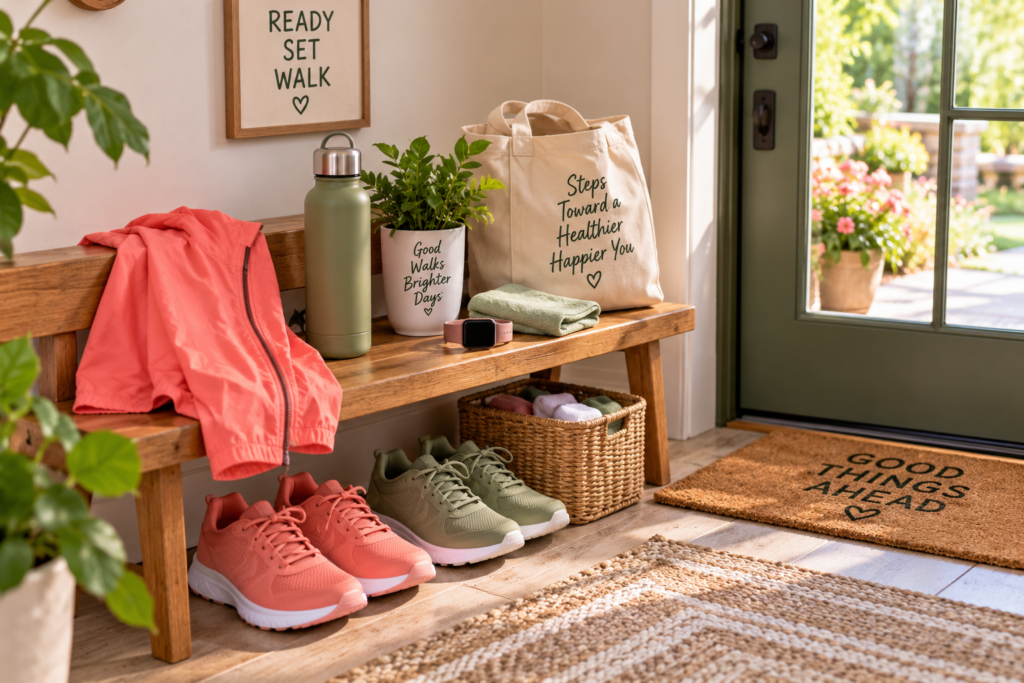
Image Description: Organized home entryway with colorful walking sneakers, lightweight coral jacket, olive water bottle, small fitness watch, and reusable bag arranged neatly beside a wooden bench, warm natural window light, soft beige walls, subtle green accents, realistic lifestyle photography, clean overhead and angled perspective.
Quick Tip: Keep your walking essentials together in one visible place. Store your shoes, socks, water bottle, and any needed accessories beside the door so preparation takes less than a few minutes.
Small amounts of friction can quietly derail a regular movement habit. Searching for shoes or gathering clothes may feel insignificant, but those extra steps give you another reason to postpone. In my experience, a dedicated ready spot makes leaving home feel simpler, particularly on mornings when motivation is low.
Shorten the Route
Image Description: Woman walking along a compact neighborhood loop with coral athletic shirt, dark olive leggings, and white sneakers, tree-lined sidewalk, nearby homes and small shops, bright natural daylight, warm green and peach palette, clean pavement textures, realistic fitness photography, eye-level side perspective.
BEFORE: A long route can make a walk feel like a major time commitment. On busy days, that extra commitment may lead to postponing the session altogether.
AFTER: A shorter loop feels easier to start and finish. Keeping the route compact also makes it simpler to fit movement between errands, work, meals, or household responsibilities.
A shorter path does not make your effort meaningless. The goal is to create a repeatable movement pattern that fits ordinary days. In my experience, having a nearby backup route helps protect consistency when weather, schedules, or energy levels make a longer outing unrealistic.
Schedule Walking Blocks
Image Description: Minimal desk beside a sunny window with a smartphone showing a simple walking reminder, coral athletic jacket hanging on a chair, white sneakers underneath, leafy park visible outside, soft morning light, warm neutral and green palette, realistic lifestyle photography, close three-quarter angle.
- Check your day: Find a realistic 10 to 30 minute opening rather than waiting for free time to appear.
- Choose a repeatable slot: Place walks before or after an existing daily responsibility.
- Add a reminder: Set a phone or calendar alert several minutes before the planned start.
- Protect the block: Treat the walking period as scheduled personal time unless something genuinely urgent interrupts it.
A scheduled movement block removes much of the daily guesswork. It also helps prevent walking from being pushed aside by smaller tasks. Keep the appointment flexible enough for real life, but specific enough that you know exactly when your shoes should be on and you’re heading outside.
Flexible Route Options
Image Description: Split visual concept showing two walking choices, one through a sunny neighborhood sidewalk and another through an indoor mall corridor, woman wearing coral athletic shirt and olive leggings, white sneakers, consistent warm lighting, clean textures, realistic fitness photography, balanced side-by-side perspective.
| Comparison Point | Option A: Outdoor Route | Option B: Indoor Route |
|---|---|---|
| Weather | Best on clear days | Useful during poor weather |
| Surface | Sidewalks and paths | Smooth indoor flooring |
| Preparation | Outdoor clothing may be needed | Simple everyday clothing works |
| Backup Use | Limited by conditions | Convenient when staying indoors |
Having a second route keeps one obstacle from cancelling your movement completely. If rain, extreme heat, or an inconvenient schedule affects your usual path, switch locations instead of abandoning the session. The purpose is not to follow one perfect route every day, but to keep practical alternatives available.
Pack Walking Essentials
Image Description: Compact walking bag beside a park bench, containing a reusable water bottle, sunglasses, phone, fitness watch, small towel, and lightweight coral jacket, surrounded by green grass and trees, soft morning sunlight, warm natural palette, realistic Pinterest fitness photography, overhead three-quarter camera angle.
DO
- Keep water ready before leaving.
- Carry your phone for navigation or emergencies.
- Check the weather before dressing.
- Keep frequently used items together.
DON’T
- Overpack your walking bag.
- Carry unnecessary heavy items.
- Wait until the last minute to prepare.
- Let missing equipment become a reason to skip.
A small essentials kit can remove several tiny obstacles before they appear. Keep only what supports your usual route and conditions. I’ve noticed that preparation works best when it takes less than two minutes. A lightweight setup keeps the focus on walking rather than organizing everything before leaving.
Use Habit Stacking
Image Description: Woman leaving a bright kitchen after breakfast for a neighborhood walk, coral athletic shirt, olive leggings, white sneakers, coffee mug and breakfast items on a wooden counter, soft golden daylight, leafy street outside, realistic lifestyle photography, eye-level perspective.
Cue: Finish breakfast, then put on walking shoes.
Action: Walk for 10 to 20 minutes around the neighborhood.
Reward: Return home and enjoy a favorite morning drink or relaxing activity.
Habit stacking connects movement with something already happening in your day. The existing activity becomes a reminder, so you do not have to rely on motivation alone. Choose a routine you rarely skip, such as making coffee, finishing lunch, or shutting down your workday, then place your walk immediately after it.
Track Minutes, Not Perfection
Image Description: Close-up of a fitness watch displaying walking minutes on a woman’s wrist, coral athletic sleeve, white sneakers visible on a clean sidewalk, soft afternoon sunlight, green trees blurred in background, warm peach and olive palette, realistic fitness photography, low-angle detail shot.
| Progress Measure | Flexible Approach | Rigid Approach |
|---|---|---|
| Daily goal | 10 to 30 minutes | Exact distance required |
| Busy day | Shorten the session | Skip completely |
| Tracking | Minutes walked | Perfect streak |
| Focus | Consistency | Perfection |
Tracking walking time can make progress easier to recognize, especially when your schedule changes from day to day. A 12-minute walk still represents movement and practice. Rather than treating shorter sessions as failures, record them honestly and look for patterns that help you maintain regular activity over the long term.
Choose Comfortable Shoes
Image Description: Woman tying supportive walking sneakers on a wooden bench before heading outdoors, coral athletic shirt, dark olive leggings, bright white sneakers, leafy park path behind her, soft morning sunlight, warm green and peach palette, realistic fitness photography, low three-quarter camera angle.
DO
- Choose shoes that feel comfortable from the first wear.
- Leave enough room for natural toe movement.
- Replace footwear when cushioning or support noticeably declines.
- Match the shoe to your usual walking surface.
DON’T
- Keep wearing shoes that cause repeated discomfort.
- Choose footwear based only on appearance.
- Assume expensive shoes automatically fit better.
- Ignore persistent rubbing or pressure points.
Comfort matters because recurring foot discomfort can make regular walks harder to maintain. Walk around indoors before committing to a pair and pay attention to fit, pressure, and stability. If discomfort persists despite changing footwear or adjusting your route, consider discussing it with a qualified healthcare professional.
Keep Water Accessible
Image Description: Reusable teal water bottle resting beside a park bench, woman in coral athletic shirt and olive leggings walking nearby, leafy trees, sunlit pathway, soft natural daylight, fresh green and peach palette, realistic Pinterest fitness photography, eye-level side perspective.
Time: Before leaving | Fill your bottle if needed.
Best For: Longer walks, warm weather, or routes without easy water access.
Setup: Keep the bottle beside your walking shoes.
Result: Water is available without adding another preparation step.
Making hydration part of your preparation routine removes a simple but common obstacle. For shorter walks, your normal daily fluid intake may be sufficient, while longer or warmer outings require more attention. Keep your bottle clean and easy to reach so drinking regularly becomes part of your normal movement habits.
Walk After Meals
Image Description: Woman taking a relaxed neighborhood walk after lunch, coral athletic shirt, olive leggings, white sneakers, modest residential street with trees and small gardens, gentle afternoon sunlight, warm natural tones, realistic lifestyle photography, side-view camera angle, calm everyday atmosphere.
A post-meal walk can fit naturally into a day that already has a clear transition point. Instead of waiting for a separate workout window, step outside after eating and walk at a comfortable pace. Keep the route easy and allow your body to settle rather than turning every meal break into intense exercise.
Start with a short, relaxed stroll and adjust based on how you feel. This approach works particularly well for people who struggle to find dedicated exercise time. In my experience, attaching movement to an existing meal break makes the habit easier to remember because the cue already happens every day.
Keep Pace Conversational
Image Description: Woman walking briskly along a leafy park path wearing a coral athletic shirt, dark olive leggings, and white sneakers, relaxed posture and natural arm swing, bright morning sunlight, soft green background, warm peach palette, realistic fitness photography, eye-level side perspective.
DO
- Walk at a pace that allows comfortable conversation.
- Keep your shoulders relaxed and posture natural.
- Increase speed gradually when the pace feels easy.
- Slow down when breathing becomes uncomfortable.
DON’T
- Turn every walk into a hard workout.
- Hold your breath while increasing speed.
- Force a pace that causes repeated discomfort.
- Compare your walking speed with someone else’s.
A conversational pace gives many beginners a practical way to judge intensity without constantly watching numbers. Your breathing should feel more active while remaining manageable. This approach can make ordinary walks feel sustainable and leaves room for faster sessions later when your fitness and comfort improve.
Prepare For Tomorrow
Image Description: Evening bedroom entry area with walking sneakers, coral athletic shirt, olive leggings, fitness watch, and filled water bottle arranged neatly beside a wooden bench, warm lamp glow, soft shadows, neutral walls, cozy realistic lifestyle photography, close three-quarter camera angle.
Cost: Free | Use items you already own.
Time: 2 to 3 minutes before bed.
Skill Level: Beginner friendly.
Best For: Morning walkers and people with busy schedules.
Preparation the night before can remove several decisions from your morning. Set out your clothes, shoes, and other essentials in one visible location. I’ve noticed that this small evening ritual is especially useful when mornings feel rushed because the first step is already handled before the day begins.
Use a Walking Playlist
Image Description: Woman walking through a sunny urban park wearing a coral athletic shirt, olive leggings, and white sneakers, wireless earbuds, smartphone in a small waist pouch, leafy trees and smooth pathway, warm natural light, peach and green palette, realistic fitness photography, side-angle perspective.
Music can give an ordinary walk a clear rhythm and make the time feel more structured. Build a playlist with songs that match a comfortable walking tempo, then save it for movement sessions. Keep the volume low enough to remain aware of traffic, cyclists, pedestrians, and other surroundings.
For outdoor walking, safety should stay ahead of entertainment. If you’re near roads or crowded paths, consider using only one earbud or skipping headphones entirely. A podcast or audiobook can also work well for slower walks, giving you something interesting to listen to without requiring a faster pace.
Pair Walks With Errands
Image Description: Woman walking along a lively neighborhood street carrying a small reusable shopping bag, coral athletic shirt, dark olive leggings, and white sneakers, local shops and trees nearby, bright natural daylight, clean sidewalks, warm green and peach palette, realistic lifestyle photography, eye-level side perspective.
- Walk to nearby shops: Choose destinations that are comfortably walkable.
- Park farther away: Add several walking minutes by choosing a slightly more distant parking spot.
- Combine small errands: Group two nearby stops into one walking outing.
- Carry only essentials: Use a lightweight reusable bag for small purchases.
- Check your route: Choose sidewalks and pedestrian-friendly paths whenever possible.
Turning necessary errands into movement can make activity feel less separate from everyday life. You do not need to create an extra workout block for every walk. A short trip to a nearby store, library, or café can add useful steps while helping your daily schedule stay practical.
Set a Minimum Goal
Image Description: Woman standing at the start of a quiet neighborhood path, coral athletic shirt, olive leggings, white sneakers, simple fitness watch, leafy trees and low homes in background, soft early morning light, warm peach and green palette, realistic Pinterest fitness photography, front three-quarter view.
Quick Tip: Set a minimum that feels achievable even on your busiest day. Ten minutes or one short neighborhood loop can serve as your baseline, while longer walks remain optional when you have more time and energy.
A minimum goal protects consistency from all-or-nothing thinking. On a demanding day, completing the smaller target keeps your movement habit active without requiring a perfect schedule. On easier days, you can naturally continue beyond the minimum. The key is making your baseline realistic enough to repeat across ordinary weeks.
Change the Starting Point
Image Description: Split-scene walking setup showing a woman leaving from home on one side and beginning from a nearby park entrance on the other, coral athletic shirt, olive leggings, white sneakers, bright daylight, leafy surroundings, clean pavement, realistic fitness photography, balanced side-by-side perspective.
BEFORE: Starting every walk from the same place can become inconvenient when your schedule changes. A route that works on a quiet morning may not fit a short lunch break.
AFTER: Moving the starting point closer to work, an errand, or another regular destination can save time. The walk becomes easier to fit into the day without requiring a completely different schedule.
Changing where you begin can make a familiar walking habit more adaptable. Keep several practical starting points in mind, such as home, a workplace, or a nearby public space. Choose locations that are safe, accessible, and suitable for walking. Flexibility helps your routine survive changes in your normal daily schedule.
Add Walking Prompts
Image Description: Bright home entryway with walking shoes beside a small phone displaying a simple reminder, coral athletic jacket hanging nearby, reusable water bottle on a wooden bench, leafy outdoor path visible through the doorway, soft natural daylight, warm peach and green palette, realistic lifestyle photography.
- Put a walking reminder on your phone.
- Keep shoes where you will see them.
- Place a water bottle beside your keys.
- Use a calendar alert for planned sessions.
Small visual cues can remind you to move before the day gets crowded. Choose prompts that appear naturally during your routine rather than filling your phone with notifications. I’ve noticed that one well-placed reminder is often more useful than several alerts because it catches attention without becoming background noise.
Use Indoor Alternatives
Image Description: Woman walking through a bright indoor hallway during rainy weather, coral athletic shirt, olive leggings, white sneakers, large windows with soft daylight, polished neutral flooring, simple modern interior, warm natural palette, realistic fitness photography, eye-level side perspective.
Cost: Usually free | Use available indoor spaces.
Time: 10 to 30 minutes.
Best For: Rainy, extremely hot, or inconvenient outdoor conditions.
Difficulty: Beginner friendly.
An indoor backup keeps weather from deciding whether you move. Walk through a suitable hallway, covered area, large indoor public space, or around your home when practical. Keep the alternative simple rather than searching for a perfect setup. The goal is maintaining regular movement when your preferred outdoor route is unavailable.
Repeat Favorite Routes
Image Description: Woman walking confidently along a familiar tree-lined neighborhood loop wearing a coral athletic shirt, dark olive leggings, and white sneakers, recognizable benches and small gardens along the path, bright morning light, soft shadows, warm green and peach palette, realistic lifestyle photography, side perspective.
Familiar routes reduce the mental work involved in planning each session. Choose one short loop you already know, then repeat it on days when decision-making feels tiring. Knowing the distance, turns, surfaces, and available stopping points can make getting outside feel more predictable and comfortable.
Variety can still be useful, but it does not need to happen every day. Keep one dependable route as your default and add alternatives when you want a change of scenery. A familiar path can be especially helpful for beginners who are building confidence and learning what walking schedule fits their lives.
Vary Walking Times
Image Description: Three-panel visual showing the same woman walking at morning, afternoon, and early evening, wearing coral athletic shirt, olive leggings, and white sneakers, changing sunlight across leafy paths, warm peach and green palette, realistic fitness photography, clean horizontal composition, consistent side perspective.
- Test your mornings: Walk before other responsibilities begin if your energy is usually higher early in the day.
- Use midday gaps: Fit a short session around lunch or another predictable break.
- Try early evenings: Walk after work or household responsibilities when temperatures are more comfortable.
- Compare your energy: Notice which time feels easiest to repeat for several weeks.
The best walking time is often the one that fits your actual schedule. Rather than assuming you need an early morning routine, test different windows and observe what you can maintain. A flexible schedule gives you room to adapt without treating one missed time slot as a missed day.
Build a Weekly Pattern
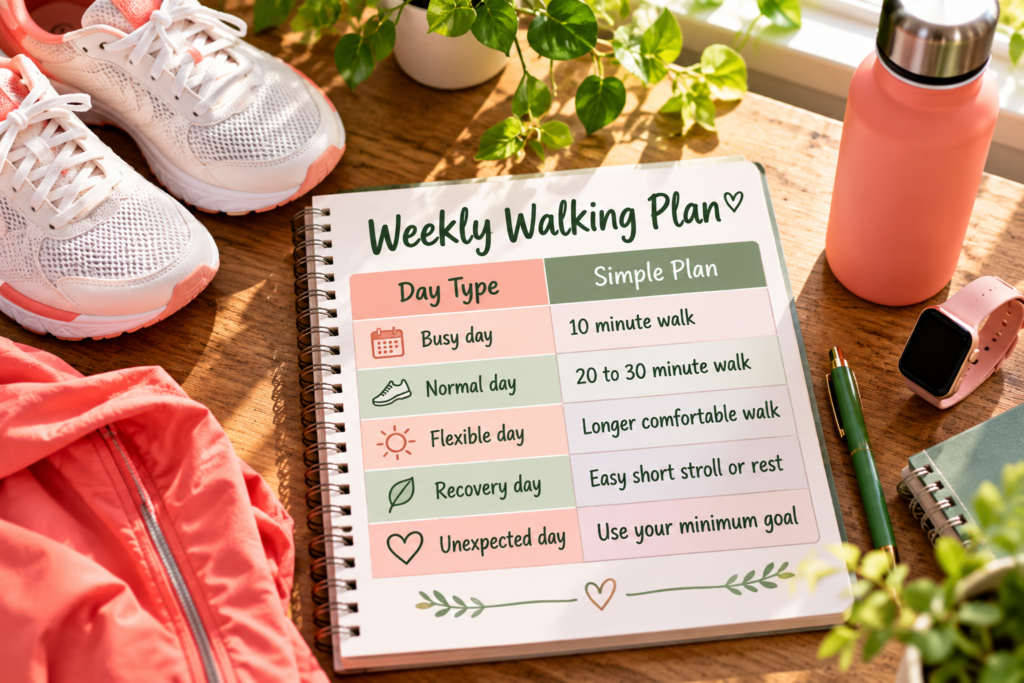
Image Description: Simple weekly planner on a wooden desk beside white walking sneakers, coral water bottle, fitness watch, and green pen, sunlight across the page, leafy plant in background, warm neutral palette, realistic lifestyle photography, overhead three-quarter camera angle.
| Day Type | Simple Plan |
|---|---|
| Busy day | 10 minute walk |
| Normal day | 20 to 30 minute walk |
| Flexible day | Longer comfortable walk |
| Recovery day | Easy short stroll or rest |
| Unexpected day | Use your minimum goal |
A weekly pattern gives your movement habit structure without requiring identical sessions. Keep shorter walks available for demanding days and longer outings for days with more free time. This approach makes consistency more realistic because your schedule can change while the overall habit remains present throughout the week.
Refresh Walking Gear
Image Description: Organized walking gear display with coral lightweight jacket, olive leggings, colorful sneakers, reusable water bottle, fitness watch, sunglasses, and small waist pouch arranged on a wooden bench, soft natural window light, warm green and peach palette, realistic Pinterest lifestyle photography, overhead angle.
DO
- Wash and rotate frequently used walking clothes.
- Keep socks paired and ready.
- Check shoe condition regularly.
- Store gear in one accessible location.
DON’T
- Wait until everything is scattered before preparing.
- Ignore worn soles or damaged footwear.
- Buy unnecessary equipment for a simple walk.
- Let complicated gear requirements delay your outing.
A simple gear refresh can remove small annoyances that gradually discourage regular walking. Focus on comfort and convenience rather than collecting equipment. Keep a dependable set of clothes, footwear, and essentials ready for ordinary sessions. The simpler your setup, the fewer preparation steps stand between you and the front door.
Use Walking Rewards
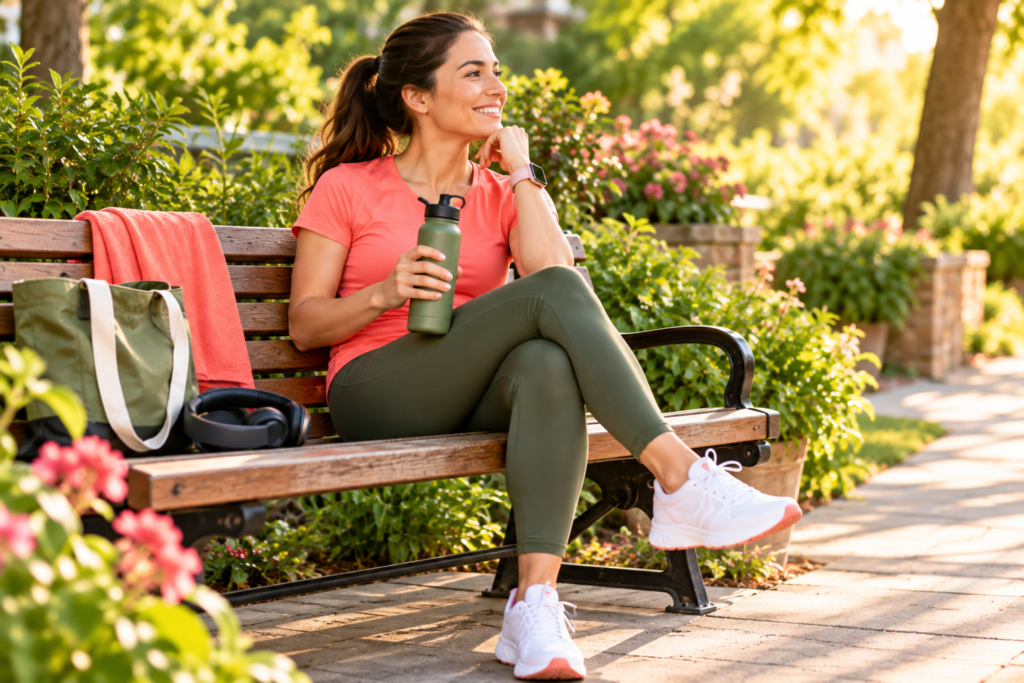
Image Description: Woman returning from a neighborhood walk and relaxing on a small outdoor bench with a reusable water bottle, coral athletic shirt, olive leggings, white sneakers, leafy plants surrounding the area, soft late-afternoon sunlight, warm peach and green palette, realistic lifestyle photography, eye-level perspective.
Cost: Free | Choose rewards you already enjoy.
Time: 5 to 15 minutes after walking.
Best For: Building a consistent beginner habit.
Works In: Home, outdoors, or indoor walking spaces.
A simple reward can give your routine a pleasant finish without turning food or purchases into requirements. Listen to a favorite podcast afterward, enjoy a quiet shower, or spend a few minutes relaxing outdoors. The reward should reinforce the habit without becoming something you need every time to keep moving.
Break Long Sitting Periods
Image Description: Woman standing from a home office desk for a short walk, coral athletic shirt, olive leggings, white sneakers, laptop and wooden desk behind her, bright window light, green houseplant, warm neutral palette, realistic lifestyle photography, side-angle perspective with clean textures.
Long stretches of sitting can make the day feel inactive even when you complete one dedicated walk. Add brief movement breaks between work tasks, study sessions, or extended screen time. A few minutes of walking around the home or outside can provide another opportunity to move without replacing your main exercise session.
Set a simple cue such as standing after finishing a meeting or completing a chapter. Walk around the room, hallway, or building for several minutes before returning to your task. I’ve found that linking movement to natural work breaks feels less disruptive than waiting for a large block of free time.
Make Walks Social
Image Description: Two women walking together along a sunny tree-lined park path, one wearing a coral athletic shirt and olive leggings, the other in a soft yellow top and blue leggings, white sneakers, relaxed conversation, warm natural sunlight, realistic Pinterest fitness photography, eye-level side view.
Quick Tip: Invite one friend, family member, or neighbor for a regular walking session. Pick a simple route and agree on a realistic time so neither person has to coordinate from scratch every day.
A walking partner can add conversation and accountability while keeping the activity comfortable. Choose someone whose schedule and preferred pace are reasonably compatible with yours. If meeting in person becomes difficult, an occasional check-in message can still help maintain awareness of your weekly movement goals without creating pressure.
Conclusion
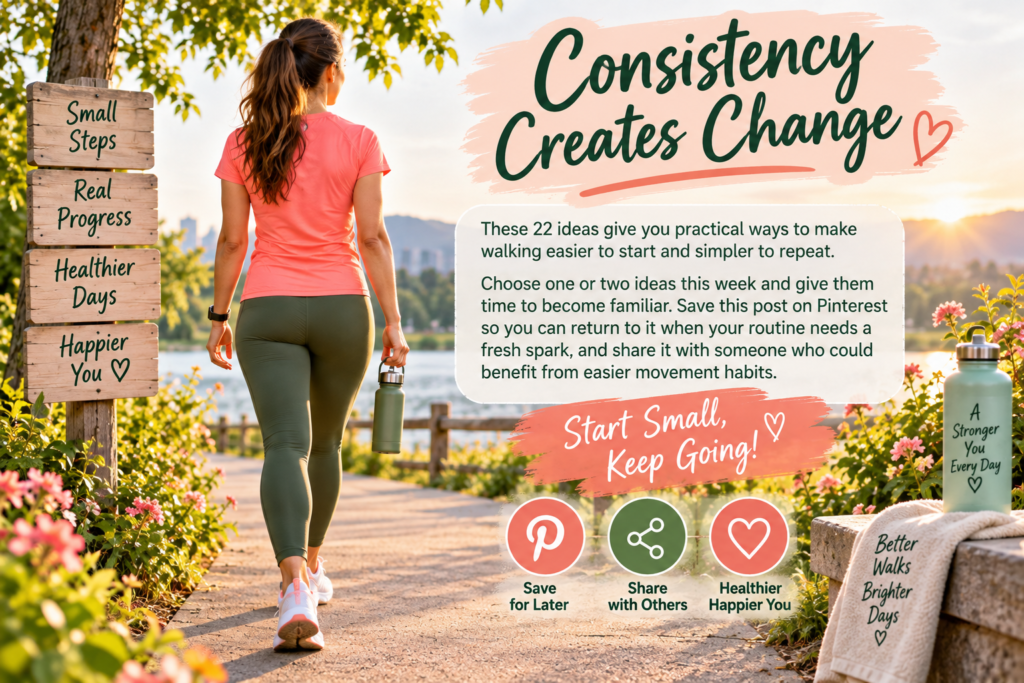
Consistency does not come from making every walk longer or harder. It comes from creating habits that fit real life, including busy mornings, changing schedules, bad weather, and low-energy days. These 22 ideas give you practical ways to make walking easier to start and simpler to repeat.
I’ve noticed that small adjustments can remove surprisingly large barriers. Choose one or two ideas this week and give them time to become familiar. Save this post on Pinterest so you can return to it when your routine needs a fresh spark, and share it with someone who could benefit from easier movement habits. Start small, keep going, and let consistency build.