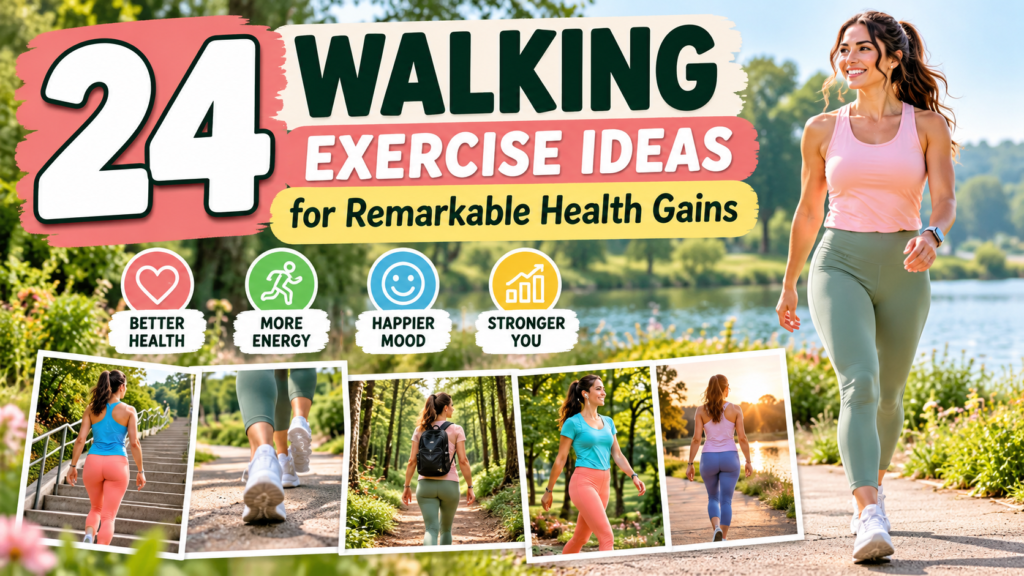
24 Walking Exercise Ideas for Remarkable Health Gains
INTRODUCTION
A simple walk can become much more than a few minutes outside. With the right approach, walking exercise can add variety, build endurance, support daily movement, and make staying active feel far more manageable.
You do not need an expensive gym membership or a complicated routine to get started. A neighborhood sidewalk, park path, treadmill, or even a safe indoor space can become part of your movement routine. The key is knowing how to change your pace, route, incline, duration, and walking style so your sessions stay useful and interesting.
This guide brings together 24 practical ideas you can adapt to different fitness levels, schedules, and energy levels. In my experience, small changes often make regular movement easier to maintain because the routine feels less repetitive. Start with one idea that fits your day, then build from there.
Brisk Pace Bursts
Image Description: Athletic woman walking briskly on a sunny park path, coral workout top, navy leggings, white sneakers, leafy green trees, warm natural morning light, subtle golden glow, clean paved trail, soft background blur, energetic Pinterest fitness aesthetic, three-quarter side camera angle.
A few faster minutes can change an ordinary walk into a more purposeful workout. Start at a comfortable pace, then increase your speed until your breathing becomes noticeably quicker while you can still speak in short sentences. Hold that pace for one to three minutes.
Return to an easy pace for recovery, then repeat several times. I’ve noticed that short bursts feel more manageable than trying to walk fast for an entire session. They also give a familiar route more variety, especially when motivation starts fading.
Park Loop Intervals
Image Description: Fit woman completing intervals around a lush city park loop, teal athletic shirt, black leggings, bright sneakers, tall trees, curved walking path, soft afternoon sunlight, natural shadows, water bottle nearby, vibrant green surroundings, crisp lifestyle photography, slightly elevated camera perspective.
- Choose a loop that takes about five to ten minutes to complete.
- Walk the first section at an easy, relaxed pace.
- Increase your speed along the next section.
- Recover with slower walking before repeating the pattern.
- Keep your posture tall and your steps controlled.
Changing intensity by sections makes the session easier to follow without constantly watching a timer. For beginners, start with one faster section per loop and gradually add more. A park loop also provides natural landmarks, so the workout feels like moving from one small goal to another.
Posture Power Walk
Image Description: Woman walking confidently along a clean residential sidewalk, lavender athletic top, olive leggings, supportive white sneakers, shoulders relaxed, arms swinging naturally, bright morning sunlight, tidy homes and trees in background, soft shadows, realistic fitness photography, eye-level front three-quarter view.
Quick Tip:
Keep your head level, shoulders relaxed, chest comfortably open, and arms moving naturally. Let your feet land underneath your body rather than reaching far ahead. Think tall posture rather than rigid posture, especially when fatigue begins to affect your form.
A stronger walking posture can make each step feel more controlled and comfortable. Keep your gaze several feet ahead instead of looking down continuously. I’ve noticed that checking posture every few minutes helps prevent the shoulders from creeping upward. This simple adjustment works well during errands, outdoor walks, and dedicated exercise sessions.
Hill Climb Walking
Image Description: Fit woman walking uphill on a paved green park trail, bright yellow athletic top, deep blue leggings, white sneakers, tall trees and gentle hillside, crisp morning sunlight, soft natural shadows, fresh outdoor atmosphere, realistic Pinterest fitness photography, low three-quarter camera angle emphasizing the incline.
BEFORE:
A flat route may feel comfortable but offer little variation in effort. The same pace can become repetitive, especially after several weeks of regular walking.
AFTER:
A gentle incline makes each step more demanding without requiring a faster pace. The legs and glutes work harder while the heart rate rises naturally.
Choose a manageable hill and shorten your stride as the slope increases. Keep your torso upright instead of leaning heavily forward. Walk uphill for 30 to 90 seconds, then recover on level ground or a gentle descent. Beginners can repeat this two or three times before gradually adding more rounds.
Timed Walking Ladder
Image Description: Active woman following a timed walking ladder on a quiet outdoor trail, turquoise workout shirt, plum leggings, running shoes, smartwatch visible, leafy trees, warm late-morning sunlight, smooth path, soft golden highlights, realistic lifestyle photography, side-angle composition with clear depth.
- Begin with 5 minutes at an easy pace.
- Walk briskly for 2 minutes, then recover for 2 minutes.
- Increase the brisk interval to 3 minutes.
- Continue alternating effort and recovery for several rounds.
- Finish with 5 relaxed minutes.
A timed ladder gives your session a clear structure without making it complicated. The gradual increase encourages you to challenge yourself while keeping recovery periods built in. If three-minute brisk intervals feel too demanding, repeat the two-minute version instead. Consistency matters more than forcing a pace that leaves you exhausted.
Treadmill Incline Walk
Image Description: Woman exercising on a modern treadmill in a bright home fitness room, soft peach athletic top, charcoal leggings, white sneakers, treadmill display visible, light wood flooring, indoor plants, large window with natural daylight, warm neutral palette, realistic fitness photography, side perspective.
| Option A | Option B |
|---|---|
| Flat treadmill | Gentle incline |
| Steady effort | Gradually increasing effort |
| Useful for easy sessions | Useful for added challenge |
| Lower perceived intensity | Higher perceived intensity |
A treadmill becomes more versatile when you adjust its incline instead of relying only on speed. Start flat for several minutes, then add a modest incline while maintaining comfortable steps. Hold the rails only when necessary for safety, since excessive support can change your natural walking mechanics and reduce the challenge.
Arm Swing Walking
Image Description: Fit woman walking on a sunny botanical garden path, soft pink athletic top, sage green leggings, white sneakers, relaxed natural arm swing, flowering plants and leafy trees, warm morning light, gentle highlights, realistic Pinterest fitness photography, eye-level side perspective with shallow background blur.
DO:
- Keep elbows comfortably bent while walking.
- Swing arms naturally from the shoulders.
- Match the arm movement to your walking rhythm.
- Relax your hands instead of clenching your fists.
DON’T:
- Force your arms into exaggerated movements.
- Shrug your shoulders toward your ears.
- Swing across your body aggressively.
- Tighten your neck or upper back.
A natural arm swing helps create a smoother rhythm and coordinated movement. Keep the motion relaxed rather than trying to make every swing large. I’ve noticed that loosening the hands and shoulders first often makes the entire stride feel easier. This approach works especially well during brisk outdoor walks or longer fitness sessions.
Walk And Recover
Image Description: Woman alternating walking speeds on a peaceful riverside trail, sky blue athletic shirt, rust-colored leggings, white sneakers, water bottle nearby, tall grasses and trees, soft early evening sunlight, warm glow, natural textures, realistic fitness photography, wide side-angle composition.
Cost: Free
Time: 20 to 30 minutes
Skill Level: Beginner
Best For: Building consistency
Works In: Parks, sidewalks, treadmills
Alternating comfortable and faster periods gives your body clear changes in effort without making the whole session demanding. Walk easily for two minutes, then increase your pace for one minute. Repeat the cycle several times. As your fitness improves, extend the brisk periods while keeping recovery controlled and comfortable.
Diagonal Trail Steps
Image Description: Athletic woman walking diagonally across a wide outdoor fitness trail, orange workout top, forest green leggings, white sneakers, textured gravel path, tall trees, filtered sunlight, soft natural shadows, fresh earthy palette, realistic Pinterest fitness photography, elevated three-quarter camera angle showing foot placement clearly.
A simple change in direction can make a familiar route feel completely different. Instead of following a perfectly straight line throughout the session, use safe, wide sections of a trail to introduce gentle diagonal steps.
Keep the movements controlled and avoid crossing your feet. Take several diagonal steps, return to your normal direction, and repeat after a short recovery. Choose a smooth surface with plenty of space. This variation adds coordination practice while keeping the session visually interesting and active.
Stair Walking Repeats
Image Description: Fit woman walking up broad outdoor park stairs, royal blue athletic top, coral leggings, white sneakers, leafy trees surrounding stone steps, bright natural daylight, soft shadows, clean energetic composition, realistic Pinterest fitness photography, low side camera angle highlighting the staircase and controlled movement.
Quick Tip:
Start with a short staircase and climb at a steady pace rather than rushing. Walk back down carefully for recovery, using the railing when needed for balance. Begin with two or three repeats, then increase gradually as the movement becomes more comfortable.
Stair climbing adds resistance because your body must lift against gravity with every step. Keep your steps controlled and maintain an upright torso. For extra consistency, count completed climbs rather than chasing speed. Stop if you feel sharp pain, unusual dizziness, or difficulty maintaining safe footing.
Landmark Pace Changes
Image Description: Active woman walking along a scenic neighborhood path, mint green athletic shirt, burgundy leggings, white sneakers, smartwatch, trees and colorful houses in soft background, clear afternoon sunlight, natural shadows, realistic lifestyle photography, eye-level perspective with visible sidewalk landmarks.
- Pick three to five visible landmarks along your route.
- Walk easily until you reach the first landmark.
- Increase your pace between the next two landmarks.
- Return to a comfortable speed afterward.
- Repeat the pattern throughout your walk.
Landmark intervals remove the need to constantly check a watch. A mailbox, tree, bench, crossing, or park entrance can become your next pacing target. This method works especially well for people who lose interest during repetitive sessions because each section gives you a small, immediate goal to reach.
Long Stride Practice
Image Description: Woman practicing controlled longer steps on a wide park walkway, lavender athletic shirt, teal leggings, light-colored sneakers, mature trees, textured pavement, warm golden-hour sunlight, soft background blur, natural shadows, realistic fitness photography, side profile showing relaxed stride and upright posture.
| Old Way | Better Way |
|---|---|
| Reaching far ahead | Keeping steps controlled |
| Leaning forward | Staying upright |
| Forcing a large stride | Slightly extending naturally |
| Ignoring balance | Maintaining steady foot placement |
A slightly longer natural stride can add variety without turning the session into a race. Focus on smooth movement rather than taking the biggest possible steps. Your foot should remain easy to control, and your balance should feel stable. If extending your stride causes discomfort, return to your usual step length and maintain a comfortable rhythm.
Recovery Walk
Image Description: Woman taking a relaxed recovery walk through a quiet botanical garden, soft lavender athletic top, light green leggings, comfortable sneakers, leafy plants, wooden bench, warm morning sunlight, gentle shadows, muted natural palette, peaceful Pinterest fitness aesthetic, eye-level camera angle with shallow background blur.
DO:
- Keep the pace comfortable enough for easy conversation.
- Let your shoulders and hands stay relaxed.
- Choose a flat, familiar route.
- Finish feeling refreshed rather than depleted.
DON’T:
- Turn recovery into a race.
- Add steep hills when you feel tired.
- Ignore unusual pain or dizziness.
- Judge the session by speed alone.
A lighter session can still support an active routine. Recovery-focused walking keeps you moving while giving your body a break from harder efforts. I’ve noticed that an easy stroll can also make it easier to stay consistent across the week. Keep this session relaxed, especially after challenging workouts or unusually busy days.
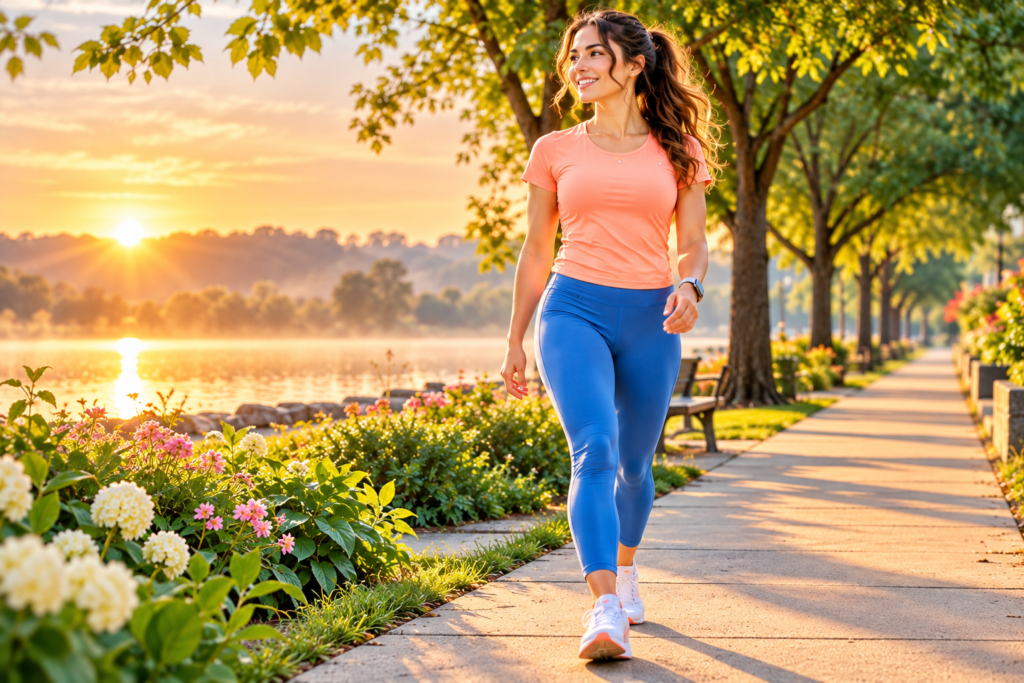
Morning Sun Walk
Image Description: Woman walking along a tree-lined sidewalk during early morning, peach athletic top, cobalt leggings, white sneakers, golden sunrise light, long soft shadows, leafy trees, subtle mist, warm natural color palette, realistic Pinterest fitness photography, front three-quarter camera angle with bright open background.
Best For: Morning routines
Time: 15 to 30 minutes
Skill Level: Beginner
Setting: Outdoor paths
Equipment: Comfortable shoes
Starting the day with movement can create a simple anchor for your routine. Keep the first few minutes gentle, then settle into a comfortable pace. If mornings feel rushed, shorten the session instead of skipping it completely. A repeatable 15-minute habit can be easier to maintain than an ambitious routine that rarely fits your schedule.
Music-Paced Walking
Image Description: Fit woman walking confidently on a modern city park path with wireless earbuds, bright turquoise athletic top, warm coral leggings, white sneakers, green trees and clean pavement, soft afternoon sunlight, subtle glow, realistic Pinterest lifestyle photography, dynamic side angle showing natural movement.
Music can give your steps a steady rhythm and make a familiar route feel more engaging. Choose a playlist with a comfortable beat, then match your pace naturally rather than forcing every step to the music.
Keep the volume low enough to hear nearby traffic, cyclists, or other people. For outdoor sessions, awareness matters as much as motivation. Alternate energetic songs with calmer tracks if you want natural changes in intensity without constantly checking your watch.
Weighted Vest Walk
Image Description: Fit woman walking on a smooth outdoor park trail wearing a lightweight weighted vest, dusty rose athletic top, olive leggings, white sneakers, lush green trees, warm morning sunlight, soft shadows, natural earthy palette, realistic Pinterest fitness photography, side three-quarter camera angle with clear full-body framing.
Quick Tip:
Extra weight changes the demands of walking, so start conservatively. A comfortable, unweighted session should already feel familiar before adding resistance. Keep the vest secure and maintain your normal posture rather than leaning forward to compensate.
A weighted vest can increase the challenge of a routine walk, but it is not necessary for improving fitness. Begin with short sessions on level ground and pay attention to your knees, hips, ankles, and back. Anyone with joint problems or other health concerns should ask a qualified professional before adding external load.
Neighborhood Route Mix
Image Description: Woman walking through a colorful residential neighborhood, sunny yellow athletic top, teal leggings, light sneakers, tree-lined sidewalks, small gardens, crosswalks and gentle slopes, bright natural daylight, soft shadows, realistic Pinterest fitness photography, elevated three-quarter perspective showing the varied route.
- Choose a safe starting point close to home.
- Add a quiet residential street for steady walking.
- Include a short gentle incline if comfortable.
- Pass a park, shop, or other visible landmark.
- Return using a different safe street when possible.
A varied route keeps familiar exercise from becoming monotonous. Changing scenery also gives you natural reasons to adjust your pace, posture, and attention. Keep traffic conditions in mind, use sidewalks where available, and avoid routes that require unsafe crossings. The best route is one you can repeat comfortably and consistently.
Indoor Walking Circuit
Image Description: Woman completing an indoor walking circuit in a bright home, soft blue athletic shirt, coral leggings, supportive sneakers, open wood floor, yoga mat, small chair and water bottle placed nearby, large windows, natural daylight, clean modern setting, realistic fitness photography, wide-angle view.
| Option A | Option B |
|---|---|
| Walk around one room | Move through several safe areas |
| One steady pace | Alternate easy and brisk periods |
| Minimal direction changes | Add gentle turns |
| Simple routine | More varied movement |
Indoor walking works well when weather, safety, or time makes an outdoor session inconvenient. Clear the floor first and remove loose rugs or objects that could cause trips. Walk between designated points for several minutes, then change direction or pace. A simple indoor circuit can keep your routine moving without requiring special equipment.
Hill Recovery Walk
Image Description: Woman walking slowly along a gentle hillside trail after an uphill interval, soft coral athletic top, sage green leggings, light sneakers, tall grass and leafy trees, warm afternoon sunlight, subtle golden glow, natural earth tones, realistic Pinterest fitness photography, rear three-quarter camera perspective.
DO:
- Slow your pace after a challenging climb.
- Use level ground for easier recovery.
- Take relaxed, controlled steps.
- Resume faster walking only when breathing settles.
DON’T:
- Rush downhill to make up time.
- Take oversized steps on steep sections.
- Continue hard efforts while excessively fatigued.
- Ignore unstable or slippery surfaces.
A planned recovery period helps you manage harder sections without turning the entire session into maximum effort. After an incline, reduce your speed and let your breathing settle naturally. Keep your footing secure, especially on descents. This approach is useful for beginners who want more variety without making every minute intensely demanding.
Errand Walking Route
Image Description: Active woman walking through a clean neighborhood shopping district with reusable tote bag, sky blue athletic shirt, rust leggings, comfortable sneakers, leafy sidewalks, small storefronts, bright daylight, warm natural palette, realistic Pinterest lifestyle photography, eye-level side perspective showing purposeful movement.
Cost: Free
Time: 20 to 45 minutes
Skill Level: Beginner
Best For: Busy schedules
Setting: Neighborhood routes
Turning necessary errands into extra movement can make an active routine feel more practical. Walk to a nearby shop, pharmacy, café, or community location when the distance and route are safe. Keep the pace purposeful, carry only a manageable load, and allow enough time so you do not need to rush.
Talk Test Walk
Image Description: Woman walking briskly beside a friend on a leafy park path, mint green athletic top, peach leggings, white sneakers, bright natural daylight, soft greenery, subtle warm glow, realistic Pinterest fitness photography, side-angle composition showing relaxed conversation and steady movement.
A simple conversation check can help you gauge effort without relying entirely on a fitness tracker. Start comfortably, then increase your pace until your breathing becomes noticeably faster while speaking remains possible.
If talking becomes difficult, slow down for recovery. This approach provides a practical way to adjust intensity based on how you feel during the session. I’ve found that simple effort cues can be easier to follow than chasing a specific number, particularly for people new to structured exercise.
Sunset Walking Loop
Image Description: Woman walking along a peaceful park loop at sunset, dusty pink athletic top, deep teal leggings, white sneakers, glowing orange and lavender sky, tree-lined path, warm golden light, long soft shadows, natural textures, realistic Pinterest fitness photography, wide three-quarter camera angle with gentle background blur.
Quick Tip:
Choose a familiar, well-lit route and finish before visibility becomes poor. Keep your phone accessible and stay aware of traffic, cyclists, and other pedestrians. A 20-minute loop is enough to create a calming evening routine without requiring a long workout.
An evening walk can provide a simple transition between daytime responsibilities and bedtime. Keep the first few minutes relaxed, then settle into a steady pace that feels sustainable. If you notice that vigorous activity close to bedtime affects your sleep, finish earlier or keep the session gentle.
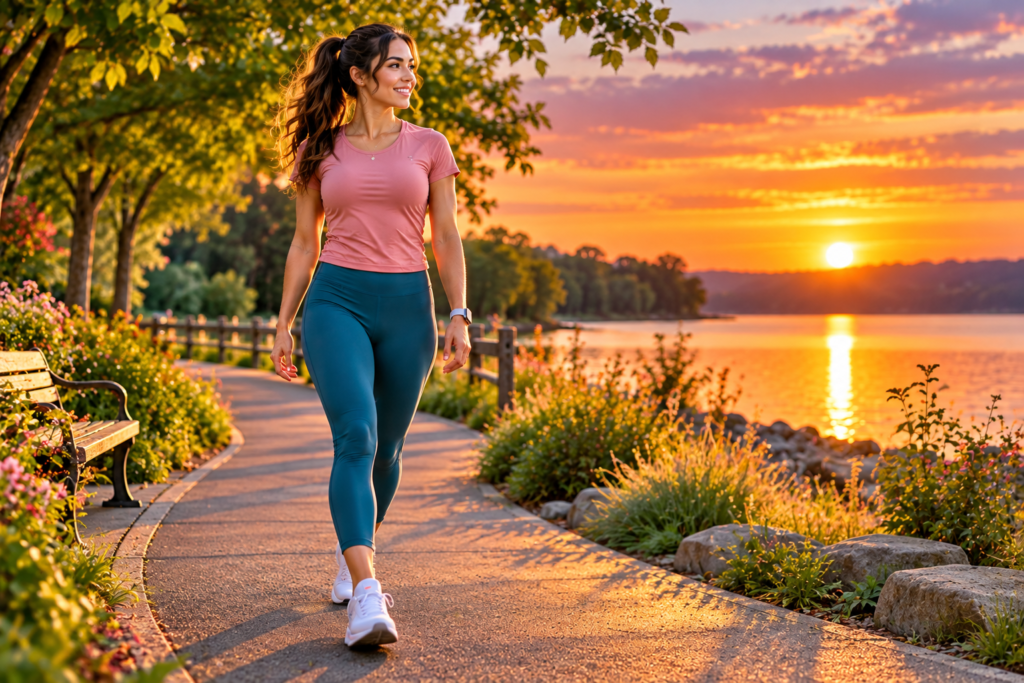
Short Lunch Walk
Image Description: Professional-looking woman walking outside during a bright lunch break, emerald green athletic top, beige leggings, white sneakers, modern office buildings mixed with leafy trees, clear midday sunlight, soft shadows, clean urban pathway, realistic Pinterest fitness photography, eye-level side perspective.
- Set aside 10 to 20 minutes during your break.
- Start with two minutes of easy walking.
- Increase to a purposeful pace for most of the route.
- Slow down during the final two minutes.
- Return to work after a brief water break if needed.
Short sessions can fit into a busy schedule more easily than waiting for a large block of free time. Keep your route close to work or home so travel does not consume the break. Even a brief bout of movement adds useful activity to the day and gives you a practical reason to step away from your desk.
Trail Texture Walk
Image Description: Fit woman walking carefully along a smooth natural park trail with mixed surfaces, bright orange athletic top, forest green leggings, neutral sneakers, packed dirt, wooden bridges and leafy trees, filtered sunlight, earthy textures, realistic Pinterest fitness photography, low three-quarter camera angle emphasizing the trail surface.
| Option A | Option B |
|---|---|
| Smooth paved path | Firm natural trail |
| Predictable surface | More varied texture |
| Easier footing | Greater attention required |
| Simple route | More environmental variety |
A firm natural trail can add variety to a regular walking routine, but surface quality matters. Choose packed, stable paths rather than loose rocks, deep mud, or uneven terrain when starting out. Shorten your stride and watch the ground ahead. Supportive footwear can help you feel more secure as the surface changes.
Weekend Distance Walk
Image Description: Fit woman walking along a scenic lakeside path on a bright weekend morning, soft blue athletic top, coral leggings, white sneakers, green trees, calm water, clear sky, warm natural sunlight, subtle reflections, realistic Pinterest fitness photography, wide-angle side perspective showing the full walking route.
DO:
- Choose a route with safe, accessible surfaces.
- Bring water for longer sessions.
- Start at a comfortable pace.
- Plan a turnaround point before fatigue builds.
DON’T:
- Increase distance dramatically in one session.
- Ignore persistent foot or joint discomfort.
- Skip rest after unusually demanding activity.
- Let pace become more important than control.
A longer weekend session can gradually build your comfort with sustained movement. Keep increases modest, especially if your weekday activity is shorter. I’ve noticed that choosing a scenic destination or familiar loop makes longer walks feel less tedious. Finish with enough energy left to handle the rest of your day comfortably.
Walk And Stretch
Image Description: Woman finishing an outdoor walk beside a quiet garden, wearing a lavender athletic top, sage leggings, and white sneakers, gently stretching calves near a park bench, leafy plants, warm natural sunlight, soft shadows, peaceful neutral palette, realistic Pinterest fitness photography, side three-quarter view.
Cost: Free
Time: 20 to 35 minutes
Skill Level: Beginner
Best For: Post-walk routine
Equipment: Optional mat
Combining a comfortable walk with a few gentle stretches creates an easy finish to an active session. Walk first while your body gradually warms up, then use simple movements for areas that feel tight. Avoid bouncing or forcing a stretch. The goal is comfortable mobility, not pushing into pain.
Step Count Blocks
Image Description: Active woman walking through a bright urban park while checking a smartwatch, cobalt blue athletic top, soft pink leggings, white sneakers, leafy trees, paved path, natural afternoon light, gentle shadows, realistic Pinterest fitness photography, over-the-shoulder three-quarter camera angle with watch visible.
Quick Tip:
Break your daily movement into several smaller blocks instead of waiting for one long workout. A short morning walk, a few minutes after lunch, and another evening stroll can collectively build substantial activity. Focus on completing manageable blocks rather than becoming fixated on reaching one exact step number.
Small movement opportunities can add up across an ordinary day. Park slightly farther away, walk during a phone call, or take a brief route after a meal when practical. The key is consistency and comfort. Step counts can provide useful feedback, but they should support your routine rather than become a source of pressure.
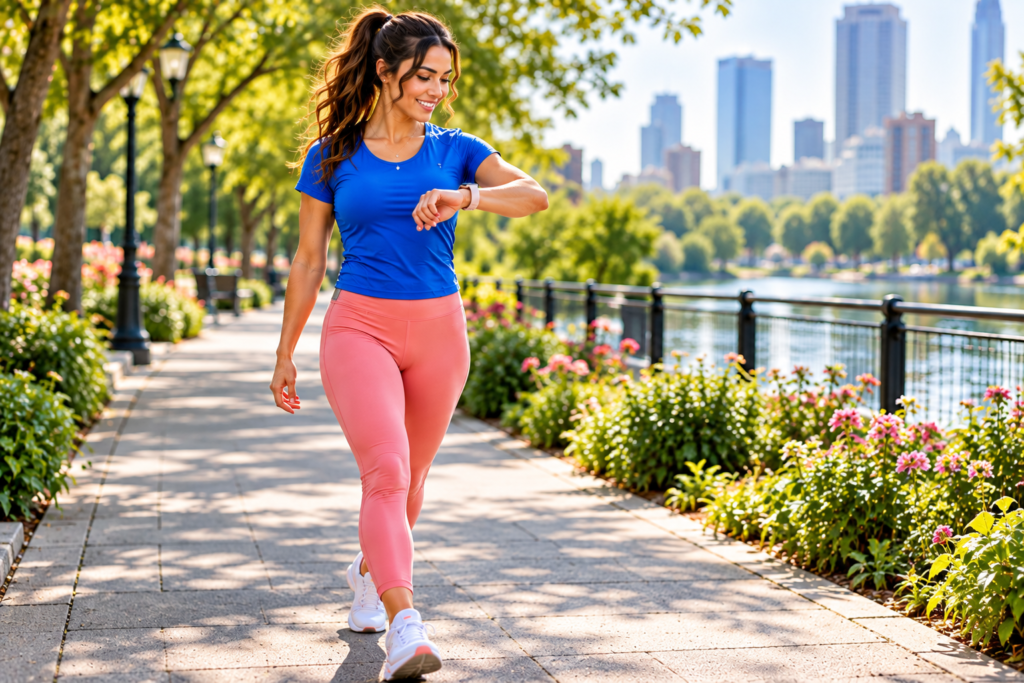
Backward Walking Practice
Image Description: Fit woman carefully practicing backward walking on a wide, empty outdoor track, turquoise athletic top, coral leggings, white sneakers, smooth rubber surface, open green field, bright natural daylight, soft shadows, realistic Pinterest fitness photography, side three-quarter camera angle showing controlled foot placement and clear surroundings.
Backward walking should be treated as a coordination exercise, not a speed challenge. Choose a flat, obstacle-free surface and begin with a few slow steps while looking over your shoulder as needed. Having a spotter nearby can provide additional safety when learning the movement.
Keep your steps short and controlled, then return to forward walking after a brief interval. Avoid crowded paths, stairs, uneven ground, or situations where you cannot clearly monitor obstacles. This variation can add a coordination element to an otherwise familiar routine, but safety should always come first.
Breathing Rhythm Walk
Image Description: Woman walking calmly through a peaceful tree-lined park, wearing a soft peach athletic top, olive green leggings, and white sneakers, relaxed posture, bright morning light, gentle shadows, lush foliage, clean pathway, realistic Pinterest fitness photography, front three-quarter camera angle with airy background.
- Begin with several minutes of comfortable walking.
- Relax your shoulders and keep your jaw loose.
- Breathe naturally while maintaining an easy rhythm.
- Increase your pace slightly if breathing remains comfortable.
- Slow down when you need more recovery.
Paying attention to breathing can help you notice how your effort changes during a session. There is no need to force a specific breathing pattern. Let your breathing remain natural and use it as a practical signal. If you become unusually breathless, reduce the intensity and allow yourself time to recover before continuing.
Walking Meditation
Image Description: Woman walking slowly through a serene botanical garden, pale blue athletic top, muted lavender leggings, white sneakers, lush greenery, small stone pathway, soft diffused morning light, subtle glow, peaceful natural textures, realistic Pinterest wellness photography, eye-level side perspective with shallow depth of field.
A slower walk can become a useful mindfulness practice when you give attention to each step. Notice the feeling of your feet contacting the ground, the movement of your arms, your breathing, and the sounds around you.
Keep your pace comfortable and choose a quiet, familiar location where you can move safely. Five to fifteen minutes is enough to begin. I’ve noticed that removing the pressure to walk quickly can make an active routine feel more approachable on stressful or low-energy days.
CONCLUSION
Walking can be simple, flexible, and surprisingly versatile. These 24 walking exercise ideas give you practical ways to vary your pace, route, intensity, timing, and surroundings without making your routine complicated.
I’ve noticed that small changes often make it easier to stay consistent because each session feels a little different. Choose one idea that fits your current fitness level and try it this week. Then save this post on Pinterest so you can return to it whenever your routine needs fresh inspiration. Share the article with a friend or family member who could benefit from more everyday movement. Start with one step, keep going, and let consistency build.