Natural Ways to Reduce Bloating After Meals
Bloating after meals is a common problem for many people. It can make the stomach feel tight, heavy, or uncomfortable. In many cases, bloating happens because of swallowed air, gas in the digestive tract, constipation, or certain foods that are harder for the body to digest.
The good news is that small daily changes can often help. You do not always need extreme diets or complicated routines. A few practical habits may make digestion feel much easier over time.
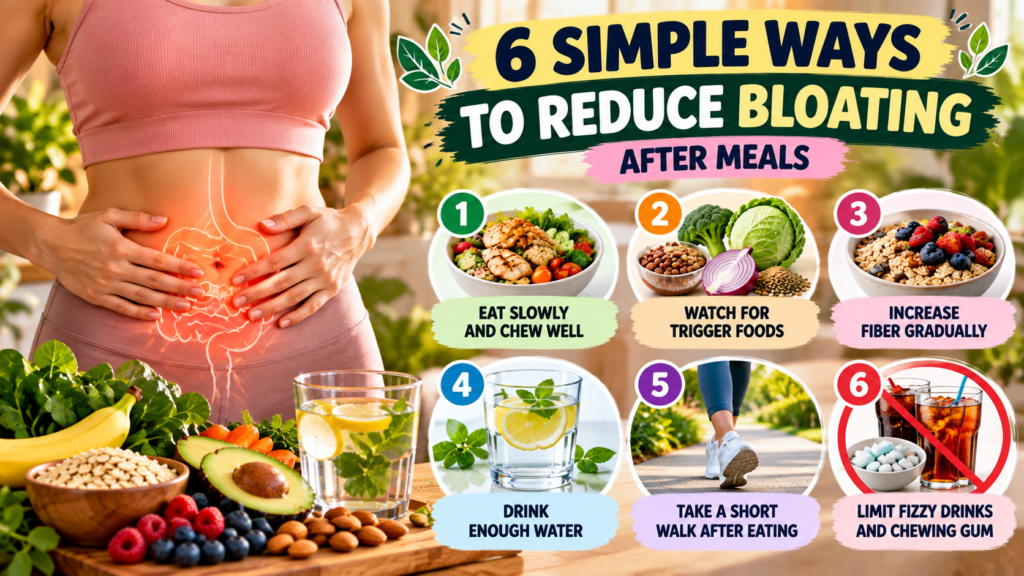
1. Eat Slowly and Chew Your Food Well
Eating too quickly can make you swallow more air, which may increase gas and bloating. Slowing down during meals and chewing properly can help your stomach handle food more comfortably.
2. Watch for Trigger Foods
Some foods are more likely to cause gas in certain people. Common examples include beans, onions, cabbage, lentils, fizzy drinks, and products containing sorbitol or excess fructose. Not everyone reacts the same way, so it helps to notice which foods make your symptoms worse.
3. Increase Fiber Gradually
Fiber supports digestion, but adding too much too quickly can actually make bloating worse at first. A better approach is to increase fiber slowly through foods like oats, fruits, vegetables, and whole grains while giving your body time to adjust.
4. Drink Enough Water
Hydration plays an important role in digestion. Water can help support regular bowel movements and may reduce discomfort linked with constipation and stomach heaviness. If you increase fiber, drinking enough water becomes even more important.
5. Take a Short Walk After Eating
Light physical activity can support digestion and help the body move gas through the digestive tract more comfortably. A short walk after meals is a simple habit that may help reduce that overly full feeling.
6. Limit Fizzy Drinks and Chewing Gum
Carbonated drinks can add extra gas to the stomach, and chewing gum may lead to swallowing more air. Reducing both can be a simple way to cut down bloating.
7. Try Gentle, Practical Food Choices
For some people, simple foods are easier to digest than heavy, greasy, or highly processed meals. Oats and other gentle, balanced foods may be easier on the stomach, especially when symptoms happen often.
When to Get Medical Advice
Occasional bloating is common, but some symptoms should not be ignored. Seek urgent medical help if bloating happens with vomiting, severe stomach pain, fever, a lump or swelling in the abdomen, or if you cannot pass stool or gas.
Final Thoughts
Bloating can be uncomfortable, but simple habits may help a lot. Eating slowly, staying hydrated, choosing foods carefully, and moving your body regularly are practical steps that support better digestion. Small changes done consistently often work better than extreme solutions.
For FactScribe, I’d recommend publishing this next because it fits perfectly with your current home remedies + diet content mix and stays close to the same tone already on your site.