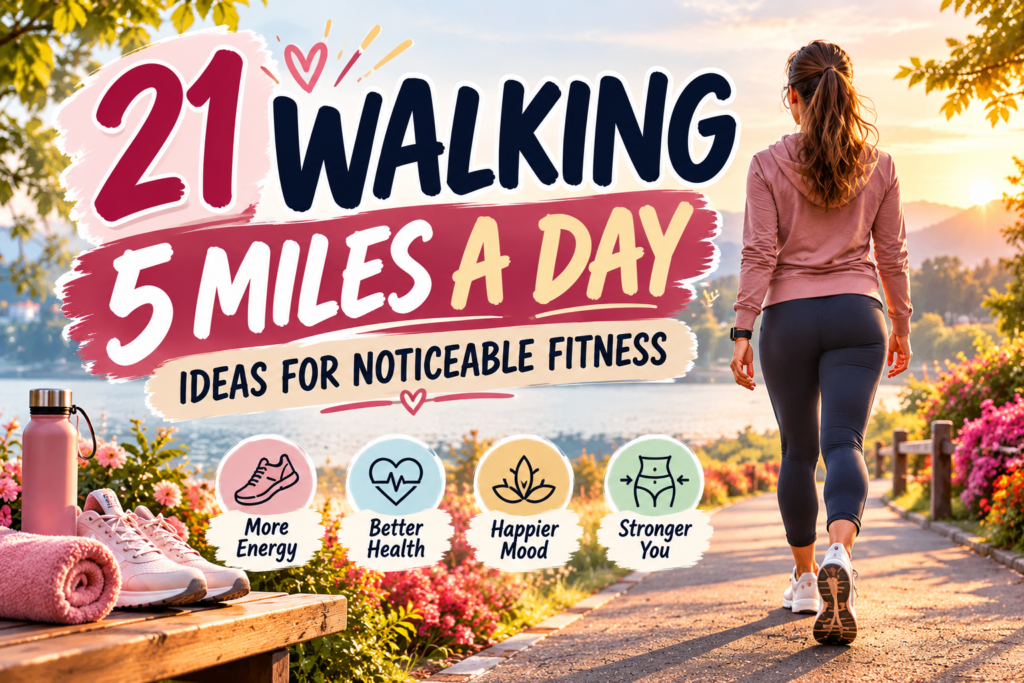
21 Walking 5 Miles a Day Ideas for Noticeable Fitness
Introduction
Want to feel fitter, build stamina, and make daily movement a habit without spending hours at the gym? Walking 5 miles a day can be a motivating fitness goal when you approach it at your own pace.
The best part is that walking doesn’t require expensive equipment or complicated workout plans. A peaceful morning stroll, a brisk walk through the park, or a few shorter sessions throughout the day can all help you stay active. The key is finding a routine that fits your schedule and feels manageable.
In this guide, you’ll discover 21 practical walking ideas to help you improve consistency, make your routes more enjoyable, and gradually build endurance. You’ll also find simple ways to track progress, stay comfortable, and avoid pushing yourself too hard. Whether you’re a beginner or returning to exercise, these ideas can help you take the next step toward a healthier, more active lifestyle.
1. Morning Sunrise Walks
Image Description: A fit adult walking along a peaceful neighborhood path at sunrise, wearing dusty blue athletic leggings, a cream sports top, and white running shoes. Golden sunlight filters through autumn trees, casting long soft shadows across the pavement. Include a subtle fitness watch, warm peach skies, realistic photography, and a clean Pinterest wellness aesthetic.
Early morning walks can make your fitness routine feel calmer and easier to maintain. Start with a quiet neighborhood route while the streets are less crowded and the air feels fresh. The gentle morning light also creates a pleasant environment that makes getting outside more appealing.
Walking before breakfast is a personal choice, not a requirement for better results. If you feel hungry or lightheaded, have a small snack first. Bring water, wear comfortable shoes, and begin at a conversational pace. As your stamina improves, gradually extend your route until five miles feels manageable.
2. Split Walking Sessions
Image Description: A bright, modern fitness flat lay featuring white running shoes, a lavender water bottle, a black fitness tracker, and a folded blush pink workout jacket beside a simple daily walking schedule. Soft natural window light, pale beige flooring, subtle shadows, and an overhead camera angle create a fresh, organized Pinterest fitness aesthetic.
- Morning walk: Cover 1.5 miles before starting your daily responsibilities.
- Lunch break: Walk another mile around your workplace, neighborhood, or nearby park.
- Afternoon break: Add half a mile to stretch your legs after sitting.
- Evening walk: Complete the remaining two miles at a comfortable pace.
- Track your progress: Record each session in a fitness app or notebook.
Breaking your daily distance into smaller sessions can make a five-mile goal less intimidating, especially when work, family, or household tasks fill your schedule. Short walks also interrupt long periods of sitting. Keep your pace comfortable, and remember that the total distance matters more than completing every mile in one session.
3. Brisk Pace Intervals
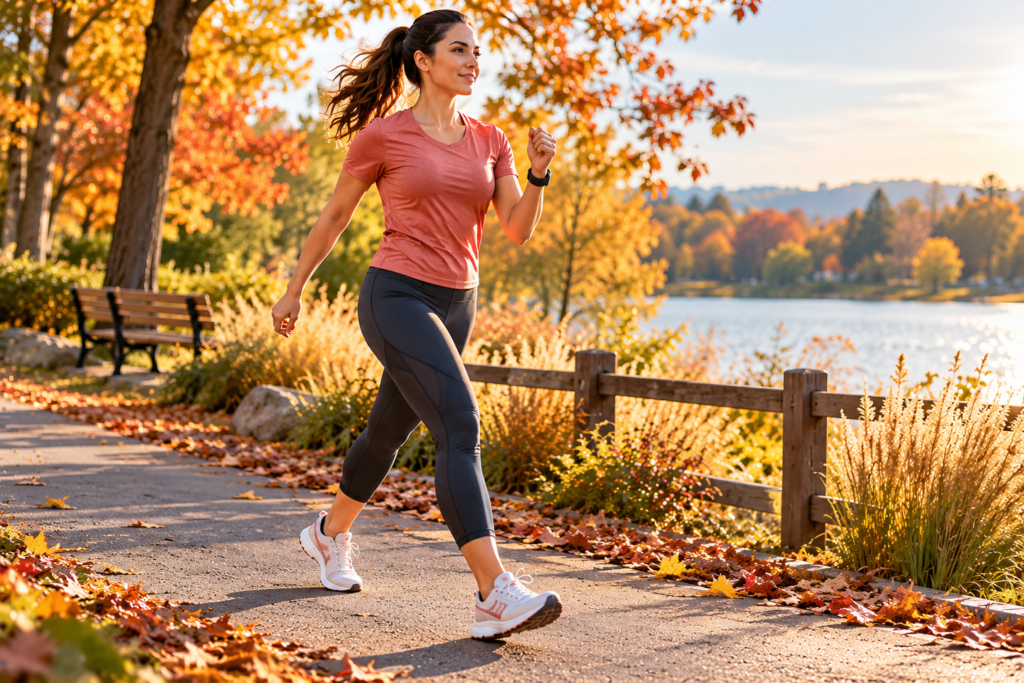
Image Description: A realistic athletic adult power walking on a paved park trail, wearing charcoal leggings, a muted coral performance shirt, and lightweight running shoes. Include a fitness watch on the wrist, green-free neutral landscaping with golden autumn foliage, crisp morning light, and a dynamic side-angle composition emphasizing purposeful movement and natural body posture.
Quick Tip:
Alternate two minutes of brisk walking with three minutes at your normal pace. Repeat the pattern throughout part of your route, adjusting the intervals to your fitness level. Brisk walking should make your breathing faster while still allowing you to speak in short sentences.
Varying your walking speed adds a little more challenge without requiring running or complicated equipment. During a five-mile outing, begin with an easy warm-up, introduce several faster intervals, and finish at a relaxed pace. As your endurance develops, increase the brisk intervals gradually rather than pushing hard from the beginning.
4. Scenic Park Routes
Image Description: A realistic fitness photograph of an adult walking along a winding paved park trail bordered by golden autumn leaves, tall trees, and soft beige grasses. The walker wears navy athletic leggings, a dusty rose jacket, and white sneakers. Warm morning sunlight filters through branches, with a distant wooden bench and peaceful open space.
BEFORE
Walking the same crowded street every day can make your routine feel repetitive. Traffic noise, limited shade, and constant interruptions may also make longer distances less enjoyable.
AFTER
A scenic park route offers changing views, quieter surroundings, and opportunities to enjoy nature while staying active. Markers along the path can help you estimate your distance.
Choosing an enjoyable route can make regular exercise easier to maintain. Search for a nearby park with paved paths, accessible entrances, and reliable distance markers. If the full route covers less than five miles, repeat a loop or combine two paths. Wear visible clothing, carry water, and choose well-lit routes when walking early or late.
5. Fitness Tracker Goals
Image Description: A close-up lifestyle photograph of a person’s wrist wearing a sleek black fitness watch while standing on a sunlit walking trail. White running shoes and a neutral athletic outfit appear softly in the background. Warm beige, charcoal, and muted blue tones, realistic skin texture, natural daylight, and a crisp editorial fitness photography style.
- Set your distance goal. Enter five miles in your walking app or fitness tracker so your target is easy to check.
- Monitor your progress. Check your distance at convenient intervals instead of watching the screen constantly.
- Review your pace. Compare similar routes to see whether your comfortable walking speed changes over time.
- Record your recovery. Note unusual fatigue or soreness and adjust the next day’s activity when needed.
A fitness tracker provides useful feedback, but it does not need to control your entire workout. GPS distances and calorie estimates can be imperfect, so focus on consistent trends rather than exact numbers. I’ve found that recording distance alongside energy levels and comfort can give a more useful picture of progress than tracking steps alone.
6. Treadmill Walking Plan
Image Description: A bright home fitness room featuring a modern treadmill positioned beside a large window with sheer cream curtains. A folded blush towel, clear water bottle, and small digital clock sit on a nearby shelf. Neutral beige walls, warm wood flooring, soft natural daylight, and a wide interior camera angle create an inviting, realistic workout setting.
| Walking Feature | Option A: Steady Pace | Option B: Varied Pace |
|---|---|---|
| Speed | Comfortable, consistent | Alternating comfortable and brisk |
| Incline | Flat or slight incline | Gentle incline intervals |
| Effort | Easy to moderate | Moderate, with recovery periods |
| Best for | Building consistency | Adding variety |
A treadmill makes it easier to maintain your walking routine during rain, extreme heat, or busy evenings. Start with five minutes at an easy pace, then settle into a comfortable speed. If you use an incline, increase it gradually and hold the handrails only when needed for balance. Finish with a few slower minutes.
7. Comfortable Walking Shoes
Image Description: A pair of supportive white and dusty mauve walking shoes placed on a light wooden bench beside a folded cream athletic towel and a charcoal fitness watch. A softly blurred park trail with golden autumn leaves fills the background. Natural morning light, realistic shoe textures, neutral colors, and a clean editorial fitness photography style.
DO:
- Choose shoes with a comfortable fit and enough room for your toes.
- Test them on a short walk before attempting longer distances.
- Wear moisture-wicking socks to help reduce friction and blisters.
- Replace worn shoes when cushioning or support noticeably deteriorates.
DON’T:
- Wear brand-new shoes for your first five-mile outing.
- Ignore persistent heel pain or rubbing.
- Assume the most expensive shoes are automatically the best fit.
- Continue walking through worsening foot pain.
Comfort becomes increasingly important as your daily mileage grows. Shoes that fit well can reduce friction and help you maintain a natural stride, although they cannot prevent every walking injury. Shop later in the day if your feet tend to swell, and try both shoes with your usual walking socks before deciding.
8. Hydration And Water Breaks
Image Description: A clear reusable water bottle, folded blush pink towel, white athletic shoes, and black fitness watch arranged beside a paved walking trail. A person in charcoal leggings and a light beige sports jacket pauses in the background. Soft golden daylight, autumn brown foliage, realistic textures, and a refreshing, minimalist Pinterest fitness aesthetic.
Time: Depends on weather and walking pace.
Best For: Longer walks, warm conditions, and outdoor routes.
Equipment: Reusable water bottle or accessible drinking fountain.
Difficulty: Easy to incorporate into an existing routine.
Result: Better support for normal hydration and temperature regulation.
Staying hydrated helps your body regulate temperature and maintain normal physical function during exercise. For a five-mile walk, carry water when fountains are unavailable, particularly in hot or humid weather. Drink regularly according to thirst and conditions rather than forcing a fixed amount. On especially hot days, shorten your route or walk during cooler hours.
9. Walking With Good Posture
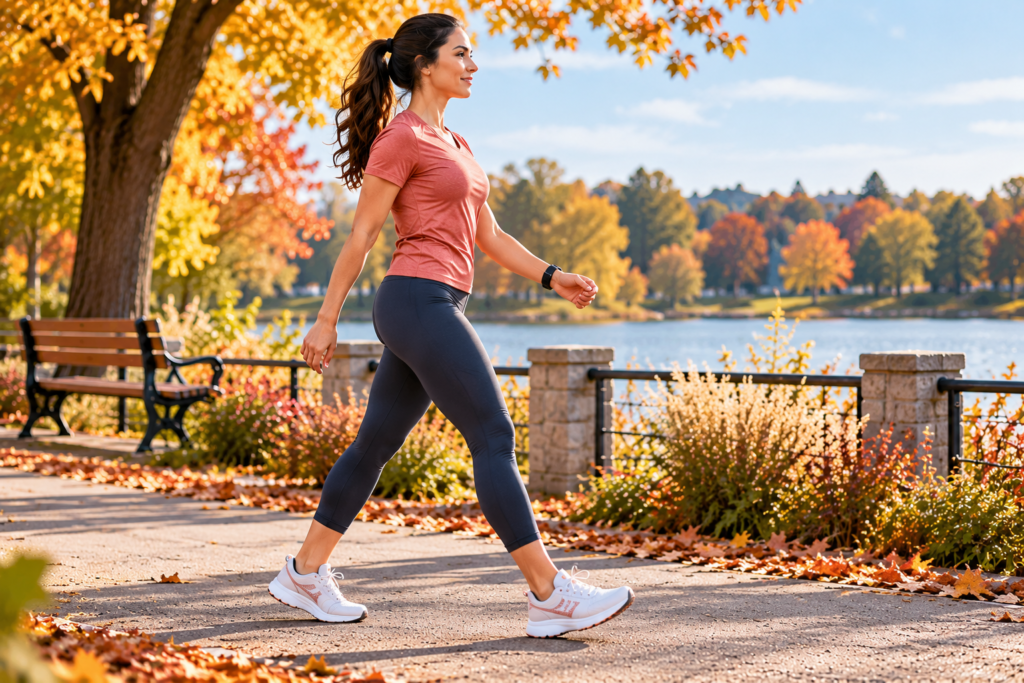
Image Description: A realistic side-view fitness photograph of an adult walking upright on a smooth park path, wearing dark navy leggings, a muted coral athletic shirt, and white walking shoes. Shoulders appear relaxed, arms swing naturally, and eyes look forward. Soft afternoon sunlight, warm neutral scenery, crisp details, and a professional wellness editorial style.
Good walking posture can make longer distances feel more comfortable when you avoid unnecessary tension. Keep your gaze forward, shoulders relaxed, and elbows slightly bent. Let your arms swing naturally while taking comfortable steps. You do not need to hold your stomach tightly or force an exaggerated stride.
Pay attention to how your body feels during the walk. If your shoulders creep toward your ears or your lower back feels strained, slow down and reset your position. In my experience, small posture checks are easier to maintain than trying to control every movement. Comfort and a natural rhythm matter more than achieving a rigid, picture-perfect walking form.
10. Walking With A Friend
Image Description: Two adult friends walking side by side along a peaceful paved park trail, wearing coordinated navy, dusty rose, and cream athletic outfits with comfortable white sneakers. Golden autumn leaves line the path, with soft sunlight filtering through tall trees. Capture natural smiles, relaxed arm movements, realistic textures, and a candid lifestyle fitness photography aesthetic.
- Choose a regular time: Arrange a morning or evening walk that fits both schedules.
- Set a shared distance: Agree on a manageable route and gradually work toward five miles.
- Keep conversation comfortable: Walk at a pace that allows you to talk without gasping.
- Celebrate consistency: Track completed walks together instead of competing over speed.
- Plan a backup: Agree on an indoor walking option when the weather is poor.
Walking with a friend can make exercise more enjoyable and provide gentle accountability on days when motivation is low. You can split the distance into shorter loops and pause briefly when needed. Choose a partner with a similar comfortable pace, and remember that your own fitness level should guide your progress.
11. Gentle Incline Walking
Image Description: An athletic adult walking uphill on a smooth park pathway with a gentle slope, wearing charcoal leggings, a cream long-sleeved athletic top, and white running shoes. Golden brown trees frame the trail, with warm sunlight illuminating the incline. A low side angle emphasizes the gradual slope, natural stride, and realistic outdoor fitness details.
Quick Tip:
Begin with a gentle hill or a treadmill incline that lets you maintain steady breathing. Walk uphill for a short interval, then return to level ground for recovery. Reduce the slope if you need to grip the rails or your walking form begins to change.
Walking uphill increases the effort required from your legs and cardiovascular system compared with walking on level ground at the same speed. You do not need steep hills to benefit. Add one or two gentle inclines to part of your route, then assess how your calves, knees, and breathing feel before increasing the challenge.
12. Recovery Pace Walks
BEFORE
After a demanding workout or a long day on your feet, trying to maintain a fast pace can leave you feeling exhausted. Pushing through persistent soreness may also make it harder to recover comfortably.
AFTER
A slower walk gives you a chance to move without adding as much intensity. Choose flat paths, shorten your distance if necessary, and allow your breathing to settle.
Not every walking session needs to feel like a workout. A comfortable pace can help you maintain your routine while giving your body a break from harder exercise. If you are tired, consider walking fewer than five miles that day. Sharp pain, unusual dizziness, or worsening symptoms are reasons to stop rather than push through.
13. Gradual Distance Increases
Image Description: A cream fitness journal opened to a weekly walking tracker beside white running shoes, a dusty rose water bottle, and a black fitness watch on a warm wooden table. Soft sunlight falls through sheer curtains. Neutral beige and blush tones, realistic paper textures, tidy composition, and an overhead Pinterest wellness photography style.
- Start with your baseline. Record how far you can comfortably walk now without excessive fatigue.
- Build gradually. Add a manageable amount of distance when your current routine feels comfortable.
- Repeat your current level. Give yourself time to adapt before increasing mileage again.
- Review your recovery. Notice soreness, energy levels, and whether you feel ready for another walk.
Building toward five miles works best when you give your body time to adjust. If you currently walk one or two miles, there is no need to rush toward the full distance. Increase your mileage according to your comfort and recovery, and repeat easier weeks whenever your legs feel unusually tired.
14. Neighborhood Walking Loops
Image Description: A sunny residential sidewalk curving past attractive cream-colored houses, brick pathways, wooden fences, and mature trees with golden autumn foliage. An adult in navy athletic leggings, a muted rose jacket, and white sneakers walks along the pavement. Eye-level wide-angle photography, soft natural light, and a calm neighborhood fitness aesthetic.
| Route Feature | Option A: One Long Route | Option B: Repeated Loops |
|---|---|---|
| Planning | Requires more route preparation | Easy to plan near home |
| Breaks | May be harder to schedule | Return home between loops |
| Water access | May require carrying supplies | Convenient access to home |
| Flexibility | Less convenient for interruptions | Easy to shorten or extend |
Neighborhood loops make distance goals easier to organize, especially when your schedule changes unexpectedly. Measure a familiar loop using a mapping app, then calculate how many repetitions reach your target. For example, a one-mile loop requires five rounds. Choose safe sidewalks, cross streets carefully, and vary your route when you need a change of scenery.
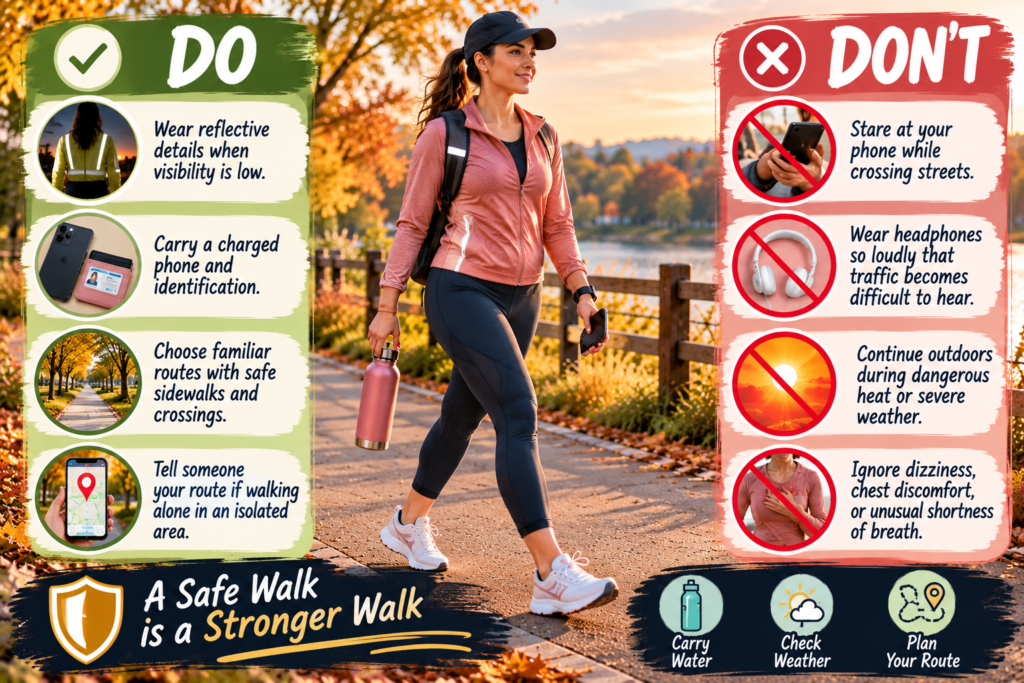
15. Walking Safety Essentials
DO:
- Wear reflective details when visibility is low.
- Carry a charged phone and identification.
- Choose familiar routes with safe sidewalks and crossings.
- Tell someone your route if walking alone in an isolated area.
DON’T:
- Stare at your phone while crossing streets.
- Wear headphones so loudly that traffic becomes difficult to hear.
- Continue outdoors during dangerous heat or severe weather.
- Ignore dizziness, chest discomfort, or unusual shortness of breath.
A safe routine is one you can repeat with confidence. Before heading out for five miles, check the weather, choose a route with accessible rest stops, and carry water when conditions require it. If you feel unwell, stop and seek appropriate help. Consistency matters, but protecting your health always comes first.
16. Fitness Walking Playlist
Image Description: A pair of white wireless earbuds, a black smartphone displaying a generic music player, a charcoal fitness watch, and white running shoes arranged on a light beige wooden bench beside a park trail. Golden autumn leaves blur in the background. Soft afternoon light, realistic textures, muted rose accents, and polished Pinterest fitness photography.
Best For: Walkers who enjoy music or rhythmic motivation.
Equipment: Smartphone, comfortable earbuds, and a playlist.
Cost: Free with many music apps.
Difficulty: Easy to incorporate into daily walks.
Result: A more engaging routine with a steady walking rhythm.
A familiar playlist can make a longer walk feel more enjoyable, especially when you are building the habit of covering five miles. Choose upbeat songs for brisk intervals and calmer tracks for warm-ups or cooldowns. Keep the volume low enough to hear traffic, avoid distractions at crossings, and leave one ear uncovered when needed for awareness.
17. Two-Mile Morning Walks
A shorter morning target can help you establish consistency before working toward longer distances. Start with a two-mile route through your neighborhood or a nearby park, leaving enough time to walk without rushing. Keep your pace comfortable, and extend the route only when your current distance feels manageable.
Once two miles becomes familiar, you can add another short session later in the day or gradually increase your morning distance. For example, a two-mile morning walk and a three-mile evening walk add up to five miles. This approach suits busy schedules, but remember that rest days and shorter walks are also valuable.
18. Walking With A Weighted Vest
Image Description: An adult wearing a lightweight black weighted walking vest over a muted mauve athletic shirt, paired with charcoal leggings and supportive white walking shoes. The person walks on a flat, paved park path with golden autumn trees in the background. Natural daylight, realistic fabric textures, side-angle composition, and a clean athletic editorial aesthetic.
Quick Tip:
Build a consistent walking routine without extra weight before considering a weighted vest. If you eventually try one, choose a light, well-fitting model and begin with a short, easy walk. Avoid adding weight if you have balance problems, joint pain, or a medical condition that makes loaded exercise unsuitable without professional guidance.
A weighted vest increases the load your body carries, but it is not necessary for improving walking fitness. The extra weight can increase stress on your feet, knees, hips, and back. Most beginners will benefit more from building comfortable mileage, maintaining a steady pace, and gradually introducing gentle hills before adding equipment.
19. Evening Sunset Walks
Image Description: An adult walking along a peaceful paved park trail at sunset, wearing navy athletic leggings, a soft blush jacket, and white walking shoes. The sky glows in warm peach, amber, and lavender tones, with golden autumn trees and long shadows framing the path. Realistic photography, gentle cinematic lighting, and a calm wellness aesthetic.
Evening walks can provide a welcome break after hours of work, errands, or household responsibilities. Choose a familiar route and begin at a relaxed pace before settling into your usual rhythm. If you still need several miles, divide the distance into manageable loops rather than rushing to finish before dark.
A sunset walk can also become a useful transition between work and rest. Wear reflective clothing as daylight fades, carry a charged phone, and check the weather before leaving. If five miles feels too demanding after a long day, shorten the route and return to your regular distance when your energy improves.
20. Walking With Daily Errands
Image Description: A fit adult walking along a charming residential shopping street with a small reusable canvas tote, wearing a cream athletic jacket, charcoal leggings, and white sneakers. Neutral storefronts, warm brick pavement, golden autumn trees, and soft afternoon sunlight create a realistic lifestyle fitness scene. Wide-angle composition with natural colors and crisp details.
- Walk to nearby shops. Choose a safe, walkable destination instead of driving when practical.
- Park farther away. Add a little walking when visiting places that require driving.
- Take the stairs. Use stairs when appropriate and comfortable rather than automatically choosing the elevator.
- Track the distance. Check your walking app to estimate how much ground your errands cover.
Everyday movement can contribute to your total activity without requiring a separate workout for every mile. Walking to a nearby store or taking a longer route home can help you accumulate distance naturally. Keep your route practical, carry shopping bags evenly, and remember that errands may not provide the same uninterrupted pace as a dedicated fitness walk.
21. Weekly Walking Schedule
Image Description: A stylish weekly fitness planner opened beside white walking shoes, a dusty rose water bottle, and a black fitness tracker on a light wooden desk. The planner features a clean seven-day grid with simple walking symbols and distance notes. Soft natural window light, cream paper, muted mauve accents, realistic textures, and an overhead Pinterest editorial composition.
Quick Tip:
Plan your walking sessions at the start of each week, but leave room for changes. Alternate longer walks with shorter, easier sessions, and schedule recovery when needed. If you are new to exercise, build toward five miles gradually instead of treating the full distance as a daily requirement.
A weekly plan turns an ambitious fitness goal into a practical routine. Record your distance, walking pace, energy, and any discomfort so you can recognize patterns over time. For example, you might complete three longer walks and several shorter sessions rather than forcing the same mileage every day. Progress comes from consistency, sensible adjustments, and enough recovery to keep moving comfortably.
Conclusion
Building a healthier lifestyle doesn’t require a perfect routine. Small, consistent steps can help you improve your stamina, enjoy more daily movement, and feel proud of your progress. Walking 5 miles a day may be a worthwhile goal, but remember to build up gradually, listen to your body, and take recovery days when needed.
I’ve found that choosing enjoyable routes and setting realistic targets makes staying active feel much more manageable. Start with one idea that fits your lifestyle, then add others as your confidence grows.
Save this post on Pinterest for inspiration, try your favorite walking tip, and share this article with someone who wants to make fitness a lasting habit. Your next step can be the beginning of something wonderful!