24 Walking 10 Miles a Day Tips for Stronger Stamina
INTRODUCTION
Building stronger stamina doesn’t happen overnight, but every step can bring you closer to your fitness goals. The secret is finding a walking routine that challenges you without leaving you exhausted.
Walking 10 miles a day can be an ambitious fitness goal, whether you’re hoping to improve endurance, become more active, or enjoy the mental benefits of regular movement. However, covering that distance takes preparation, comfortable footwear, proper hydration, and enough recovery time.
The good news? You don’t need to push yourself to the limit to make progress. Small adjustments to your pace, walking route, daily schedule, and nutrition can make longer walks feel more manageable. I’ve noticed that paying attention to comfort and consistency often makes a routine easier to maintain than focusing on distance alone.
In this guide, you’ll discover 24 practical walking tips to help you build stamina, manage your energy, prevent common discomforts, and develop a sustainable routine. Whether you’re a beginner working toward longer walks or an experienced walker looking to improve endurance, these ideas will help you take your next steps with greater confidence.
1. Gradual Distance Building
Image Description: A beginner walker on a quiet park trail at sunrise, wearing navy athletic leggings, a dusty blue moisture-wicking shirt, and comfortable running shoes. Golden sunlight filters through autumn trees, with a fitness watch and water bottle visible. Natural colors, crisp details, soft shadows, realistic photography, vertical Pinterest composition.
Building up your walking distance gradually is the smartest way to develop stamina without overwhelming your body. Instead of attempting ten miles immediately, start with a distance that feels manageable, such as two or three miles, and increase it as your endurance improves.
Pay attention to how your legs feel later that day and the following morning. Mild tiredness is common, but persistent soreness, joint pain, or unusual fatigue means you may need more recovery time. Consistent progress matters far more than reaching a big mileage goal too quickly.
2. Comfortable Walking Shoes
Image Description: A pair of supportive walking shoes in soft white and charcoal gray placed beside cushioned athletic socks, a lightweight fitness watch, and a folded lavender workout towel. Pale wooden flooring, warm window light, subtle beige background, realistic fabric textures, clean minimalist styling, overhead photography, Pinterest fitness aesthetic.
- Choose proper fit: Leave a little space in front of your toes to prevent rubbing during longer walks.
- Check cushioning: Look for comfortable support that suits your feet and walking style.
- Test them gradually: Wear new shoes on shorter walks before covering several miles.
- Replace worn pairs: Flattened cushioning and damaged soles may reduce comfort and stability.
- Wear suitable socks: Moisture-wicking fabrics can help reduce friction and keep feet drier.
When walking long distances, small footwear problems can become painful blisters or sore arches. Shop for shoes later in the day if your feet tend to swell, and test them with your usual walking socks. Comfortable footwear helps you maintain a natural stride and makes longer sessions easier to manage.
3. Steady Walking Pace
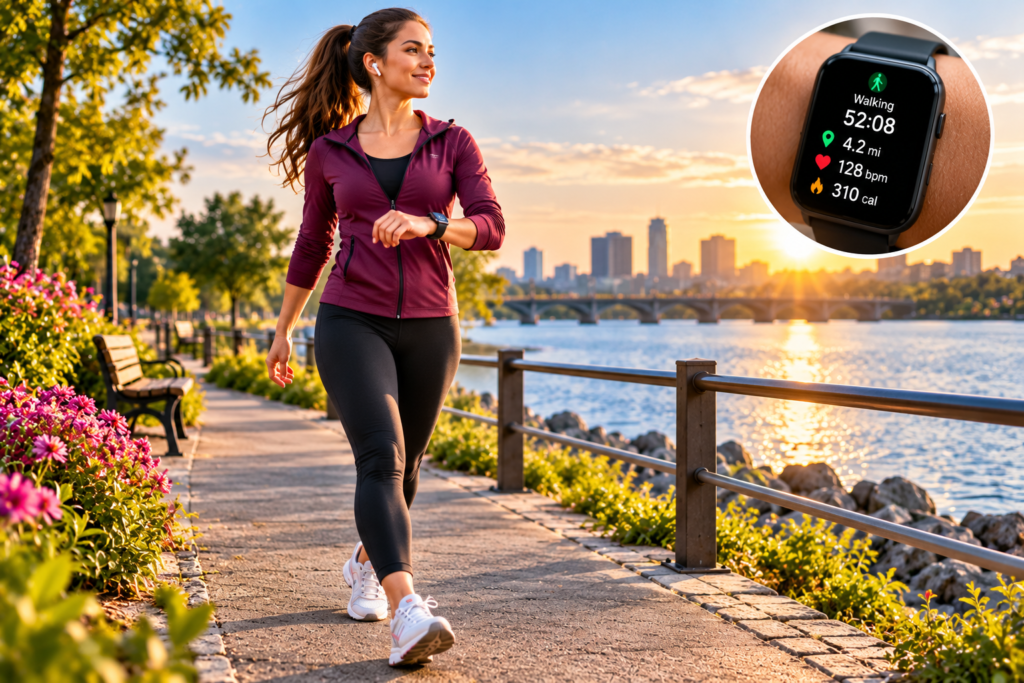
Image Description: A fit adult walking briskly along a paved riverside path, wearing a plum athletic jacket, black leggings, and white trainers. A smartwatch displays walking metrics, while calm blue water and soft morning sunshine fill the background. Eye-level camera angle, realistic details, balanced colors, energetic yet peaceful Pinterest fitness photography.
Quick Tip:
Start each walk at an easy pace for five to ten minutes before moving faster. During your main walking session, aim for a speed that raises your breathing slightly while still allowing you to speak in complete sentences.
A steady pace helps you conserve energy across a longer distance instead of tiring yourself out during the first few miles. Walking 10 miles a day can place considerable demands on your feet and legs, especially when you are new to endurance exercise. Build your pace gradually, and slow down whenever your breathing becomes uncomfortable or your form starts to suffer.
4. Planned Walking Breaks
Image Description: A walker resting on a modern wooden park bench beside a scenic walking trail, wearing a burgundy sports jacket, black leggings, and white trainers. A reusable water bottle and fitness watch sit nearby. Soft afternoon sunlight, warm neutral tones, leafy trees, realistic textures, candid lifestyle photography, vertical Pinterest composition.
BEFORE
Walking several miles without stopping can leave your legs heavy and your energy depleted, especially when your body is still adapting to longer distances. Pushing through every sign of fatigue may also affect your posture and concentration.
AFTER
Planned breaks give your feet and muscles a chance to recover before you continue. You can return to your walk feeling more comfortable and focused.
Schedule a short break whenever you need one, perhaps after every two or three miles. Sit briefly, drink water, and check for hot spots inside your shoes. Some days, a few minutes of rest will be enough; other days, shortening the walk is the better choice. Listen to your body’s signals rather than following a rigid schedule.
5. Water Bottle Routine
Image Description: A stainless steel water bottle in matte lavender beside a small sports towel, lightweight running shoes, and a smartwatch on a pale stone bench. A sunny walking path with soft blue sky appears in the background. Bright natural lighting, subtle shadows, clean textures, fresh fitness editorial style, overhead three-quarter view.
- Drink before leaving: Start your walk adequately hydrated rather than waiting until you feel thirsty.
- Carry water: Choose a lightweight bottle that fits comfortably in your backpack or waist pack.
- Sip regularly: Take small drinks during your walk, adjusting the amount for heat, humidity, and effort.
- Check the weather: Hot conditions and heavy sweating increase your need for fluids.
- Refill when needed: Plan routes with safe, accessible water stops for longer outings.
Hydration supports normal temperature regulation and physical performance, particularly during extended outdoor exercise. You do not need to force large amounts of water at once. Instead, drink regularly and adjust to the conditions. For especially hot walks or prolonged heavy sweating, an electrolyte drink may also be useful. Anyone with fluid restrictions should follow their healthcare professional’s guidance.
6. Walking Route Choices
Image Description: A split-view fitness photograph comparing a flat paved park pathway beside a lake with a gently rolling countryside trail. Both scenes feature clear walking surfaces, golden morning light, blue skies, and a person wearing neutral athletic clothing. Realistic photography, crisp details, balanced natural colors, clean Pinterest-friendly composition.
| Comparison | Option A: Flat Route | Option B: Rolling Route |
|---|---|---|
| Physical demand | Generally easier to sustain | Requires more effort on climbs |
| Pace | Easier to maintain consistently | Naturally varies with terrain |
| Muscle challenge | Repetitive, steady movement | Greater variation in leg effort |
| Beginner suitability | Useful for building distance | Best introduced gradually |
| Route planning | Often easier to measure | Allow extra time for hills |
Choosing the right route can make a long walking session feel more manageable. Start with a flat, familiar path while building endurance, then introduce gentle hills as your fitness improves. Check the surface, lighting, weather, and availability of rest stops before setting out. A comfortable route helps you focus on consistency instead of battling unnecessary obstacles.
7. Supportive Walking Posture
Image Description: A fit adult demonstrating upright walking posture on a sunlit park path, wearing a navy blue athletic top, black leggings, and white walking shoes. Shoulders relaxed, head level, arms bent naturally, and eyes looking forward. Greenery-free neutral autumn foliage, warm golden lighting, realistic fitness photography, full-body side angle.
DO
- Keep your head level and look ahead along the path.
- Relax your shoulders and let your arms swing naturally.
- Stand tall with your chest comfortably open.
- Take natural steps without forcing an unusually long stride.
DON’T
- Avoid staring down at your phone while walking.
- Don’t tense your shoulders or clench your fists.
- Avoid leaning excessively forward from your waist.
- Don’t force your feet into an unnatural walking position.
Good posture helps you move comfortably over longer distances without creating unnecessary tension. Check your alignment every mile, especially when fatigue begins to set in. Keep your movements relaxed rather than rigid, and adjust your stride to suit your natural gait. If persistent pain develops, stop and seek appropriate professional advice.
8. Daily Mileage Planning
Image Description: An open fitness journal on a light wooden desk showing a weekly walking schedule, simple mileage checkboxes, and a pair of white athletic shoes. A black fitness watch and pale blue water bottle sit beside it. Soft morning window light, cream and navy palette, crisp paper textures, overhead editorial photography.
Time: Depends on your walking speed and breaks.
Planning Level: Beginner-friendly.
Tracking Tools: Fitness watch, phone app, or paper journal.
Best For: Building consistency and monitoring recovery.
Planning your weekly mileage helps you balance ambitious goals with realistic recovery needs. Rather than aiming for ten miles every single day immediately, alternate longer walks with shorter sessions or rest days as needed. Record your distance, energy levels, and any discomfort so you can recognize patterns. A flexible plan keeps your progress sustainable when work, weather, or fatigue changes your schedule.
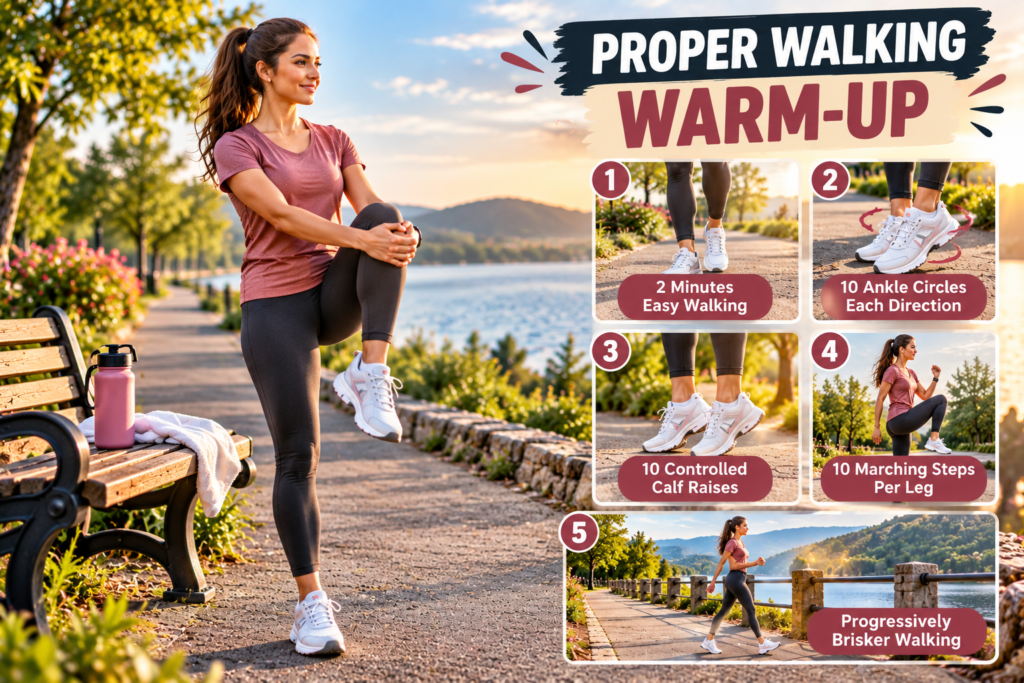
9. Proper Walking Warm-Up
Image Description: An adult preparing for a long walk on a quiet paved trail, performing gentle ankle circles beside a wooden bench. They wear a dusty rose sports shirt, charcoal leggings, and supportive white trainers. Soft morning sunlight, neutral stone textures, distant trees, realistic athletic photography, full-body composition, warm natural color grading.
Before your first mile, give your body a few minutes to ease into movement. Start with a comfortable walking pace, then gradually increase your speed as your muscles warm up.
A simple warm-up can include:
- Two minutes of easy walking.
- Ten gentle ankle circles in each direction.
- Ten controlled calf raises.
- Ten comfortable marching steps per leg.
- Several minutes of progressively brisker walking.
You do not need an exhausting stretching routine before heading out. Gentle movement prepares you for the activity ahead while helping you notice stiffness before it becomes distracting. Save deeper stretches for afterward if they feel comfortable. If a movement causes pain, skip it rather than forcing your body through the exercise.
10. Balanced Walking Snacks
Image Description: A neatly arranged pre-walk snack setup featuring a banana, apple slices, whole-grain crackers, peanut butter, and a small bowl of almonds on a light wooden table. A lavender water bottle and folded workout towel complete the scene. Soft natural window light, warm beige and blush palette, realistic food photography, overhead Pinterest composition.
- Choose a banana: It provides carbohydrates for readily available energy before a longer walk.
- Pack an apple: Pair apple slices with peanut butter for a satisfying snack.
- Try whole-grain crackers: Combine them with cheese or hummus for carbohydrates and protein.
- Carry a small snack: Keep something portable in your walking bag for longer outings.
- Eat according to your needs: Adjust portions and timing to your appetite and activity level.
Walking long distances requires energy, so avoid starting a demanding session when you feel unusually hungry or weak. A light snack about 30 to 60 minutes beforehand may help, although larger meals generally need more digestion time. Afterward, eat a balanced meal with carbohydrates and protein to support recovery. Your ideal routine depends on your schedule, appetite, and individual needs.
11. Consistent Hydration Breaks
Image Description: A reusable pale blue water bottle and compact hydration backpack resting beside white walking shoes on a sunlit park bench. A fitness tracker displays distance, while a paved path stretches into the background. Soft golden light, charcoal and blue accents, detailed fabric textures, realistic outdoor fitness photography, vertical composition.
Quick Tip:
Drink water before starting your walk, then take regular sips throughout the route. In hot or humid weather, carry extra water and plan refill stops instead of relying on finding supplies along the way.
Staying hydrated becomes especially important when your walking sessions last several hours. Thirst, dry mouth, and unusual fatigue can signal that you need to reassess your fluid intake, although these symptoms have other possible causes too. Avoid drinking excessive amounts rapidly. If you sweat heavily for prolonged periods, consider replacing electrolytes as well. Consistent drinking habits are more practical than waiting until you feel depleted.
12. Recovery Day Scheduling
Image Description: A peaceful home recovery corner featuring cushioned athletic shoes beside a rolled exercise mat, a soft cream towel, and a glass of water on a light wooden floor. Neutral beige and dusty blue accents, gentle morning window light, uncluttered surroundings, realistic lifestyle photography, warm textures, minimalist Pinterest fitness aesthetic.
BEFORE
Pushing through ten-mile walks every day without enough recovery can leave your legs persistently tired. Your usual pace may begin to feel harder, and minor aches can become more noticeable.
AFTER
A planned lighter day gives your body time to recover while preserving your walking habit. Gentle movement or complete rest can both be appropriate, depending on how you feel.
Schedule shorter walks or rest days around your longest sessions, particularly when increasing your weekly distance. Prioritize sleep, balanced meals, and comfortable footwear during recovery. In my experience, a flexible routine is easier to maintain than an all-or-nothing mileage target. Persistent pain, swelling, or worsening fatigue deserves attention rather than another demanding walk.
on them for ten miles. A small blister, loose strap, or poorly fitting waistband can become irritating over time. Keep your setup simple, secure, and comfortable so you can concentrate on your pace rather than adjusting your belongings.
14. Distance Tracking Methods
Image Description: A black fitness smartwatch displaying walking distance beside a smartphone with a simple route map, an open mileage journal, and white athletic shoes on a pale wooden desk. Soft daylight, navy and cream color palette, realistic screen details, subtle shadows, clean minimalist styling, overhead Pinterest fitness photography.
| Tracking Method | Best Advantage |
|---|---|
| Fitness watch | Tracks distance and time during walks |
| Smartphone app | Records routes and weekly progress |
| Pedometer | Offers a simple step count |
| Paper journal | Makes notes about energy and recovery |
Tracking your walks helps you understand how your stamina develops over time. Choose one method you can use consistently rather than switching between several tools. Record your distance, duration, and how you felt afterward. Remember that GPS readings and step-based estimates can vary, so treat mileage as a useful guide rather than a perfectly precise measurement.
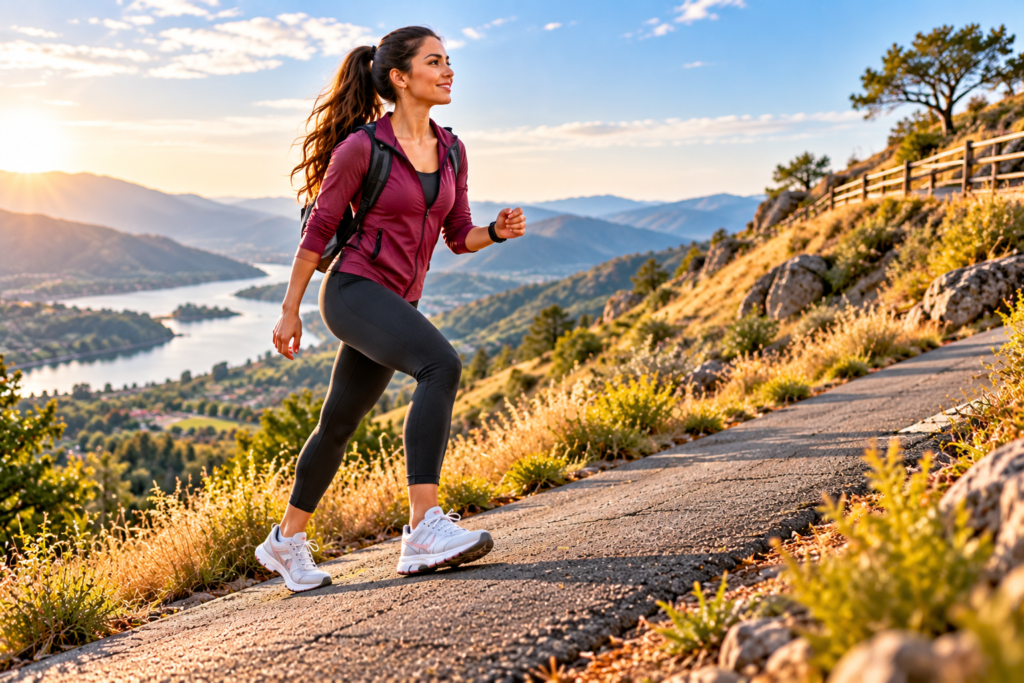
15. Gradual Hill Training
Image Description: A walker ascending a gentle paved hillside trail in a burgundy athletic jacket, black leggings, and supportive white trainers. Rolling hills, dry golden grasses, and a pale blue sky fill the background. Bright natural daylight, earthy brown and gold palette, realistic outdoor fitness photography, wide side-angle composition, crisp details.
DO
- Start with gentle inclines and short uphill sections.
- Shorten your stride when climbing.
- Slow your pace to maintain comfortable breathing.
- Walk downhill carefully with controlled steps.
DON’T
- Avoid sprinting uphill when building endurance.
- Don’t lean excessively forward from your waist.
- Avoid increasing hill difficulty and total mileage simultaneously.
- Don’t push through knee, ankle, or foot pain.
Hills add variety to your walking routine and challenge your leg muscles differently from flat paths. Begin with a gentle incline once your regular distance feels manageable, then increase the challenge gradually. Allow extra recovery after demanding sessions, particularly if your calves or thighs feel unusually tired. Stronger stamina comes from progressively challenging your body, not making every walk difficult.
16. Step Count Milestones
Image Description: A smartphone showing a daily step counter beside a black fitness watch, white walking shoes, and a small fitness journal on a warm wooden table. The screen displays a progress ring and simple activity statistics. Soft natural window light, dusty blue and cream accents, realistic details, clean overhead Pinterest fitness photography.
Tracking: Daily steps and walking distance.
Goal Setting: Gradual, adjustable milestones.
Difficulty: Beginner-friendly.
Best For: Building consistency and motivation.
Breaking a long-distance goal into smaller milestones can make your progress easier to manage. Rather than focusing only on reaching ten miles, celebrate completing your first two miles, maintaining a comfortable pace, or finishing a planned weekly schedule. Step counts can provide additional motivation, but they are estimates of activity rather than a measure of fitness on their own. Choose milestones that encourage steady progress without making you feel pressured to walk through pain or exhaustion.
17. Comfortable Walking Rhythm
Image Description: An athletic adult walking along a smooth waterfront promenade, wearing a dusty blue performance shirt, black leggings, and white trainers. Arms swing naturally beside the body, with relaxed shoulders and a level head. Soft morning light reflects off the water, neutral colors, realistic full-body fitness photography, eye-level camera angle.
A natural rhythm can help long walks feel less tiring. Start at a comfortable speed, coordinate your arm swing with your steps, and allow your stride to follow your body’s natural movement rather than forcing a particular pattern.
During longer sessions, check your breathing and posture every so often. If your shoulders tighten or your steps become heavy, ease your pace for a few minutes. Some walkers enjoy listening to music with a steady beat, while others prefer the sound of their surroundings. Choose whatever helps you stay relaxed, alert, and consistent throughout the route.
18. Weekly Walking Schedule
Image Description: An open weekly planner showing seven neatly arranged walking slots beside white trainers, a black smartwatch, and a lavender water bottle. A pale wooden desk, cream stationery, soft navy accents, and gentle morning window light create a clean, organized fitness workspace. Realistic photography, overhead perspective, crisp details, Pinterest editorial style.
| Old Way | Better Way |
|---|---|
| Walking the same distance daily | Varying distance according to recovery |
| Increasing mileage suddenly | Adding distance gradually |
| Ignoring tired legs | Scheduling lighter days |
| Chasing a daily target | Following a flexible weekly plan |
A balanced schedule makes endurance training easier to sustain. For example, you might alternate moderate walks with one longer outing and lighter recovery days, adjusting the plan to your current fitness. Walking ten miles every day is not necessary to improve stamina. Give yourself permission to reduce mileage when needed, and increase your workload only when your body is responding comfortably.
19. Blister Prevention Routine
Image Description: White cushioned walking socks, supportive gray trainers, blister prevention tape, and a small foot-care pouch arranged on a pale wooden bench. A folded dusty blue towel sits nearby, with a sunlit walking trail softly blurred in the background. Warm natural lighting, neutral beige palette, realistic textures, clean fitness editorial photography.
DO
- Wear moisture-wicking socks that fit without bunching.
- Check your shoes for rough seams and pressure points.
- Apply blister prevention tape to known friction areas.
- Change damp socks when practical during longer outings.
DON’T
- Avoid wearing brand-new shoes for a ten-mile walk.
- Don’t ignore burning or rubbing sensations.
- Avoid walking in socks that slide inside your shoes.
- Don’t deliberately pop blisters, especially if you have diabetes or poor circulation.
Blisters can turn an enjoyable walking routine into an uncomfortable experience. Check your feet before and after longer sessions, paying attention to your heels, toes, and the balls of your feet. At the first sign of friction, stop and adjust your socks or footwear. Early action is usually easier than managing a painful blister after several miles.
20. Energy Level Monitoring
Image Description: A fitness journal with handwritten energy ratings beside a black smartwatch, white trainers, and a glass of water on a light oak desk. A simple three-color energy scale uses blue, amber, and soft red accents. Natural window lighting, clean paper textures, realistic overhead photography, minimalist Pinterest fitness aesthetic.
Energy Check: Before, during, and after walking.
Tracking Time: One minute per check.
Best For: Recognizing fatigue patterns.
Adjustment: Shorten or postpone demanding sessions when needed.
Paying attention to your energy can help you recognize when your training needs adjustment. Before leaving, consider whether you slept well, ate enough, and feel ready for exercise. During the walk, notice unusual weakness, dizziness, or breathlessness. These signs should not be treated as ordinary training discomfort. Stop if they occur, seek appropriate medical advice, and prioritize recovery over completing your mileage target.
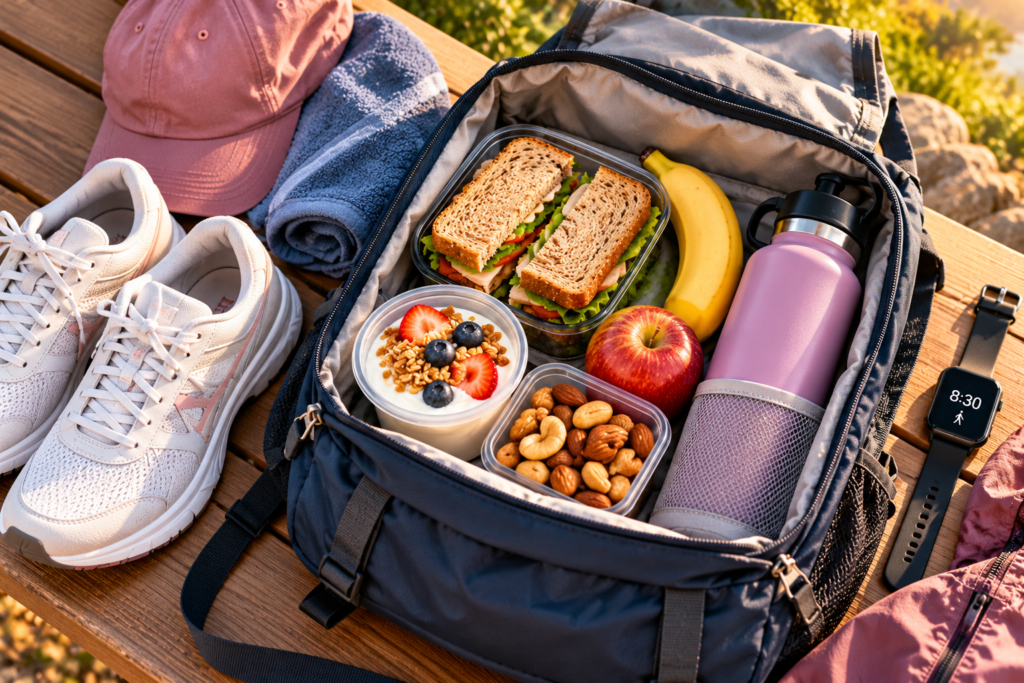
21. Walking Fuel Preparation
Image Description: A neatly packed walking-day meal setup featuring a whole-grain sandwich, banana, small container of almonds, yogurt, and a reusable water bottle inside an open athletic backpack. White trainers sit beside the bag on a light wooden floor. Soft daylight, warm cream and dusty blue palette, realistic food photography, overhead composition.
Long walks are easier to manage when you prepare food and water before leaving home. Start with a balanced meal containing carbohydrates and protein, then pack snacks that are easy to carry and eat.
Useful options include:
- A banana for portable carbohydrates.
- Whole-grain crackers with cheese.
- An apple with peanut butter.
- A small sandwich for a longer outing.
Your needs depend on your pace, body size, weather, and total walking time. For a session lasting several hours, planned snacks may help maintain energy and prevent excessive hunger afterward. Keep perishable foods safely stored, and avoid experimenting with unfamiliar foods immediately before a demanding walk.
22. Weather Ready Walking Gear
Image Description: A neatly arranged outdoor walking kit featuring a lightweight navy rain jacket, breathable athletic shirt, black leggings, white walking shoes, a cap, and a compact water bottle. Soft gray pavement and a cloudy sky appear in the background. Cool natural lighting, muted blue and beige palette, crisp fabric textures, realistic fitness photography.
Weather Check: Before every outdoor walk.
Essential Gear: Comfortable shoes, weather-appropriate clothing, water, and a charged phone.
Best For: Outdoor endurance sessions.
Safety Priority: Visibility, suitable temperatures, and safe walking surfaces.
Weather preparation helps prevent uncomfortable surprises during longer outings. Check the forecast before leaving, especially when rain, extreme heat, or strong winds are expected. Wear reflective details when visibility is poor, and choose breathable layers that you can adjust as your body warms up. If conditions become unsafe, move indoors or postpone the walk. Protecting your health matters more than completing a planned distance.
23. Indoor Walking Alternatives
Image Description: A bright home workout space with a person walking briskly on a treadmill, wearing a dusty rose athletic shirt, charcoal leggings, and white trainers. A small towel and water bottle rest nearby, with a fitness watch visible. Warm window light, cream walls, pale wooden flooring, realistic lifestyle photography, vertical Pinterest composition.
When outdoor conditions are unpleasant, indoor walking can help you maintain your routine without depending on the weather. A treadmill, indoor track, or spacious hallway can provide a convenient alternative for building endurance.
Start at a comfortable speed and increase it gradually as your body warms up. If using a treadmill, keep the safety clip attached and avoid increasing speed or incline beyond what you can control. Break the session into manageable intervals if needed. Indoor walking also makes it easier to monitor your pace, take water breaks, and stop whenever discomfort develops.
24. Progress Tracking Journal
Image Description: An open fitness journal displaying a weekly walking log with columns for distance, duration, energy, and recovery notes. A black smartwatch, white trainers, and a blue pen sit on a pale wooden desk. Soft morning window light, cream paper, navy accents, realistic textures, clean overhead photography, minimalist Pinterest fitness aesthetic.
- Record distance: Write down how far you walked each day.
- Track duration: Note your total walking time, including planned breaks.
- Rate your effort: Use a simple scale from easy to challenging.
- Monitor recovery: Record soreness, sleep quality, and energy levels.
- Review weekly: Look for improvements without comparing yourself to others.
A simple journal can reveal progress that daily measurements might miss. You may notice that a familiar route feels easier, your breathing settles sooner, or your recovery improves after longer sessions. Use these observations to guide gradual adjustments rather than increasing distance automatically. If your performance declines repeatedly or fatigue persists, reduce your workload and allow additional recovery before progressing again.
CONCLUSION
Building stronger stamina starts with small, consistent steps rather than pushing your body beyond its limits. These 24 walking tips can help you improve your pace, prepare for longer distances, stay hydrated, and make recovery part of your routine.
Remember, walking 10 miles a day isn’t a requirement for better fitness. Start with a distance that suits your current ability, increase gradually, and listen to your body’s signals. I’ve found that realistic habits are easier to maintain than ambitious goals without a recovery plan.
Save this article on Pinterest, try one or two tips on your next walk, and share it with someone who wants to build endurance. Your next step is a fresh opportunity to grow stronger!