22 Walking Workouts to Boost Your Daily Calorie Burn
INTRODUCTION
A simple walk can become much more effective with a few smart changes. You don’t need a gym, complicated equipment, or hours of free time to make your daily movement count.
These walking workouts give you practical ways to increase your pace, add hills, use intervals, and make ordinary routes more engaging. Whether you’re starting from scratch or your usual walks have stopped feeling challenging, you’ll find options that fit different fitness levels and schedules. Some take just 15 minutes, while others work well for longer weekend sessions.
In my experience, the easiest routines to maintain are the ones that feel realistic. Small changes, such as adding a few brisk intervals or choosing a hillier route, can make a familiar walk feel completely different. Use these ideas as inspiration, choose what suits your current ability, and build from there.
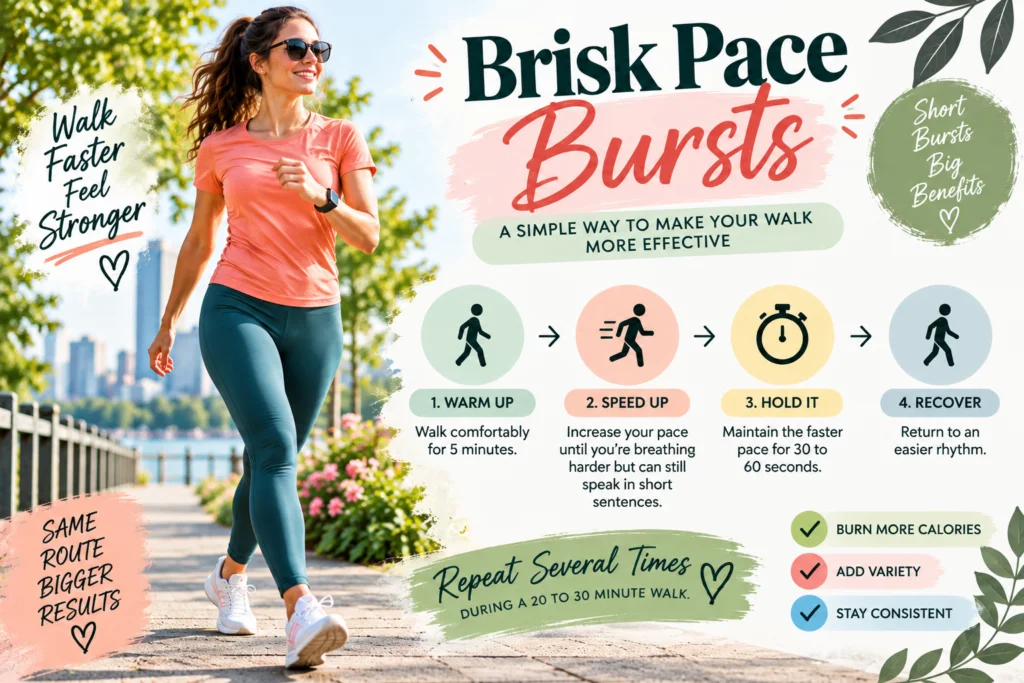
Brisk Pace Bursts
Image Description: Bright outdoor walking path with a woman in a peach athletic top, dark teal leggings, and white sneakers moving at a brisk pace, leafy trees and modern buildings softly blurred behind her, crisp morning sunlight, clean pavement texture, energetic Pinterest fitness photography, low side angle.
A faster pace can make an ordinary walk feel surprisingly different. Start with 5 minutes of comfortable walking, then increase your speed until you’re breathing harder but can still speak in short sentences. Hold that pace for 30 to 60 seconds before returning to an easier rhythm.
Repeat the faster intervals several times during a 20 to 30 minute walk. In my experience, short bursts feel much more manageable than trying to walk quickly for the entire session. They also give a familiar route more variety, which can make daily movement easier to stick with.
Incline Walking
Image Description: Woman walking uphill on a scenic neighborhood incline wearing a coral athletic shirt, charcoal leggings, and white sneakers, warm natural sunlight, green trees lining the path, textured pavement, subtle shadows, clean modern fitness aesthetic, rear three-quarter camera perspective, realistic Pinterest photography.
- Choose a gentle hill that you can climb without losing good posture.
- Walk uphill for 1 to 3 minutes, then slow down on flatter ground.
- Keep your chest lifted and take shorter steps as the slope increases.
- Start with 3 to 5 uphill repeats during a moderate walk.
- Use a treadmill incline when outdoor hills are unavailable.
Walking uphill increases the effort required from your legs and cardiovascular system. Keep the pace controlled rather than racing to the top. A shorter uphill interval can provide plenty of challenge, especially for beginners who are still building walking fitness and lower-body strength.
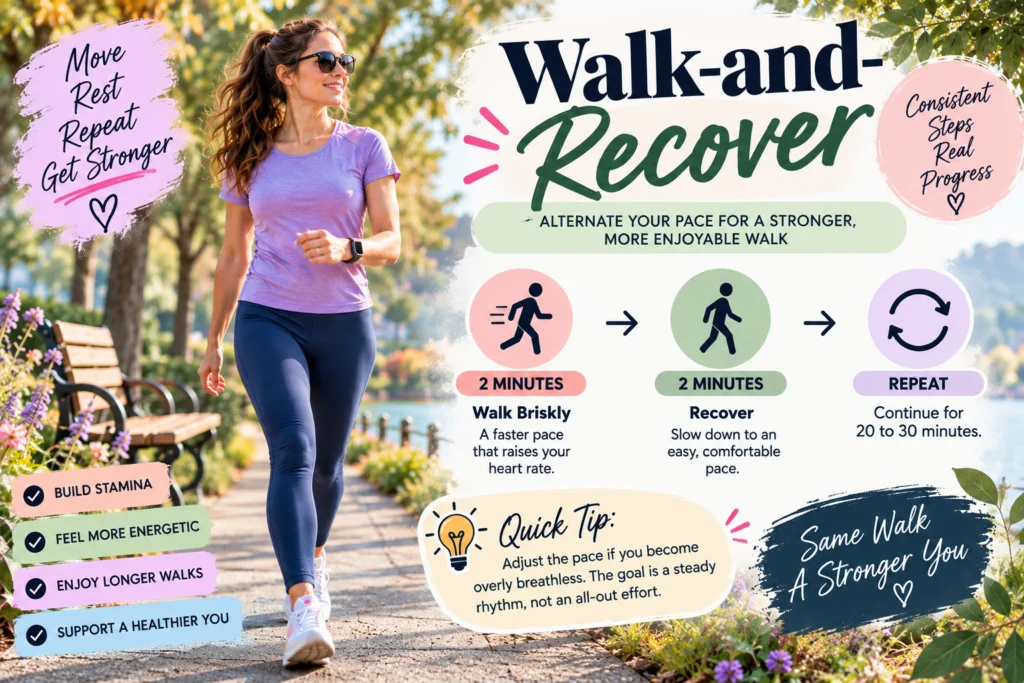
Walk-and-Recover
Image Description: Stylish park pathway with a woman alternating between brisk and relaxed walking, wearing a lavender athletic top, navy leggings, and white sneakers, soft golden morning light, green foliage, wooden benches, natural textures, peaceful yet active mood, eye-level side perspective, realistic fitness photography.
Quick Tip: Build your session around alternating effort levels instead of maintaining one speed. Walk briskly for 2 minutes, then recover at an easy pace for 2 minutes. Repeat the pattern for 20 to 30 minutes, adjusting the pace if you become overly breathless.
This rhythm gives your body regular recovery periods while keeping the walk active. I’ve noticed that planned recovery makes longer sessions feel less intimidating because you always know an easier section is coming. It also works well for people who find continuous fast walking uncomfortable or difficult to maintain.
Hill Repeat Walks
Image Description: Fit woman walking up a gently sloped residential street in a rust-orange athletic shirt, black leggings, and white sneakers, leafy trees and neat homes in the background, bright natural daylight, warm neutral palette, textured asphalt, realistic Pinterest fitness photography, low rear camera angle.
BEFORE: A flat walking route can start to feel predictable, especially after you’ve used the same path for weeks. Your pace may stay comfortable from beginning to end, giving you little variation in effort.
AFTER: Add several short hill repeats to create natural changes in intensity. Walk uphill for 60 to 90 seconds, recover while walking downhill or on level ground, then repeat 4 to 6 times.
The key is controlled effort, not racing uphill. Keep your steps short and steady, and avoid leaning heavily forward. In my experience, hill repeats make a familiar neighborhood route feel more purposeful without requiring special equipment. Finish with several easy minutes so your breathing gradually returns to normal.
Power Step Intervals
Image Description: Active woman performing quick power steps along a wide park trail, wearing a turquoise athletic shirt, plum leggings, and white sneakers, tall green grass nearby, clear blue sky, bright natural sunlight, crisp shadows, energetic clean aesthetic, dynamic side camera angle, realistic fitness photography.
- Warm up: Walk comfortably for 5 minutes to prepare your muscles and joints.
- Pick up the pace: Increase your stride speed for 30 seconds while keeping your posture upright.
- Recover: Return to an easy walking pace for 60 to 90 seconds.
- Repeat: Complete 6 to 10 rounds based on your fitness level.
- Cool down: Finish with 5 minutes of relaxed walking.
Short power intervals add structure without making the entire workout demanding. Keep your arms moving naturally and avoid taking exaggerated strides. The goal is quicker, purposeful movement that you can control. Beginners can start with fewer rounds and gradually add repetitions as the faster sections become more comfortable.
Steady Versus Speed
Image Description: Two-panel fitness scene showing the same woman on a park walkway, one side showing relaxed steady walking and the other showing faster purposeful steps, peach and teal workout clothing, bright morning light, leafy background, clean pavement, realistic editorial fitness photography.
| Comparison | Steady Walking | Speed Intervals |
|---|---|---|
| Pace | Comfortable and consistent | Alternates between faster and slower |
| Effort | Moderate and predictable | Higher during short bursts |
| Best Use | Longer easy sessions | Shorter structured workouts |
| Recovery | Minimal variation | Planned recovery periods |
Both approaches have a place in a walking routine. Steady movement can help you build consistency and accumulate more active minutes, while faster intervals add variety and challenge. Choose the style that matches your current fitness level, then increase duration or intensity gradually rather than changing everything at once.
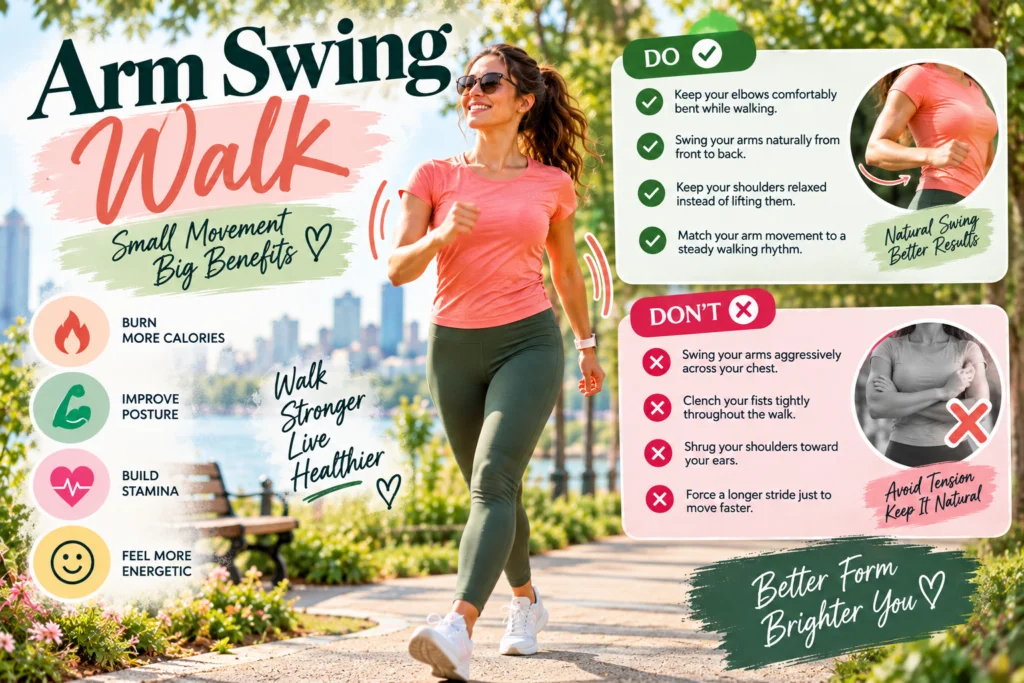
Arm Swing Walk
Image Description: Woman walking briskly through a sunny city park wearing a coral athletic shirt, olive leggings, and white sneakers, arms swinging naturally beside her body, leafy trees, smooth pathway, soft morning sunlight, warm green and peach palette, realistic fitness photography, waist-level side camera perspective.
DO:
- Keep your elbows comfortably bent while walking.
- Swing your arms naturally from front to back.
- Keep your shoulders relaxed instead of lifting them.
- Match your arm movement to a steady walking rhythm.
DON’T:
- Swing your arms aggressively across your chest.
- Clench your fists tightly throughout the walk.
- Shrug your shoulders toward your ears.
- Force a longer stride just to move faster.
A purposeful arm swing can help your whole body feel more coordinated during faster walking. Keep the movement relaxed and let your legs set the rhythm. I’ve noticed that focusing on posture and natural arm movement often makes brisk walking feel smoother, especially during longer sessions where tension can gradually build.
Tempo Ladder
Image Description: Woman progressing through a walking workout on a clean riverside path, wearing a yellow athletic top, navy leggings, and white sneakers, early morning golden light, trees and water softly blurred, subtle pavement texture, bright uplifting palette, realistic Pinterest fitness style, side perspective.
Time: 25 to 30 minutes
Skill Level: Beginner to intermediate
Structure: Gradually increasing pace
Best For: Building walking stamina and calorie-burning intensity
Start slowly and let your pace climb in small steps rather than jumping straight into a fast walk. After warming up, increase your speed every few minutes until you reach a purposeful pace, then gradually slow down before finishing. This progressive pattern keeps the session varied while teaching your body to handle changing effort.
Park Loop Intervals
Image Description: Woman walking briskly around a scenic urban park loop wearing a soft pink athletic shirt, deep green leggings, and white sneakers, landscaped trees, curved pathway, wooden benches, warm afternoon sunlight, crisp natural textures, inviting Pinterest fitness aesthetic, elevated three-quarter camera view.
BEFORE: A park loop can become an automatic stroll when every lap follows the same pace. You may finish several rounds without noticing much change in effort.
AFTER: Give each lap a purpose. Walk the first lap comfortably, make the second brisk, slow down for the third, then repeat the pattern according to your fitness level.
A simple loop becomes more useful when you assign different intensities to each section. If your route has benches, signs, or trees, use them as visual markers for pace changes. This keeps you engaged and gives you an easy structure without needing a timer or fitness device.
Stair Walking
Image Description: Woman walking upward on broad outdoor park stairs wearing a bright coral athletic shirt, dark blue leggings, and white sneakers, surrounded by leafy greenery, warm natural sunlight, textured stone steps, soft shadows, clean fitness aesthetic, realistic Pinterest photography, low upward camera angle emphasizing the staircase.
- Warm up: Walk on level ground for 5 minutes before approaching the stairs.
- Climb steadily: Walk upward for 30 to 60 seconds while keeping your steps controlled.
- Recover: Walk slowly on level ground for 1 to 2 minutes.
- Repeat: Complete 4 to 8 climbing rounds based on your fitness level.
Stair walking increases the workload on your legs because you repeatedly lift your body upward. Keep your torso upright and use the handrail for balance if needed. Start with fewer rounds than you think you can handle, especially if you’re new to stairs, then build gradually as your legs become stronger.
Treadmill Incline
Image Description: Woman walking on a modern treadmill with a gentle incline, wearing a lavender athletic top, charcoal leggings, and white sneakers, bright home gym with wood flooring, large windows, soft natural daylight, neutral beige and gray palette, clean organized setting, realistic side-angle fitness photography.
| Option | Flat Setting | Incline Setting |
|---|---|---|
| Effort | Lower and steady | Higher at the same speed |
| Main Challenge | Maintaining pace | Walking against elevation |
| Starting Point | Comfortable speed | Gentle incline |
| Best Use | Longer easy sessions | Shorter challenging intervals |
A treadmill makes incline training easy to control because you can adjust the slope and speed separately. Start with a modest incline and maintain good posture rather than holding the rails. Increase only one variable at a time so you can clearly notice how your body responds during the workout.
Long Weekend Walk
Image Description: Couple walking along a wide scenic trail on a bright weekend morning, wearing comfortable peach and blue athletic clothing, white sneakers, leafy trees, golden sunlight, natural dirt and pavement textures, distant hills, relaxed lifestyle mood, realistic Pinterest fitness photography, wide rear camera perspective.
DO:
- Choose a route that allows enough time for a relaxed pace.
- Carry water for longer outings.
- Begin with several easy minutes before settling into your normal rhythm.
- Add short brisk sections when your energy feels good.
DON’T:
- Start much faster than your usual walking pace.
- Ignore discomfort that changes your natural movement.
- Forget comfortable footwear for extended routes.
- Increase distance dramatically from one weekend to the next.
Longer walks can add meaningful movement without feeling like a formal workout. Pick a scenic route, bring water, and keep the first portion comfortable. A few short brisk sections can add variety, but consistency matters more than pushing hard. This approach works particularly well for people who enjoy walking outdoors and have more time on weekends.
Morning Fast Start
Image Description: Woman beginning a brisk morning walk on a tree-lined sidewalk, wearing a soft peach athletic shirt, teal leggings, and white sneakers, golden sunrise light, long gentle shadows, fresh green foliage, clean pavement texture, calm residential background, warm Pinterest fitness aesthetic, low side camera angle.
Cost: Free
Time: 20 to 30 minutes
Skill Level: Beginner
Best For: Starting the day with purposeful movement
The first few minutes set the rhythm for the entire session. Walk gently for about 5 minutes, then move into a brisk pace that feels purposeful without leaving you breathless. Keep your shoulders relaxed and your steps quick enough to raise your breathing slightly while remaining controlled.
Post-Meal Stroll
Image Description: Woman taking a relaxed walk along a bright neighborhood pathway after a meal, wearing a light yellow athletic top, sage green leggings, and white sneakers, warm late-afternoon sunlight, leafy trees, tidy homes, smooth pavement, peaceful lifestyle mood, realistic Pinterest photography, eye-level rear perspective.
A short walk after eating can be an easy habit to fit into a busy day. Keep the pace comfortable rather than turning it into a hard workout, especially immediately after a large meal. Start with 10 to 15 minutes and gradually extend the walk if it feels comfortable.
The biggest advantage is consistency. Instead of waiting for a large block of free time, attach movement to something you already do every day. A gentle neighborhood stroll can add active minutes without requiring a gym, special equipment, or a complicated routine.
Back-and-Forth Route
Image Description: Woman walking repeatedly along a straight park pathway wearing a coral workout shirt, navy leggings, and white sneakers, landscaped trees on both sides, bright natural daylight, clean concrete surface, soft green and blue palette, organized fitness mood, overhead three-quarter camera perspective.
- Pick a safe, flat route with a clear turnaround point.
- Walk briskly to the endpoint, then return at an easier pace.
- Use each round as one complete interval.
- Complete 5 to 10 rounds depending on your available time.
- Keep your turnaround smooth instead of stopping completely.
A back-and-forth route removes the need to plan a complicated course. It also gives you an obvious marker for changing pace. I’ve noticed this setup works especially well when motivation is low because the next target is always visible. Use a familiar sidewalk, track, hallway, or safe park path to keep the session simple.
Faster Finish
Image Description: Woman finishing a brisk outdoor walk on a sunlit park path, wearing a coral athletic shirt, dark teal leggings, and white sneakers, green trees and soft city buildings behind her, warm late-morning light, crisp pavement texture, energetic clean Pinterest fitness aesthetic, low front-side camera angle.
BEFORE: The final minutes of a walk often become an automatic slowdown. Once the main portion feels finished, it’s easy to lose focus and simply wander toward home.
AFTER: Reserve the final 5 minutes for a controlled pace increase. Begin slightly faster than your normal walking speed, then finish with 30 to 60 seconds at your strongest comfortable pace.
A faster finish adds purpose to the end of your session without requiring a longer workout. Keep your posture tall and your breathing controlled. If your pace becomes uncomfortable, ease back slightly. This approach is especially useful for walkers who prefer gradual intensity instead of repeated hard intervals throughout the entire session.
Mailbox Markers
Image Description: Woman walking briskly through a quiet residential street using mailboxes and trees as visual pace markers, wearing a mint green athletic shirt, burgundy leggings, and white sneakers, soft morning sunlight, tidy homes, textured sidewalk, natural colors, realistic lifestyle fitness photography, eye-level side view.
- Choose markers: Select safe landmarks such as trees, benches, driveways, or street signs along your route.
- Increase pace: Walk briskly from one marker to the next while maintaining comfortable breathing.
- Recover: Use the next section for an easier walking pace.
- Repeat: Continue alternating faster and easier sections for 20 to 30 minutes.
This method turns an ordinary route into a simple interval session without watching a stopwatch. The changing landmarks also give your attention something to focus on. Keep the faster sections controlled enough that you can maintain good posture and avoid turning the workout into an exhausting sprint.
Flat Pace Blocks
Image Description: Woman walking steadily along a wide paved trail beside a calm lake, wearing a bright blue athletic shirt, charcoal leggings, and white sneakers, clear morning sky, soft sunlight, green trees, smooth pavement, crisp natural textures, minimalist Pinterest fitness aesthetic, side-on camera perspective.
| Option | Short Blocks | Longer Blocks |
|---|---|---|
| Duration | 2 to 3 minutes | 5 to 8 minutes |
| Pace | Brisk | Steady brisk |
| Recovery | Frequent | Less frequent |
| Best For | Beginners | Experienced walkers |
Divide your walk into simple pace blocks so the session has a clear beginning, middle, and finish. Start with shorter blocks if you’re new to structured exercise. As your stamina improves, lengthen the brisk periods while keeping your breathing manageable. The goal is steady progress, not maximum speed.
Reverse Route
Image Description: Woman walking along a scenic neighborhood path in the opposite direction of her usual route, wearing a soft coral athletic shirt, olive green leggings, and white sneakers, bright morning sunlight, leafy trees, textured sidewalk, modern homes, fresh natural palette, realistic Pinterest fitness photography, rear three-quarter view.
DO:
- Choose a familiar route that feels safe from either direction.
- Start at an easy pace for the first few minutes.
- Notice landmarks from the opposite perspective.
- Add short brisk sections once your rhythm feels comfortable.
DON’T:
- Choose unfamiliar roads without checking safety first.
- Increase speed before warming up.
- Walk while distracted by your phone.
- Ignore traffic, uneven surfaces, or changing weather conditions.
Changing direction can make a familiar walk feel noticeably different and keep your attention engaged. Use the same route but reverse the order of landmarks, hills, and turns. I’ve noticed that small changes like this can reduce boredom and make routine movement feel less repetitive without requiring a completely new workout plan.
Recovery Loop
Image Description: Woman walking slowly through a peaceful botanical garden pathway, wearing a pale blue athletic top, soft gray leggings, and white sneakers, lush green plants, wooden bench, warm filtered sunlight, natural stone textures, calm neutral palette, realistic wellness photography, wide eye-level perspective.
Cost: Free
Time: 15 to 25 minutes
Skill Level: Beginner
Difficulty: Low
Best For: Active recovery days
Not every walking session needs to feel challenging. A relaxed recovery loop keeps you moving while giving your body a break from faster efforts, hills, and longer distances. Keep your pace easy enough to breathe comfortably, and focus on smooth steps, relaxed shoulders, and natural arm movement.
Corner-to-Corner Bursts
Image Description: Woman performing short brisk walking bursts between visible street corners on a leafy urban pathway, wearing a bright yellow athletic shirt, navy leggings, and white sneakers, clear daylight, modern buildings softened behind trees, textured pavement, energetic clean aesthetic, dynamic side camera perspective.
A few carefully timed bursts can change the feel of an ordinary neighborhood walk. Pick two safe landmarks about 30 to 60 seconds apart and walk briskly between them, then return to your normal pace for the next section.
Repeat the pattern several times during a 20 to 30 minute session. Keep your steps quick rather than dramatically lengthening your stride. This setup is especially practical when you do not want to carry a timer or constantly check your phone while walking.
Stroll-to-Stride
Image Description: Woman gradually increasing walking speed along a bright riverside trail, wearing a soft pink athletic shirt, forest green leggings, and white sneakers, golden morning sunlight, leafy trees and calm water in the background, smooth pavement texture, fresh natural palette, realistic Pinterest fitness photography, side camera angle.
Start with an easy stroll, then gradually increase your stride speed every few minutes. The slow beginning gives your joints and muscles time to warm up before the more purposeful sections begin. Keep your steps natural rather than forcing a longer stride, especially as your pace increases.
I’ve found gradual changes easier to maintain than sudden bursts for people who are new to structured walking. After reaching your fastest comfortable pace, hold it briefly, then reduce your speed for the final few minutes. The result is a smooth session that builds intensity without making the workout feel abrupt.
Phone-Free Walk
Image Description: Woman walking confidently along a peaceful tree-lined trail with her phone stored away, wearing a lavender athletic shirt, charcoal leggings, and white sneakers, warm natural sunlight, lush greenery, textured pathway, uncluttered background, calm focused mood, realistic Pinterest lifestyle photography, rear three-quarter perspective.
- Put your phone on silent before starting.
- Choose a familiar, safe route with minimal distractions.
- Use landmarks to estimate your walking intervals.
- Keep your eyes focused on the path ahead.
- Let the walk become your uninterrupted movement time.
Removing constant phone checks can make it easier to notice your pace, posture, surroundings, and breathing. You don’t need technology to make every session productive. A simple route with a clear time goal can provide enough structure, while the reduced distraction may help the walk feel more refreshing and intentional.
Indoor Hallway Walk
Image Description: Woman briskly walking through a bright spacious home hallway, wearing a turquoise athletic shirt, plum leggings, and white sneakers, light wood flooring, cream walls, large windows, soft natural daylight, tidy modern interior, clean Pinterest fitness aesthetic, low side camera perspective.
Quick Tip: Use a long hallway, covered walkway, or spacious indoor area when outdoor conditions are inconvenient. Walk from one end to the other at a comfortable pace, turn carefully, and continue for 10 to 20 minutes. Keep turns controlled so you don’t lose balance.
Indoor walking can keep your routine going during rain, extreme heat, poor air quality, or limited outdoor access. I’ve seen this work well for people who struggle with consistency because the workout requires almost no setup. Add gentle pace changes every few minutes to keep the session active without needing specialized equipment.
CONCLUSION
Walking does not have to stay the same every day. A faster finish, gentle hill, short interval, or longer weekend route can give your routine a fresh purpose while helping you stay active and build stamina. The best approach is one you can repeat consistently and adjust as your fitness improves.
I’ve noticed that small changes often make regular movement feel more interesting and achievable. Choose one or two walking workouts from this list and try them this week. Save this post on Pinterest so you can return to your favorite ideas, and share it with someone who could use simple walking inspiration. Start with one step, then keep going.