23 Walking Program Tips for Powerful Weight Loss
Introduction
A walking program can be a simple starting point when you want to lose weight without making exercise feel overwhelming. You do not need complicated equipment, long gym sessions, or an all-or-nothing routine to start moving more.
This guide shares 23 practical walking ideas designed to help you build consistency, increase daily movement, improve walking intensity, and make your routine easier to maintain. You will find simple options for brisk intervals, hills, recovery walks, walking breaks, longer sessions, and everyday movement.
The biggest challenge is often not knowing how to walk, but knowing how to keep going when life gets busy. I’ve noticed that small changes, such as adding a short postmeal walk or choosing a regular route, can make staying active feel much more realistic. Use these ideas to create a routine that fits your schedule and grows with your fitness.
Morning Power Walk
Image Description: Woman briskly walking on a clean park path at sunrise, wearing a coral athletic top, olive leggings, and white sneakers, soft golden natural light, fresh green trees, pale blue sky, subtle morning mist, realistic fitness photography, eye-level side perspective, energetic Pinterest aesthetic.
A morning walk can set the pace for your entire day. Start with 5 minutes at an easy pace, then gradually increase your speed until your breathing feels deeper but controlled. Keep your shoulders relaxed and let your arms swing naturally with each step.
For weight management, consistency matters more than making every walk exhausting. I’ve noticed that choosing a regular time removes much of the daily decision-making. A brisk 20 to 30 minute session before work, errands, or family responsibilities can become a dependable part of your routine without taking over your schedule.
Brisk Pace Intervals
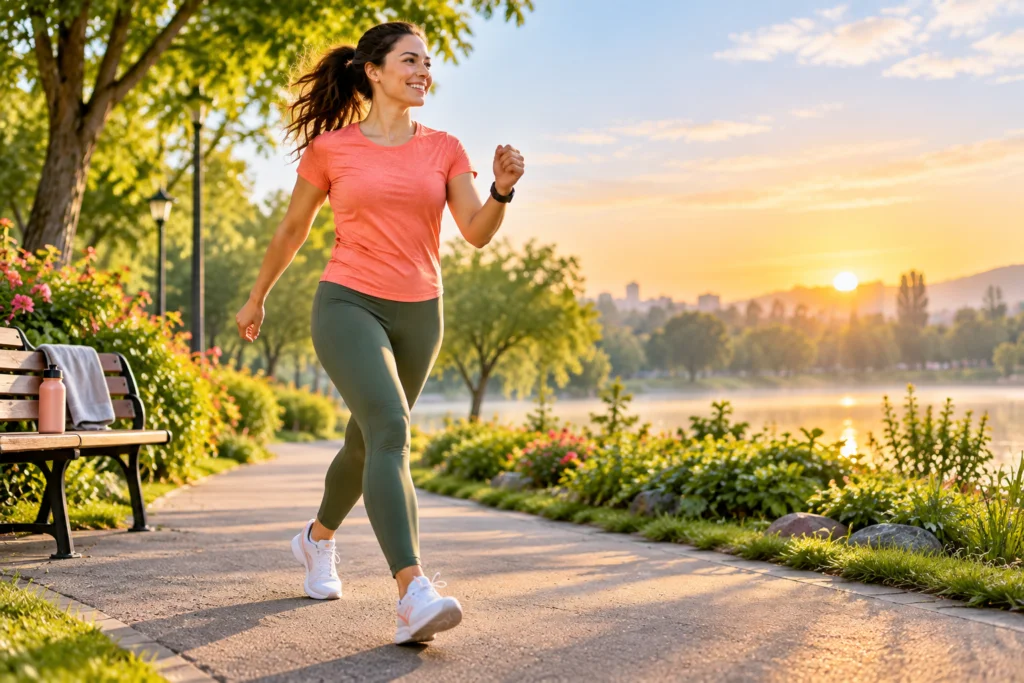
Image Description: Fit woman alternating between comfortable and brisk walking on a wide urban trail, wearing a peach athletic shirt, dark teal leggings, and white sneakers, bright morning sunlight, modern buildings softly blurred behind leafy trees, crisp pavement texture, realistic fitness photography, low side angle.
- Walk comfortably for 5 minutes to warm up your muscles and joints.
- Increase your pace for 1 minute, moving quickly without running.
- Return to an easy pace for 2 minutes before repeating.
- Complete 5 to 8 faster intervals during your session.
- Finish with several relaxed minutes to gradually bring your breathing down.
Short bursts of faster walking add intensity without requiring a long workout. The goal is a pace that feels noticeably quicker while remaining manageable. As your fitness improves, you can gradually extend the brisk intervals or shorten recovery periods. This approach also gives a regular walk more structure and variety.
Incline Walking Route
Image Description: Woman walking uphill on a paved park trail, wearing a mustard yellow athletic top, forest green leggings, and white sneakers, warm afternoon sunlight, gentle hillside, tall trees, textured pavement, natural shadows, realistic fitness photography, rear three-quarter camera angle, clean Pinterest wellness aesthetic.
Quick Tip: Choose a gentle hill rather than the steepest route available. Walk uphill at a controlled pace, keeping your posture tall and taking shorter steps instead of leaning heavily forward.
Inclines make your legs work harder and can raise your heart rate without requiring a faster pace. Start with one or two gentle hills during a regular outing. As the route becomes easier, add another incline or repeat the same hill once more. Keep your steps controlled, especially when walking downhill.
Recovery Walk
Image Description: Woman taking a relaxed walk through a quiet botanical garden, wearing a dusty rose athletic shirt, sage green leggings, and white sneakers, soft morning light filtering through leafy branches, smooth stone pathway, gentle shadows, natural textures, realistic fitness photography, eye-level rear perspective.
BEFORE: A demanding workout can leave your legs feeling heavy and make the next session harder to start. Skipping movement completely may also turn one tiring day into several inactive days.
AFTER: A gentle recovery walk keeps you moving without adding much stress. Ten to 25 relaxed minutes can help you stay consistent while giving your body time between harder sessions.
Recovery days still count. Keep your pace comfortable enough to hold a conversation without struggling for breath. Choose a flat route, wear supportive shoes, and resist the urge to turn an easy session into a speed workout. In my experience, having a low-pressure option makes weekly movement easier to maintain.
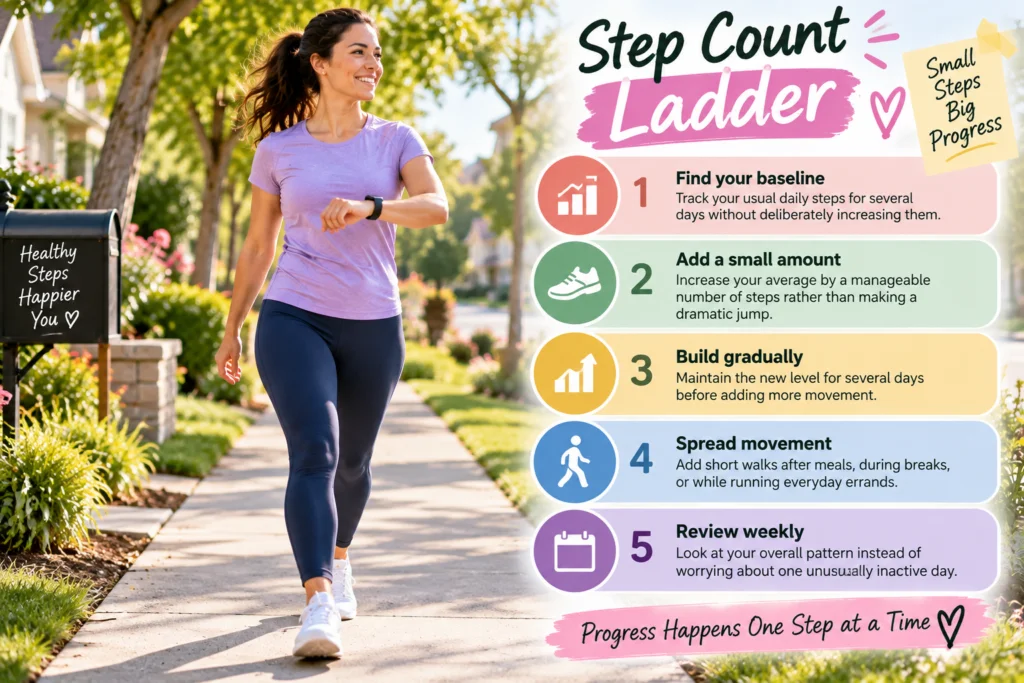
Step Count Ladder
Image Description: Woman walking through a sunny neighborhood with a fitness watch visible on her wrist, wearing a lavender athletic top, navy leggings, and white sneakers, warm natural daylight, tree-lined sidewalk, tidy homes softly blurred, realistic fitness photography, waist-level side perspective.
- Find your baseline: Track your usual daily steps for several days without deliberately increasing them.
- Add a small amount: Increase your average by a manageable number of steps rather than making a dramatic jump.
- Build gradually: Maintain the new level for several days before adding more movement.
- Spread movement: Add short walks after meals, during breaks, or while running everyday errands.
- Review weekly: Look at your overall pattern instead of worrying about one unusually inactive day.
A gradual step increase gives your body time to adapt while keeping the routine realistic. There is no universal step number that guarantees a particular amount of weight loss. Focus on building more movement into your normal day, then adjust based on energy, schedule, and recovery.
Postmeal Walks
Image Description: Woman walking along a peaceful residential sidewalk after a meal, wearing a soft blue athletic shirt, warm beige leggings, and white sneakers, golden evening light, leafy trees, subtle homes in background, clean pavement, realistic lifestyle fitness photography, eye-level side angle.
| Option A | Option B |
|---|---|
| One longer walk | Several short walks |
| Requires a larger time block | Fits around daily routines |
| Best for uninterrupted exercise | Best for busy schedules |
| Can feel harder to fit in | Easier to repeat consistently |
Short walks after meals can make daily movement feel less demanding because they attach exercise to something already happening. A 10 to 15 minute stroll after breakfast, lunch, or dinner can contribute to your overall activity without requiring a separate workout block. Keep the pace comfortable and focus on consistency.
The most useful choice is the one that fits your actual schedule. If a single long session feels difficult to maintain, divide your walking into smaller outings. Keep comfortable shoes nearby, choose familiar routes, and use everyday transitions as reminders to move. Small sessions can add up across the day.
Arm Swing Walk
Image Description: Woman walking briskly through a sunny city park, wearing a coral athletic shirt, olive leggings, and white sneakers, arms swinging naturally beside her body, leafy trees, smooth pathway, soft morning sunlight, warm green and peach palette, realistic fitness photography, waist-level side camera perspective.
DO:
- Keep your elbows comfortably bent while walking.
- Swing your arms naturally from front to back.
- Keep your shoulders relaxed instead of lifting them.
- Match your arm movement to your walking rhythm.
DON’T:
- Swing your arms aggressively across your body.
- Clench your fists tightly throughout the walk.
- Lift your shoulders toward your ears.
- Force a large arm motion that feels uncomfortable.
A natural arm swing helps coordinate your upper and lower body while maintaining a steady walking rhythm. It should support your stride, not dominate it. Keep your hands relaxed and let the movement develop naturally as your pace increases. Good walking form should feel controlled, comfortable, and sustainable from start to finish.
Steady Distance Goal
Image Description: Woman walking along a long lakeside trail, wearing a soft peach athletic shirt, dark green leggings, and white sneakers, bright natural daylight, calm blue water, distant trees, textured gravel path, realistic fitness photography, wide side perspective, clean wellness Pinterest aesthetic.
Time: 25 to 40 minutes | Skill Level: Beginner to intermediate | Best For: Building endurance | Setting: Park, trail, or neighborhood | Difficulty: Moderate
A consistent distance goal can help turn scattered walks into a predictable routine. Start with a distance that feels manageable rather than choosing an ambitious target immediately. Add a little distance as your endurance improves, while keeping at least some easier sessions during the week for recovery.
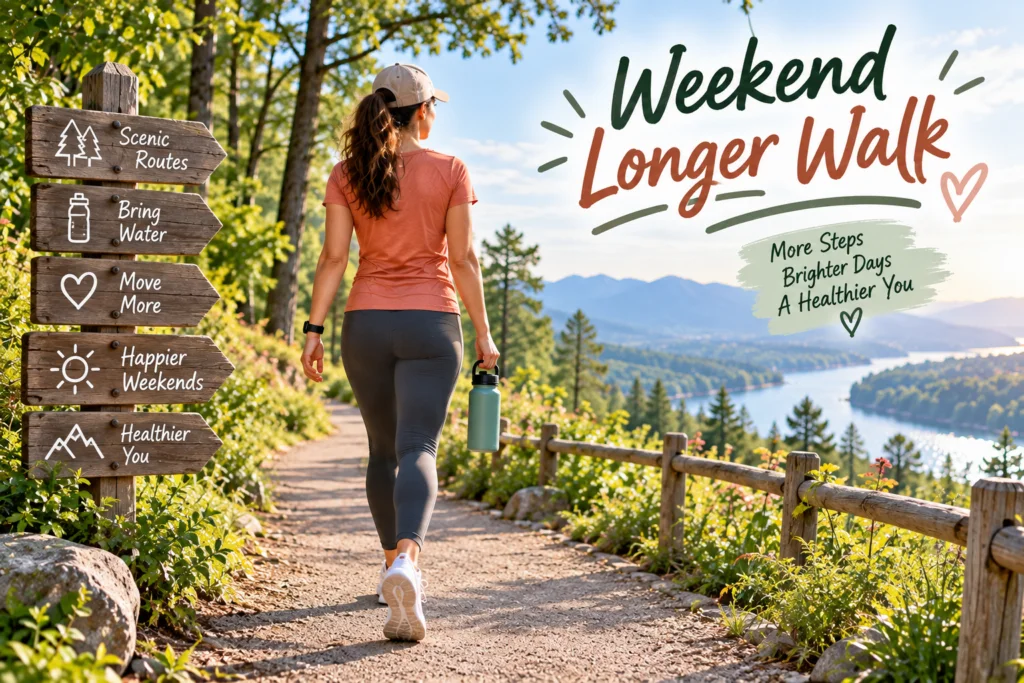
Weekend Longer Walk
Image Description: Active woman walking on a scenic green trail during a bright weekend morning, wearing a terracotta athletic top, charcoal leggings, and white sneakers, soft golden sunlight, tall trees, natural trail textures, distant hills, realistic fitness photography, wide-angle rear perspective, fresh Pinterest wellness aesthetic.
Longer weekend walks can give your weekly activity a useful boost while leaving busy weekdays less demanding. Choose a scenic route, bring water, and begin at a comfortable pace. If you normally walk for 25 minutes, adding 10 minutes is enough to create a gradual increase without making the outing overwhelming.
I’ve noticed that enjoyable routes are easier to repeat than workouts chosen only for calorie burn. Pick a park, trail, waterfront path, or quiet neighborhood that makes the time feel pleasant. Keep the intensity moderate, especially if your weekday sessions already include hills or faster intervals. Consistency remains the foundation.
Route Variety
Image Description: Woman walking along a colorful mixed-terrain route featuring a paved sidewalk, leafy park trail, and gentle hill, wearing a mustard athletic top, teal leggings, and white sneakers, bright natural daylight, soft shadows, trees and urban details, realistic fitness photography, elevated three-quarter perspective.
Cost: Free | Time: 20 to 45 minutes | Skill Level: Beginner | Best For: Preventing routine boredom | Works In: Parks, neighborhoods, trails
Repeating the same route can make regular exercise feel predictable. Rotate between a neighborhood loop, park pathway, gentle hill, and scenic trail throughout the week. Changing scenery also gives you different surfaces, inclines, and surroundings to explore while keeping your basic walking routine familiar and manageable.
Walking With Music
Image Description: Woman walking confidently through a tree-lined urban path with wireless earbuds, wearing a bright coral athletic shirt, navy leggings, and white sneakers, clear morning sunlight, leafy background, smooth pavement, realistic fitness photography, side profile camera angle, energetic yet uncluttered Pinterest aesthetic.
Music can make a familiar walk feel more engaging. Create a playlist with a steady rhythm and choose songs that help you maintain a comfortable pace. Keep the volume low enough to remain aware of traffic, cyclists, other pedestrians, and your surroundings, especially on outdoor routes.
For variety, create separate playlists for easy walks, brisk sessions, and longer outings. A familiar song can become a simple cue to pick up your pace for a short interval. If you’re walking near roads or shared paths, stay alert rather than becoming completely absorbed in your headphones.
Incline And Flat Mix
Image Description: Woman walking across a route combining a flat paved park section with a gentle grassy incline, wearing a dusty blue athletic top, rust leggings, and white sneakers, warm natural sunlight, leafy trees, textured pathway, soft hills in background, realistic fitness photography, wide side perspective.
BEFORE: A completely flat route may eventually feel too easy as your endurance improves. Repeating the same pace and terrain can also make your sessions feel less challenging.
AFTER: Alternating flat sections with gentle inclines creates natural changes in effort. You can recover on level ground before approaching another hill, making the session varied without requiring constant speed changes.
Start with five to 10 minutes on flat ground, then include a gentle incline for several minutes before returning to level terrain. Repeat the pattern according to your fitness level. Keep your stride shorter on hills and avoid rushing downhill. This simple route design works especially well for walkers who want more variety without running.
Hydration Walk Prep
Image Description: Woman preparing for an outdoor walk beside a bright kitchen counter, wearing a sky blue athletic shirt and olive leggings, reusable water bottle, walking shoes, small towel, and fitness watch arranged neatly, soft natural window light, warm neutral background, realistic lifestyle photography, overhead three-quarter view.
- Fill your bottle: Bring water for longer walks, hot conditions, or routes without reliable water access.
- Check the weather: Adjust your clothing and walking time when temperatures or humidity are high.
- Dress comfortably: Choose breathable clothing and supportive footwear suited to your route.
- Plan ahead: Place your shoes, bottle, and other essentials where you can grab them quickly.
Good preparation removes small obstacles before they become reasons to skip a session. Hydration needs vary with temperature, activity level, and individual factors, so drink regularly rather than forcing a specific amount. For longer or hotter walks, plan where you can refill your bottle or take a cooling break.
Walking Buddy
Image Description: Two women walking together on a sunny park pathway, wearing coordinated coral and sage athletic tops with navy leggings and white sneakers, leafy trees, soft golden daylight, natural shadows, textured pavement, realistic fitness photography, eye-level rear perspective, friendly Pinterest wellness aesthetic.
A walking partner can turn exercise into a regular social appointment. Choose someone whose pace is reasonably similar and agree on a simple route before starting. Conversation should remain comfortable rather than leaving either person breathless, especially during longer sessions.
| Solo Walk | Walking Partner |
|---|---|
| Flexible start time | Shared schedule |
| Choose your own pace | Match a comfortable pace |
| Quiet personal time | Social interaction |
| Easy to change routes | Plan routes together |
There is no need to make every session social. Solo walks can provide quiet time, while buddy walks can make consistency easier on days when motivation is low. In my experience, having a planned meeting time can reduce the temptation to postpone a walk because someone else is expecting you.
Walking Breaks
Image Description: Woman taking a brisk walking break outside a modern office building, wearing a lavender athletic top, charcoal leggings, and white sneakers, midday natural light, landscaped walkway, glass architecture softly blurred, clean pavement textures, realistic fitness photography, waist-level side perspective.
DO:
- Walk for 5 to 10 minutes during suitable breaks.
- Use stairs or longer routes when practical.
- Keep comfortable walking shoes accessible.
- Stand and move after extended sitting periods.
DON’T:
- Wait for a full free hour before moving.
- Turn every break into an intense workout.
- Ignore pain or unusual discomfort.
- Let a missed break discourage you from moving later.
Short activity breaks can increase your total daily movement without requiring another formal workout. Set a simple reminder if long periods of sitting are common during your day. Even a few minutes of walking can help break up sedentary time, while your main sessions can remain focused on purposeful exercise and endurance.
Comfortable Walking Shoes
Image Description: Pair of supportive walking shoes placed beside a park bench, with a woman preparing for her walk in a soft coral athletic shirt and sage leggings, warm morning sunlight, green grass, textured pavement, neutral earthy palette, realistic fitness photography, low-angle close-up with background softly blurred.
Time: 5 minutes to prepare | Skill Level: Beginner | Best For: Daily walking | Result: Better comfort and consistency
Foot comfort can determine whether a walking routine feels sustainable. Choose shoes that fit comfortably, provide appropriate support for your feet, and suit the surfaces you usually walk on. Replace worn footwear when cushioning, tread, or overall structure has noticeably deteriorated.
Comfortable Walking Pace
Image Description: Woman walking steadily along a bright botanical garden pathway, wearing a peach athletic shirt, deep teal leggings, and white sneakers, soft morning sunlight through trees, colorful flowers, smooth stone walkway, realistic fitness photography, eye-level side angle, crisp Pinterest wellness aesthetic.
The right pace should feel purposeful without becoming exhausting. Start slowly for several minutes, then settle into a rhythm where your breathing is faster but controlled. For moderate intensity, the talk test can help: you should generally be able to speak, although singing would be difficult.
For beginners, pace matters less than building a repeatable habit. A comfortable 20 minute walk completed regularly can be more useful than an intense session that leaves you too tired to continue. I’ve noticed that people often walk faster naturally as their endurance improves, so there is no need to force speed immediately.
Weekly Walking Schedule
Image Description: Open weekly planner beside walking shoes, fitness watch, water bottle, and sunglasses on a light wooden desk, soft morning window light, cream and sage color palette, clean organized background, realistic lifestyle photography, overhead perspective, Pinterest-friendly wellness planning aesthetic.
| Flexible Routine | Structured Routine |
|---|---|
| Walk whenever time allows | Planned walking days |
| Easier to adjust | Easier to track |
| May vary from week to week | Creates predictable habits |
| Useful during busy periods | Useful for building consistency |
A weekly schedule gives your walking routine a clear place in your life. Start with realistic sessions you can maintain, such as three or four walks each week. Include easier days between demanding sessions when needed. Record the duration or distance so you can see patterns without becoming focused on perfection.
Posture Check
Image Description: Woman walking upright along a sunlit park path, wearing a muted coral athletic shirt, forest green leggings, and white sneakers, shoulders relaxed, head aligned naturally, leafy trees and soft grass surrounding the walkway, warm natural light, realistic fitness photography, waist-level side perspective.
DO:
- Keep your head comfortably upright and look ahead.
- Let your shoulders stay relaxed rather than raised.
- Keep your torso tall without stiffening your back.
- Allow your arms to move naturally beside your body.
DON’T:
- Stare downward at your feet throughout the walk.
- Lean heavily forward from your waist.
- Shrug your shoulders while increasing your pace.
- Force your posture into a rigid position.
Good walking posture should feel natural rather than posed. A comfortable head position, relaxed shoulders, and steady trunk can help you move efficiently. Check your posture occasionally instead of constantly correcting yourself. If discomfort appears, slow down and reassess your stride, footwear, route, or overall workload before increasing intensity.
Water Bottle Habit
Image Description: Woman walking beside a lakeside trail carrying a reusable turquoise water bottle, wearing a light yellow athletic shirt, sage leggings, and white sneakers, bright natural daylight, calm blue water, green trees, smooth pathway, realistic fitness photography, three-quarter rear perspective.
Cost: Low | Time: Seconds to prepare | Skill Level: Beginner | Best For: Longer outdoor walks | Works In: Parks, trails, neighborhoods
Keeping a reusable bottle ready makes hydration easier to remember before leaving home. For short walks in comfortable weather, you may not need to carry much water, while longer sessions, heat, and humidity can increase fluid needs. Pay attention to thirst and your personal requirements rather than following a rigid rule.
Make the bottle part of your walking setup. Place it beside your shoes, keys, or fitness watch so it becomes a visual reminder before you leave. On longer routes, check whether water is available along the way. Preparation becomes especially useful during warm weather when fluid loss can increase.
Walking Playlist
Image Description: Woman walking confidently through a leafy neighborhood with wireless earbuds, wearing a dusty pink athletic top, dark teal leggings, and white sneakers, golden afternoon sunlight, textured sidewalk, trees and modern homes softly blurred, realistic fitness photography, side profile perspective, clean lifestyle aesthetic.
A good playlist can give your walking sessions a simple rhythm. Start with slower songs for your warm-up, use steady tracks during the main portion, and finish with calmer music. Choose familiar songs that keep you moving without encouraging an uncomfortable pace.
For safety, keep the volume low enough to hear your environment. On roads, shared paths, or crowded areas, remain alert to vehicles, cyclists, and other pedestrians. I’ve found that changing the playlist occasionally can make a familiar route feel fresh without changing the workout itself. Music should support your routine, not distract from safe walking.
Hill Repeat Walk
Image Description: Woman walking uphill on a gently sloped park trail, wearing a burnt orange athletic shirt, deep green leggings, and white sneakers, bright natural sunlight, tall trees, textured pathway, soft blue sky, realistic fitness photography, low side camera angle, crisp Pinterest wellness aesthetic.
Time: 25 to 35 minutes | Skill Level: Intermediate | Best For: Building walking intensity | Setting: Gentle hills | Difficulty: Moderate
Hills can increase the effort of a walking session without requiring you to run. Start with a gentle incline and walk upward at a controlled pace. Return to flat ground for recovery, then repeat according to your fitness level. Keep your steps shorter on the climb and maintain steady breathing.
Distance Progression
Image Description: Woman walking along a long tree-lined trail with a fitness watch visible on her wrist, wearing a dusty blue athletic shirt, rust-colored leggings, and white sneakers, warm morning sunlight, green foliage, smooth pathway, realistic fitness photography, wide side perspective.
Progress feels easier when you increase your walking workload gradually. Start with a distance you can complete comfortably, then add a small amount after your body has adapted. Keep track of your walks using time, distance, or both, but avoid feeling pressured to increase every session.
A useful progression might be 20 minutes one week, 25 minutes the next, followed by another gradual increase. If your legs feel unusually tired or sore, hold your current level instead of pushing forward. I’ve noticed that steady progress is easier to maintain when the goal is consistency rather than constantly chasing a bigger number.
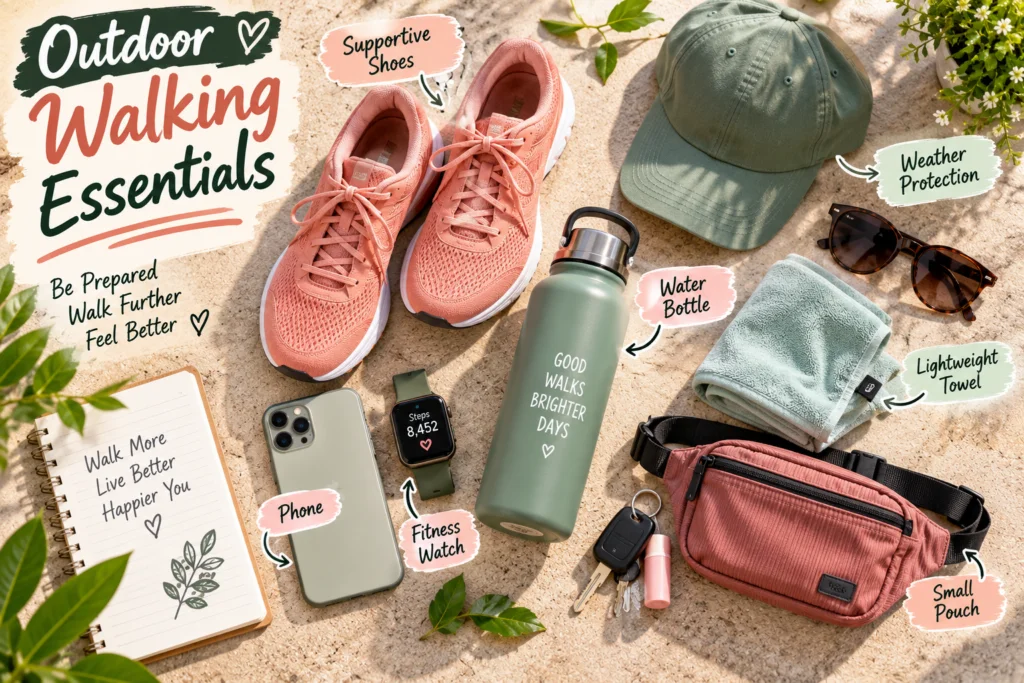
Outdoor Walking Essentials
Image Description: Flat-lay arrangement of walking essentials including supportive sneakers, reusable water bottle, sunglasses, fitness watch, lightweight towel, cap, and small waist pouch on a textured beige surface, warm natural sunlight, soft shadows, earthy coral and sage palette, realistic lifestyle photography, overhead Pinterest composition.
- Supportive shoes: Choose comfortable footwear suited to your walking surface.
- Water bottle: Carry water when your route, duration, or weather makes hydration practical.
- Weather protection: Use sunglasses, a cap, or suitable layers based on outdoor conditions.
- Phone: Keep it available for navigation, communication, or emergency needs.
- Small pouch: Store keys and other essentials without carrying unnecessary weight.
Keeping your basic gear ready can remove friction before a walk. Store everything in one place so you do not have to search for supplies each time. For outdoor sessions, check weather and route conditions before leaving. The simpler your preparation becomes, the easier it is to start on ordinary busy days.
Tempo Walking Blocks
Image Description: Woman walking briskly on a wide urban trail, wearing a bright apricot athletic shirt, navy leggings, and white sneakers, clear morning sunlight, modern buildings and leafy trees softly blurred, smooth pavement, realistic fitness photography, low side camera angle, energetic Pinterest wellness aesthetic.
Cost: Free | Time: 25 to 35 minutes | Skill Level: Beginner to intermediate | Best For: Increasing intensity | Result: More purposeful sessions
Tempo blocks add structure without turning a walk into a running workout. After warming up, walk briskly for several minutes, then return to an easier pace. Repeat the pattern two or three times. Your faster sections should feel challenging but controlled, with enough recovery to maintain good form.
Evening Walk Routine
Image Description: Woman walking through a peaceful neighborhood at sunset, wearing a soft lavender athletic shirt, olive leggings, and white sneakers, warm golden-orange light, long shadows, leafy trees, quiet sidewalk, realistic fitness photography, eye-level rear perspective, calming Pinterest wellness aesthetic.
Evening can be a practical time to fit movement into a busy schedule. A short walk after work or dinner creates a clear transition between daily responsibilities and personal time. Keep the route familiar and well lit, and choose a comfortable pace rather than trying to compensate for missed activity earlier.
I’ve noticed that routines linked to an existing habit are easier to remember. Put your walking shoes near the door and choose a consistent starting cue, such as finishing dinner or closing your laptop. Even a 15 to 20 minute outing can help you maintain your weekly movement pattern without demanding a large block of time.
Rest Day Walking
Image Description: Woman taking a gentle stroll through a quiet botanical garden, wearing a soft peach athletic top, sage green leggings, and white sneakers, diffused morning sunlight, flowering plants, smooth stone pathway, natural textures, realistic fitness photography, wide rear perspective, peaceful Pinterest wellness aesthetic.
DO:
- Keep the pace easy enough for relaxed conversation.
- Choose flat, comfortable routes.
- Use shorter sessions when your body feels tired.
- Treat recovery as part of your weekly routine.
DON’T:
- Turn every recovery walk into a speed session.
- Add steep hills when your legs need rest.
- Ignore persistent pain or unusual fatigue.
- Increase distance simply because you feel pressured to hit a number.
Easy movement can help you stay active while giving your body a break from harder sessions. A recovery walk might last 10 to 20 minutes and should feel comfortable from beginning to end. If you are unusually fatigued or experiencing pain, resting completely may be more appropriate than walking.
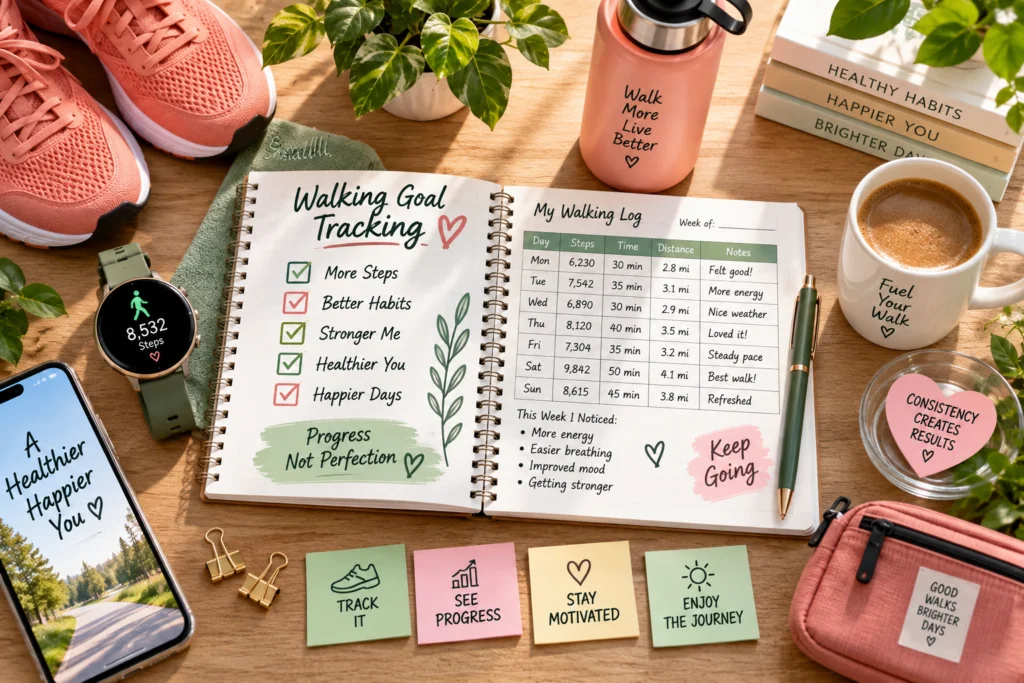
Walking Goal Tracking
Image Description: Fitness journal open beside walking shoes, smartwatch, water bottle, and pen on a light wooden desk, soft morning window light, sage, cream, and coral color palette, simple weekly activity notes visible, realistic lifestyle photography, overhead camera perspective, clean Pinterest wellness aesthetic.
Time: 2 minutes daily | Skill Level: Beginner | Best For: Building consistency | Cost: Free
Tracking a few simple details can show patterns that are easy to miss. Record your walking time, distance, route, or how the session felt. You do not need to track everything. Choose one or two measures that help you understand your progress without making exercise feel like paperwork.
Review your notes once a week rather than judging individual days. A busy day with fewer steps does not erase several consistent sessions. Look for trends such as longer walks, easier breathing, or improved comfort on familiar routes. Those changes can be useful signs that your routine is becoming more sustainable.
Walking With Hills
Image Description: Woman walking through a rolling green park with gentle hills and flat sections, wearing a turquoise athletic shirt, warm brown leggings, and white sneakers, bright natural daylight, soft clouds, leafy trees, textured path, realistic fitness photography, wide-angle side perspective.
Hills change the effort of a walk without requiring complicated equipment. Begin on level ground, then approach a gentle incline at a controlled pace. Shorten your stride as the slope increases and keep your upper body relaxed. Return to flat terrain afterward to recover before choosing another incline.
For beginners, one or two hills during a regular route may be enough. More experienced walkers can repeat a moderate incline several times while keeping recovery periods comfortable. That’s why gradual progression matters: your route should challenge your current ability without making every session feel like a test.
Active Errand Walking
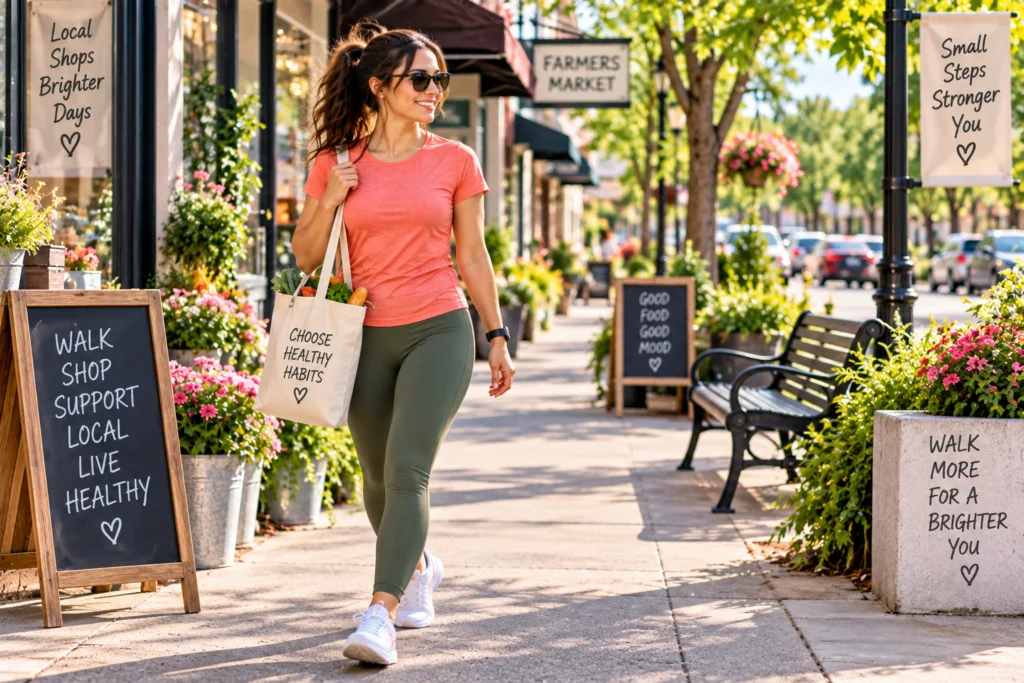
Image Description: Woman walking through a lively neighborhood carrying a small reusable shopping bag, wearing a coral athletic shirt, dark olive leggings, and white sneakers, bright daytime light, local shops and trees in background, clean sidewalk textures, realistic lifestyle photography, eye-level side perspective.
- Walk nearby errands: Choose destinations within a comfortable walking distance when practical.
- Park farther away: Add a few extra minutes by choosing a spot slightly beyond the closest option.
- Use walking routes: Take a pedestrian-friendly path instead of automatically choosing the shortest driving route.
- Carry light items: Keep bags manageable so they do not interfere with comfortable posture or balance.
- Combine trips: Group nearby errands into one walking outing when your schedule allows.
Everyday movement can add meaningful activity without feeling like another workout. The key is choosing realistic opportunities rather than forcing yourself to walk everywhere. A pharmacy, café, market, or nearby appointment may provide a natural reason to move. Over time, these small choices can increase total daily activity while fitting around normal responsibilities.
Conclusion
Weight loss does not require every walk to be long or intense. The most useful routine is one you can repeat, adjust, and enjoy as your fitness develops. These 23 ideas give you practical ways to add variety, build endurance, increase daily movement, and stay consistent.
Choose one idea that fits your life this week and start there. I’ve seen how small changes can make regular movement much easier to maintain. Save this post on Pinterest so you can return to it when you need fresh motivation, and share it with someone who could benefit from a more practical walking program. Keep moving, stay consistent, and let each walk build momentum.