21 Indoor Walking Workout Ideas for Invigorating Days
Introduction
Need an easy way to keep moving when outdoor walks are not an option? An indoor walking workout can turn a hallway, living room, or open corner into a simple space for daily activity.
These 21 ideas bring variety to your routine with pace changes, marching, side steps, arm movements, and other beginner-friendly options. Whether you’re short on time, dealing with bad weather, or simply prefer exercising at home, you can choose movements that fit your space and comfort level.
In my experience, having several simple options makes it easier to stay consistent because you can change the routine whenever your energy or available space changes. You’ll find practical ideas you can try today, along with ways to make indoor walking feel more engaging without complicated equipment.
Hallway Power Walk
Image Description: Bright modern hallway with warm oak flooring, soft natural window light, a woman in coral athletic wear walking briskly, white sneakers, subtle indoor plants, neutral walls, small wall mirror, clean uncluttered setting, gentle shadows, energetic Pinterest fitness aesthetic, eye-level camera perspective.
A long hallway can become a surprisingly useful walking track when outdoor weather is unpleasant. Walk briskly from one end to the other, turn smoothly, and keep your arms moving naturally. The repeated turns add structure without requiring equipment or much space.
I’ve noticed that short hallway sessions feel easier to start than longer workouts because the route is already available. Set a timer for 10 to 20 minutes and focus on steady movement rather than speed. Increase your pace for the final few minutes if you still feel comfortable.
Living Room Lap Walk
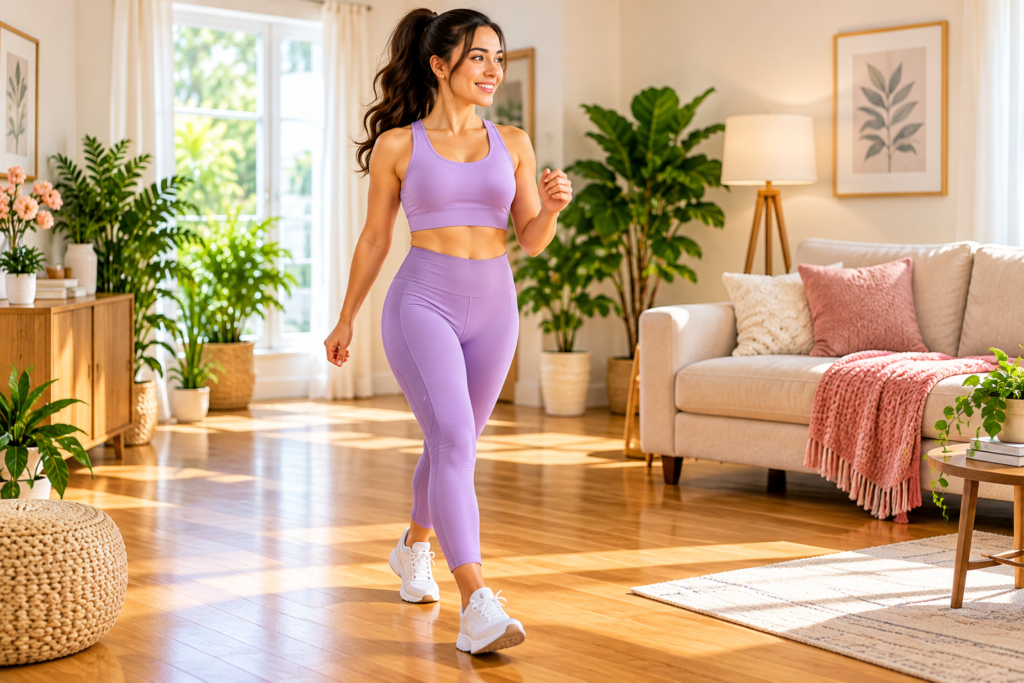
Image Description: Cozy living room with light beige walls, warm wooden floor, cream sofa pushed aside, green houseplants, soft daylight, woman wearing lavender workout clothes walking around clear furniture space, neutral decor, bright natural atmosphere, wide-angle camera view, clean Pinterest fitness photography.
Clear a safe path around the edges of your living room and turn ordinary walking into a simple indoor routine. Keep furniture corners, cords, rugs, and slippery surfaces out of your route before starting. A steady pace can raise your heart rate without making the workout complicated.
- Walk clockwise for several minutes, then reverse direction.
- Keep your shoulders relaxed and gaze forward.
- Swing your arms naturally instead of holding them tightly.
- Pick up your pace during the middle portion of the session.
- Slow down gradually before stopping.
For a more engaging session, divide your walk into short pace changes. Walk comfortably for two minutes, then increase your speed for one minute. Repeat the pattern several times. This approach keeps the routine from feeling monotonous and gives beginners an easy way to control intensity.
March And Move
Image Description: Sunlit home workout corner with pale blue walls, light wood floor, small exercise mat, woman in mustard yellow fitness clothing performing energetic marching movements, soft morning glow, minimal furniture, indoor plant, clean shadows, fresh Pinterest-style composition, slightly elevated camera angle.
Quick Tip: Keep your marching steps light and controlled rather than stomping. Drive each knee comfortably upward while moving your opposite arm forward. Start slowly, then increase your rhythm once your body feels warm.
Marching adds variety when continuous walking starts to feel repetitive. Begin with two minutes of relaxed movement, followed by 30 to 60 seconds of quicker marching. In my experience, alternating these speeds makes a short indoor session feel more purposeful while keeping the routine accessible for beginners.
Step Touch Intervals
Image Description: Bright home workout room with warm beige walls, honey wood flooring, woman in teal athletic clothing performing side-to-side step touches, soft natural window light, simple exercise mat, small potted plant, uncluttered furniture, gentle shadows, fresh Pinterest fitness aesthetic, eye-level perspective.
BEFORE: A steady walking pace can become repetitive when the same movement continues for several minutes. Your attention may drift, especially during longer indoor sessions.
AFTER: Add side-to-side step touches between walking intervals. The change in direction wakes up your movement pattern and gives your legs a brief variation without needing equipment.
Keep each interval controlled rather than rushing through the steps. Walk for three minutes, then step side to side for one minute before returning to your normal pace. I’ve found that simple movement changes can make an at-home routine feel less predictable and easier to stick with throughout the week.
Staircase Pace Walk
Image Description: Clean residential staircase with light wood steps and white walls, woman in bright blue workout clothes walking near the stairs, warm natural daylight, secure handrail, tidy landing, neutral decor, soft shadows, energetic yet safe home fitness atmosphere, angled camera perspective.
- Warm up first: Walk on a flat surface for several minutes before approaching the stairs.
- Start slowly: Step up and down at a comfortable pace while maintaining steady breathing.
- Use the rail: Keep one hand near the handrail when needed for balance and confidence.
- Alternate periods: Follow a short stair interval with several minutes of easy flat walking.
- Finish gently: Slow your pace and walk on the flat floor for a few minutes.
Stairs can add a stronger challenge to an indoor walking routine because each step requires more effort than level walking. Keep the intervals brief at first and avoid rushing. If your knees, ankles, or balance make stairs uncomfortable, stay on a flat route instead.
Walking With Weights
Image Description: Modern home fitness area with soft gray walls, pale wood flooring, woman wearing rose pink workout clothes holding two very light hand weights while walking, natural daylight, simple bench, indoor plant, uncluttered background, realistic Pinterest fitness photography, three-quarter camera angle.
| Comparison Point | Option A | Option B |
|---|---|---|
| Equipment | No weights | Light hand weights |
| Focus | Walking rhythm | Walking plus upper-body movement |
| Intensity | Lower | Higher |
| Best Starting Point | Beginners | Comfortable walkers |
Light weights can add upper-body work, but more resistance is not automatically better. Start with very light hand weights and keep your arm movements controlled. If holding weights changes your walking posture, grip, or balance, put them down and continue without them.
For many people, regular walking already provides enough activity without added resistance. I’ve noticed that maintaining comfortable posture matters more than making a routine harder. Keep your shoulders relaxed, avoid swinging weights aggressively, and choose a weight that allows smooth movement from beginning to end.
Arm Swing Walk
Image Description: Airy home workout space with cream walls and light oak flooring, woman in coral and peach athletic clothing walking with natural arm swings, large window providing soft daylight, green plant, simple bench, warm neutral palette, clean uncluttered background, realistic Pinterest fitness photography, front three-quarter view.
DO:
- Keep elbows softly bent while walking.
- Swing your arms naturally from the shoulders.
- Keep your hands relaxed instead of tightly clenched.
- Match your arm rhythm to your walking pace.
DON’T:
- Don’t swing your arms across your body.
- Don’t shrug your shoulders upward.
- Don’t force a large arm movement.
- Don’t sacrifice balance to walk faster.
A natural arm swing can make indoor walking feel more coordinated and active. Keep the movement comfortable and let your arms follow your steps instead of forcing them. A slightly quicker rhythm may raise your overall effort, but smooth technique should come first, especially during longer sessions at home.
Interval Pace Changes
Image Description: Stylish home fitness room with warm white walls, light wooden floor, woman in emerald green workout clothes walking briskly beside a digital timer, soft golden daylight, small water bottle, indoor plant, minimal decor, crisp shadows, energetic Pinterest aesthetic, wide-angle perspective.
Time: 15 to 20 minutes
Skill Level: Beginner to intermediate
Equipment: Timer or phone
Structure: Easy and brisk intervals
Best For: Building walking variety
A simple timer can turn an ordinary indoor walk into a structured session. Start with three minutes at an easy pace, then walk briskly for one minute. Repeat the pattern several times and finish with a slower period. The clear rhythm helps you stay focused without needing complicated choreography or equipment.
Low Impact Knee Lifts
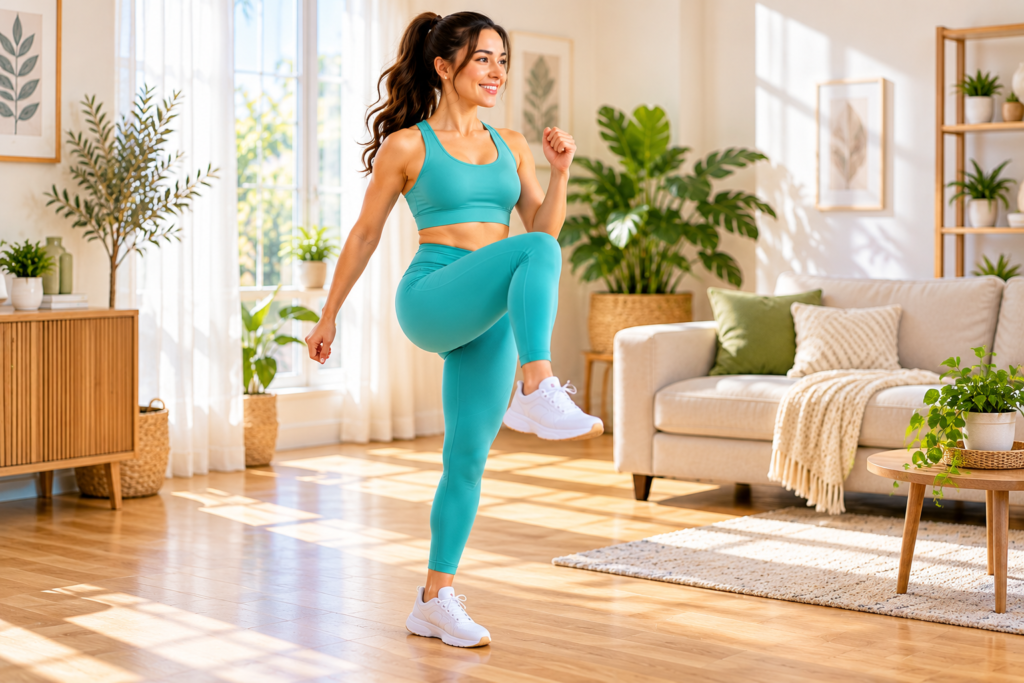
Image Description: Bright minimalist living room with soft cream walls and pale wood flooring, woman in turquoise athletic wear performing controlled knee lifts, sunlight through sheer curtains, small green plant, neutral sofa in background, clean open floor, soft shadows, Pinterest fitness photography, side-angle camera view.
Low impact knee lifts bring more movement into your routine without requiring jumping. Lift one knee at a time to a comfortable height while keeping your torso upright. Alternate sides steadily, then return to normal walking when your legs need a break.
For a beginner-friendly session, walk comfortably for two minutes before adding 30 seconds of knee lifts. Repeat the sequence several times. Keep your feet landing softly and avoid lifting higher than you can control. This variation works especially well in compact rooms where a longer walking path is unavailable.
Dance Step Walking
Image Description: Cheerful home workout room with warm peach walls, light wood flooring, woman in bright pink athletic wear combining walking steps with simple dance movements, soft afternoon sunlight, compact speaker, green plant, clear floor space, playful Pinterest fitness aesthetic, wide camera angle.
- Start with a comfortable walking pace for two minutes.
- Add simple side steps for 30 seconds.
- Return to forward and backward walking.
- Keep dance movements small enough to maintain balance.
- Use upbeat music with a steady rhythm.
Mixing simple dance steps into your walking session can make indoor movement feel more playful. Keep the choreography easy and repeatable rather than trying complicated moves. A few side steps, gentle turns, and rhythm changes can keep your feet active while giving your mind something different to focus on during the workout.
Music Tempo Walk
Image Description: Modern apartment workout corner with soft lavender walls, warm wooden flooring, woman in yellow athletic clothing walking while listening to music through wireless headphones, smartphone on a small stand, natural window light, houseplant, clean neutral decor, bright Pinterest fitness composition.
Quick Tip: Choose music with a steady beat that matches a comfortable walking rhythm. Begin with slower songs for warming up, use livelier tracks during your main session, then finish with calmer music as you cool down.
Music can give an indoor session a useful sense of structure. Create a short playlist with different energy levels and let each group guide your pace. Keep the volume low enough to remain aware of your surroundings, especially if you’re walking near furniture, stairs, pets, or other people.
Furniture-Free Walking Zone
Image Description: Spacious minimalist living room with furniture pushed safely against the walls, warm beige palette, light oak floor, woman in sky blue athletic clothing walking through an open central area, soft natural daylight, yoga mat nearby, subtle plants, clean Pinterest home fitness aesthetic, elevated camera angle.
BEFORE: Furniture, cords, loose rugs, and small objects can interrupt your walking path. Frequent obstacles may force sudden turns or awkward steps.
AFTER: A cleared central area creates a simple route for steady movement. With fewer distractions underfoot, you can concentrate on posture, pace, and controlled turns.
Before starting, inspect the floor and move anything that could catch your feet. Give yourself enough space to turn without bumping into furniture. Even a modest cleared area can support several minutes of continuous movement when you combine forward walking, side steps, and gentle direction changes.
Countertop Support Walk
Image Description: Bright modern kitchen with warm white cabinets, pale wood flooring, woman in coral workout clothes walking beside a clean countertop, soft morning sunlight, subtle green plant, uncluttered surfaces, neutral beige and cream palette, realistic Pinterest fitness photography, eye-level camera perspective, spacious safe pathway.
- Clear the route: Remove stools, bags, cords, and other objects from the walking area.
- Set your pace: Walk comfortably around the open kitchen space for several minutes.
- Use support carefully: Keep the countertop nearby for balance if needed, but avoid leaning heavily on it.
- Add direction changes: Alternate straight walking with controlled turns around the available space.
- Cool down: Finish with slower steps before stopping completely.
A kitchen can provide a convenient route when other rooms are occupied. Keep the countertop as a nearby balance point rather than something you continuously hold. This setup is especially useful for beginners who feel more confident having stable furniture within reach while practicing steady indoor movement.
Window Walking Loop
Image Description: Sunlit apartment with large windows, warm cream walls, natural oak flooring, woman in lavender athletic clothing walking along a clear perimeter route, sheer curtains, leafy indoor plants, soft morning glow, minimal furniture, peaceful Pinterest fitness aesthetic, wide-angle interior photography.
| Comparison Point | Small Loop | Long Loop |
|---|---|---|
| Space Needed | Limited | More open floor area |
| Turning Frequency | More frequent | Less frequent |
| Best Pace | Comfortable | Moderate to brisk |
| Ideal For | Apartments | Larger rooms or open homes |
Walking around a safe room perimeter can create a simple visual target when there is no long hallway available. Keep turns gradual and avoid cutting sharply around furniture. If the route becomes repetitive, change direction after several minutes or add short periods of faster walking to keep your attention engaged.
Sidewalk Simulation Steps
Image Description: Contemporary home workout area with light gray walls, warm wood floor, woman in bright orange athletic clothing performing controlled side-to-side walking steps, soft daylight through a large window, small digital timer, green plant, open floor, crisp Pinterest fitness photography, three-quarter angle.
DO:
- Step sideways in a controlled rhythm.
- Keep your knees softly bent.
- Alternate directions after several repetitions.
- Maintain enough space between your feet and nearby furniture.
DON’T:
- Don’t cross your feet while moving quickly.
- Don’t rush the direction changes.
- Don’t use slippery socks on smooth flooring.
- Don’t continue if you feel unstable.
Side-to-side movement adds variety without requiring a large walking distance. It can also break up long periods of forward walking. Keep the steps small at first, especially if you’re unfamiliar with lateral movement. Once your balance feels secure, alternate brief side-step intervals with comfortable forward walking.
Room-to-Room Walk
Image Description: Bright modern home with connected living room and hallway, warm oak floors, woman in mint green athletic clothing walking between rooms, soft natural window light, cream walls, small indoor plants, tidy furniture placement, airy neutral palette, realistic Pinterest fitness photography, wide-angle perspective.
Time: 15 to 25 minutes
Skill Level: Beginner
Equipment: None
Best For: Homes with multiple connected rooms
Intensity: Easy to moderate
Walking between two or three rooms creates a natural route without requiring special equipment. Choose spaces with clear floors and avoid areas where rugs slide or furniture creates tight corners. Change direction at each room entrance and maintain a steady rhythm to keep the session organized.
Countdown Walking Blocks
Image Description: Cozy home fitness corner with soft beige walls, light wood flooring, woman in royal blue athletic clothing walking beside a smartphone displaying a simple countdown timer, warm lamp glow mixed with window light, water bottle, leafy plant, uncluttered decor, Pinterest wellness aesthetic.
A countdown timer gives each walking block a clear finish line. Walk steadily for five minutes, then take a brief slower period before starting another block. Seeing the minutes decrease can make a longer session feel easier to manage, especially when motivation is low.
For extra variety, assign a different goal to each block. Use the first for warming up, the next for a brisk pace, another for relaxed walking, and the final block for a controlled finish. Keep the structure simple enough that you can remember it without repeatedly checking your phone.
Heel-To-Toe Walking
Image Description: Minimalist indoor fitness space with pale beige walls and natural wood flooring, woman in soft pink athletic clothing practicing controlled heel-to-toe walking, bright window light, simple exercise mat, small plant, clean open floor, gentle shadows, realistic Pinterest fitness photography, close three-quarter angle.
Quick Tip: Slow down and pay attention to how each foot contacts the floor. Let the heel land first, roll gently through the foot, and push away through the toes without exaggerating the movement.
Heel-to-toe walking encourages mindful foot placement during an indoor session. Keep your gaze forward and take comfortable steps rather than making them unusually long. I’ve noticed that slowing down occasionally helps people become more aware of their posture and balance, which can make the overall routine feel more controlled.
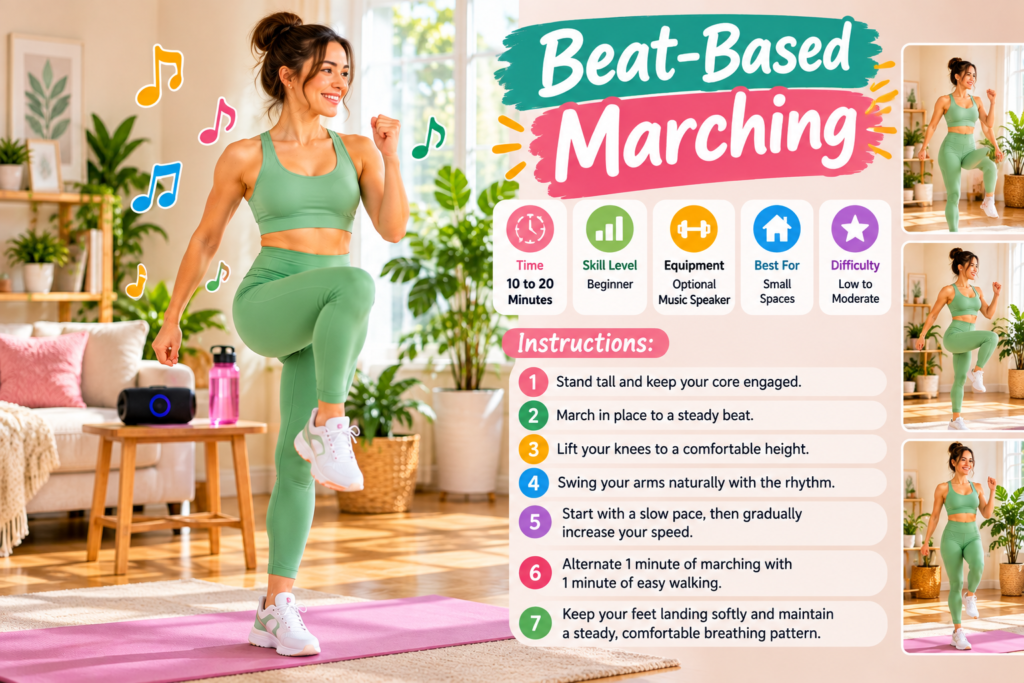
Beat-Based Marching
Image Description: Bright home fitness studio with warm cream walls, pale wood flooring, woman in vibrant green athletic clothing marching in place to music, wireless speaker nearby, soft natural daylight, leafy plant, minimal furniture, clean open space, energetic Pinterest fitness aesthetic, front-facing camera angle.
Time: 10 to 20 minutes
Skill Level: Beginner
Equipment: Optional music speaker
Best For: Small spaces
Difficulty: Low to moderate
Marching to a steady beat gives your feet a simple rhythm to follow. Start with relaxed steps, then gradually increase your cadence without forcing your knees higher than feels comfortable. Keep your torso upright and let your arms move naturally.
For a compact workout area, alternate one minute of marching with one minute of easy walking around the room. This creates regular changes in movement while keeping the routine simple. Choose a floor with good traction and wear supportive footwear if that feels more comfortable.
Reverse Walking Practice
Image Description: Spacious modern living room with light beige walls and honey wood flooring, woman in sky blue workout clothing carefully walking backward along a clear straight path, soft daylight, neutral sofa in background, indoor plant, uncluttered floor, realistic Pinterest fitness photography, side-angle view.
Walking backward requires more attention than ordinary forward movement, so safety should come first. Clear the entire route before beginning and move slowly. Keep your steps short, maintain an upright posture, and stop immediately if you feel unsteady.
Start with just 20 to 30 seconds of backward walking beside a clear wall or open space, then return to forward movement. In my experience, short intervals are easier to control than trying to maintain the movement for several minutes. Skip this variation if your balance is uncertain or the environment cannot be cleared safely.
Walk And Reach
Image Description: Airy home workout room with soft peach walls, light oak flooring, woman in turquoise athletic clothing walking while reaching one arm forward at a time, warm natural window light, small plant, simple mat, uncluttered background, fresh Pinterest fitness photography, three-quarter camera angle.
- Reach forward gently while maintaining a steady walking rhythm.
- Alternate arms rather than extending both at once.
- Keep your shoulders relaxed throughout the movement.
- Return each arm naturally before taking the next reach.
Combining walking with controlled reaches adds upper-body movement without requiring complicated choreography. Keep the range comfortable and avoid twisting aggressively as you reach. After several minutes, return to ordinary walking so your muscles can relax before repeating another short movement block.
Conclusion
Staying active does not require a gym or a large workout area. These indoor walking workout ideas give you simple ways to add movement, vary your pace, and make better use of the space you already have.
Start with one idea that feels comfortable, then experiment with another as your confidence grows. I’ve noticed that small changes in movement can make home workouts feel much less repetitive. Save this post on Pinterest so you can return to these ideas whenever you need inspiration, and share it with someone looking for easy ways to stay active at home. Keep moving, keep experimenting, and make each walk count.