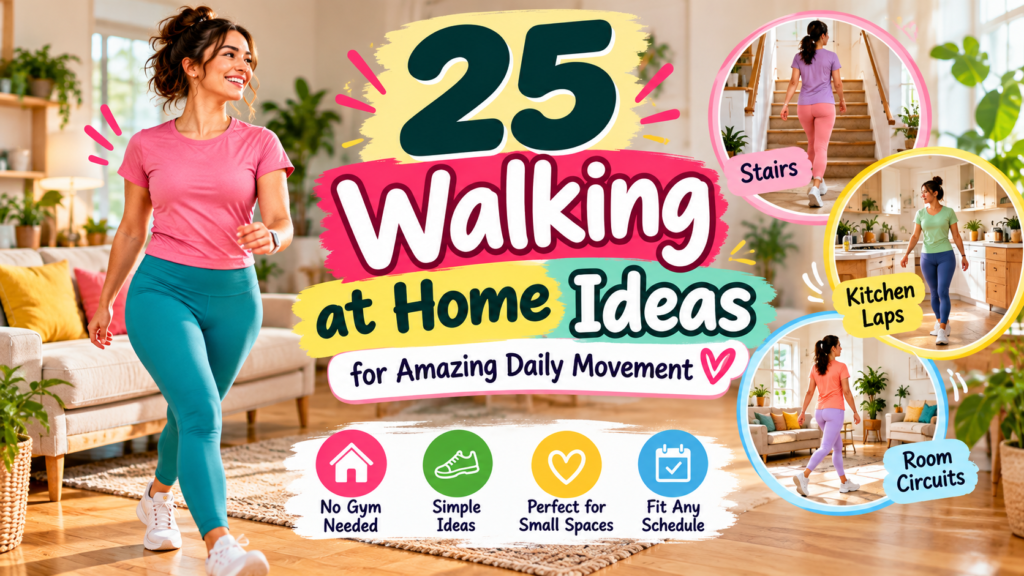
25 Walking at Home Ideas for Amazing Daily Movement
Introduction
You do not need a gym, fancy equipment, or a large room to move more each day. Walking at home can turn small pockets of free time into practical movement that fits your routine.
This article brings together simple ideas you can use in hallways, living rooms, bedrooms, kitchens, and other clear areas around your home. Some options focus on steady movement, while others add gentle intervals, direction changes, music, or everyday routines to keep things interesting.
The biggest benefit is flexibility. You can choose a five-minute option when your schedule is packed or create a longer indoor session when you have more time. In my experience, having several easy choices makes daily movement feel less repetitive and easier to maintain. Explore the ideas, choose one that fits your space today, and build from there.
Hallway Power Walk
Image Description: Bright modern hallway with warm oak flooring, soft cream walls, and a woman wearing a coral athletic top with navy leggings walking briskly. Natural morning light streams through a nearby window, creating gentle shadows. Minimal decor, clean lines, white sneakers, and a bright, energetic Pinterest fitness aesthetic.
A hallway can become a surprisingly useful walking lane when you keep the route clear. Walk from one end to the other at a steady pace, turn carefully, and repeat. Keep your arms moving naturally instead of holding them stiffly. A timer can help you stay focused without counting every lap.
I’ve noticed that short indoor routes feel easier to maintain when the goal is simple: keep moving for a set amount of time. Start with five minutes, then add another few minutes as your comfort improves. This setup works especially well during work breaks, rainy afternoons, or days when getting outside is inconvenient.
Living Room Marches
Image Description: Cozy living room with a beige sofa, light wood floor, cream rug, and large windows filled with soft daylight. A woman in a lavender workout shirt and teal leggings performs high-knee marching in place. Warm neutral decor, subtle plants, natural textures, and a clean lifestyle photography composition.
- Lift one knee at a time toward hip height without leaning backward.
- Swing the opposite arm forward to create a natural walking rhythm.
- Keep your feet landing softly to reduce unnecessary impact.
- Start with 30 seconds, then rest briefly before repeating.
- Lower the knee height if your balance or mobility feels limited.
Marching in place turns a small patch of floor into an active movement station. It raises your heart rate while giving you control over speed and intensity. For extra variety, alternate between a relaxed march and faster intervals. A simple playlist can make several short rounds feel less repetitive and easier to continue.
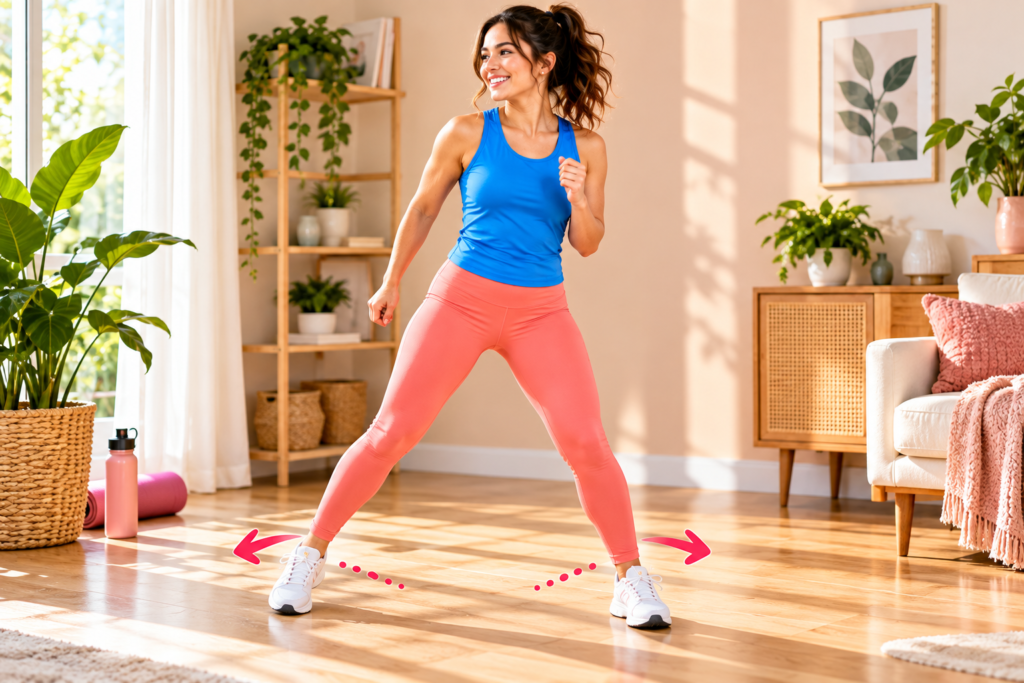
Step-Touch Intervals
Image Description: Sunlit home workout corner with pale wooden flooring, soft peach walls, and a small green plant beside a woven basket. A woman wearing a bright blue tank top and coral leggings performs side-to-side step touches. Soft natural light, cheerful colors, minimal furniture, and an upbeat Pinterest fitness aesthetic.
Quick Tip: Keep the steps small at first and focus on a steady rhythm. Touch the floor lightly with the trailing foot instead of jumping. Once the movement feels comfortable, increase your pace for 20 to 30 seconds, then return to an easier rhythm.
Step-touch intervals add side-to-side movement without requiring much space. They can wake up your legs after sitting and provide an easy change from forward walking. I’ve found that alternating slower and faster periods keeps indoor sessions interesting. Use a clear floor area and avoid slippery socks while moving laterally.
Kitchen Counter Laps
Image Description: Bright contemporary kitchen with warm wood cabinets, light stone countertops, and pale tile flooring. A woman wearing a mint green athletic shirt and plum leggings walks briskly around the kitchen island. Soft morning sunlight enters through a window, with subtle plants and clean surfaces creating a fresh home fitness aesthetic.
Before: Sitting in the kitchen during cooking breaks can turn several spare minutes into inactive time. The available floor space may seem too limited for meaningful movement.
After: Short laps around the island or counter create a simple walking route. Keep corners wide, remove loose rugs, and maintain a steady pace while staying clear of hot cookware.
A few minutes between meals can become useful movement time without changing your daily schedule. Walk clockwise for one round, then reverse direction to vary the movement pattern. In my experience, attaching activity to an existing routine, such as waiting for food to cook, makes short sessions easier to remember.
Timed Room Circuits
Image Description: Open-plan home interior with a neutral beige sofa, light oak floors, soft blue accent wall, and large windows. A woman in a yellow athletic top and charcoal leggings walks through several connected rooms. Bright natural daylight, clean furniture arrangement, subtle greenery, and an airy lifestyle photography style.
- Choose your route: Connect two or three clear areas, such as the living room, hallway, and bedroom.
- Set a timer: Begin with 5 to 10 minutes and maintain a comfortable walking pace.
- Change direction: Reverse your route halfway through the session to add variety.
- Add short bursts: Walk faster for 20 to 30 seconds before returning to your regular pace.
Room circuits make indoor movement feel more structured without requiring equipment. They also give you a clear beginning and ending, which can help prevent the session from feeling aimless. Keep furniture corners and cables out of your route before starting. Increase the duration gradually rather than trying to make every circuit intense.
Treadmill Incline Walks
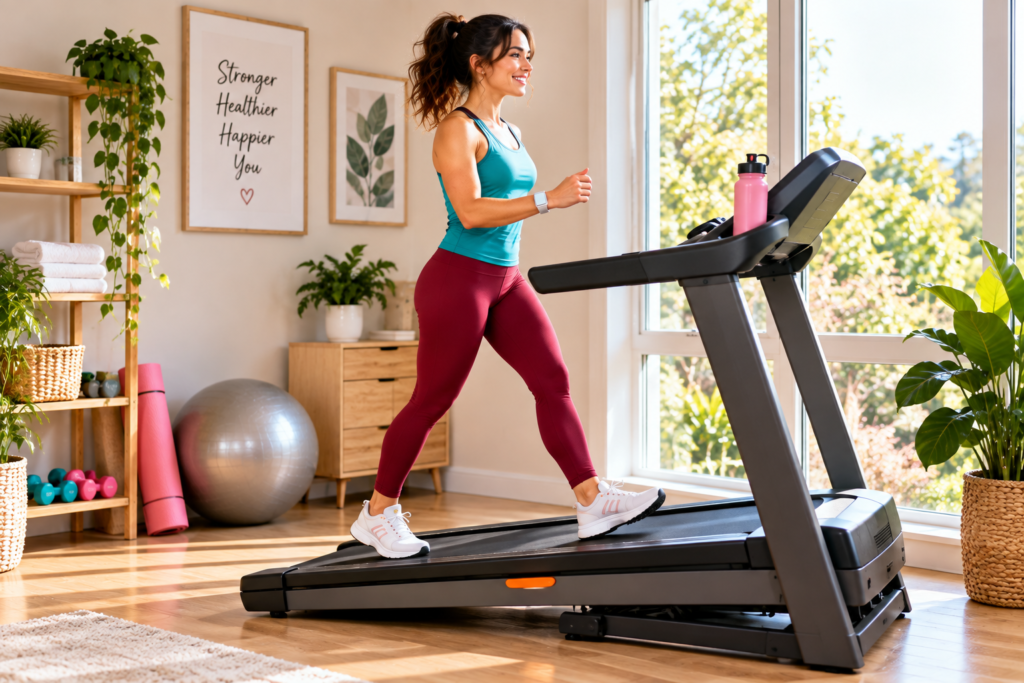
Image Description: Modern home workout room featuring a compact treadmill beside a large window, light wood flooring, and neutral walls. A woman in a turquoise athletic top and burgundy leggings walks at a gentle incline. Natural daylight, subtle wall decor, water bottle nearby, realistic fitness photography, clean composition.
| Feature | Option A: Flat Walk | Option B: Incline Walk |
|---|---|---|
| Effort | Lower | Higher |
| Pace | Comfortable | Moderate |
| Leg Demand | Lower | Greater |
| Best For | Easy movement | Added challenge |
A treadmill can provide a consistent indoor route when outdoor conditions are inconvenient. Walking on a gentle incline increases the muscular demand compared with flat walking, so begin conservatively. Hold the rails only when necessary for balance, maintain an upright posture, and reduce the incline if your form becomes uncomfortable.
Stair Step Walks
Image Description: Bright home staircase with light oak steps, white walls, and a simple wooden handrail. A woman wearing a rose pink athletic top and teal leggings carefully steps up and down one stair at a time. Soft daylight fills the space, with clean textures and a realistic Pinterest fitness photography style.
DO
- Keep your entire foot secure on each step.
- Use the handrail when you need extra balance.
- Maintain a controlled pace instead of rushing.
- Start with a short interval and build gradually.
DON’T
- Skip steps during a beginner session.
- Run up or down stairs when tired.
- Continue if you feel unstable or dizzy.
- Use cluttered stairs as your workout area.
Stair walking adds a natural change in elevation and can make a short session more challenging. Start with one or two minutes, then rest before repeating. I’ve noticed that controlled movement is more useful than rushing through the steps. Choose a well-lit staircase and keep the area completely clear before beginning.
Dance Walk Patterns
Image Description: Cheerful living room with honey-colored wood flooring, soft cream walls, and colorful cushions on a neutral sofa. A woman in a sky blue workout top and bright orange leggings performs rhythmic walking steps. Warm natural light, small indoor plants, open floor space, and energetic lifestyle photography.
Cost: Low | Time: 5 to 15 minutes | Skill Level: Beginner | Best For: Variety | Works In: Living room or bedroom
Walking to music can make repetitive indoor movement feel more playful. Match simple forward steps with side steps, gentle turns, or two-step patterns while keeping your movements controlled. Pick songs with a steady beat rather than extremely fast tracks. The goal is continuous movement, not complicated choreography.
Window-to-Door Walks
Image Description: Spacious apartment interior with cream walls, light oak flooring, and a large bright window opposite a white doorway. A woman in a soft green athletic top and pink leggings walks between the two points. Natural afternoon light, minimal furniture, woven textures, and a clean Pinterest lifestyle aesthetic.
Start with the shortest route in your home and turn it into a repeatable walking path. Moving between two fixed points gives you a simple visual target, so you can concentrate on your pace rather than planning each movement.
I’ve seen this approach work well for people who dislike complicated workout routines. Set a timer for five minutes and walk between the window and doorway at a comfortable speed. Keep turns controlled, maintain good posture, and clear anything that could become a trip hazard.
Music-Paced Walking
Image Description: Stylish home fitness area with warm beige walls, pale wooden flooring, and a compact speaker on a small shelf. A woman wearing a bright pink athletic top and olive green leggings walks rhythmically across the room. Soft golden daylight, subtle plants, woven textures, and an upbeat Pinterest lifestyle photography aesthetic.
- Pick a steady playlist: Choose songs with consistent beats that make maintaining a comfortable rhythm easier.
- Match your pace: Walk naturally with the music instead of forcing your steps to match every beat.
- Change intensity: Use one song for relaxed movement and the next for a slightly faster pace.
- Keep the floor clear: Move furniture, cords, and loose mats away from your walking route.
Music gives your indoor session a simple rhythm and can make several minutes of movement feel less repetitive. I’ve noticed that familiar songs can also make it easier to stick with a planned duration. Keep the volume low enough to hear your surroundings, especially if other people are moving through the home.
Phone Break Walks
Image Description: Bright home office with a light wood desk, cream chair, indoor plant, and large window. A woman in a cobalt blue athletic shirt and peach leggings walks while holding her phone safely at her side. Natural daylight, soft shadows, organized workspace, neutral textures, and realistic lifestyle photography.
Quick Tip: Turn short phone breaks into movement breaks by walking during calls, voice messages, or audio playback when you do not need to look at the screen. Keep the phone secure and your eyes focused on the walking path rather than the display.
Small movement breaks can add up across a busy day. Walk around the room during a casual call or take several laps after finishing a message. This approach works especially well for people who spend long periods at a desk. Keep hands free when possible and avoid walking while reading or typing.
Pillow-Free Floor Route
Image Description: Minimal bedroom with warm beige walls, pale wood flooring, neatly made bed, and a soft cream bench placed against the wall. A woman wearing a turquoise workout top and raspberry leggings walks along a clear floor route. Gentle morning light, clean surfaces, cozy textures, and polished Pinterest fitness styling.
Before: Bedroom floors can become crowded with baskets, shoes, chargers, and small furniture. That makes an indoor route difficult to follow safely and may interrupt your movement.
After: Clearing a simple loop creates enough room for repeated walking. Keep the pathway wide, move small objects aside, and use the same route whenever you want a quick movement session.
A clear floor route removes unnecessary decisions before you begin. Spend two minutes moving obstacles, then walk the same loop for five to ten minutes. This setup is particularly useful in smaller homes where a dedicated exercise area is unavailable. Recheck the floor before each session if the room is frequently used.
Chair-Side Walking
Image Description: Bright dining area with a round wooden table, cream upholstered chairs, light oak flooring, and soft natural window light. A woman in a coral workout top and sage green leggings walks around the outer edge of the table. Warm neutral palette, uncluttered floor, realistic home fitness photography, Pinterest-friendly composition.
- Clear the area: Move bags, cords, and small objects away from the walking path.
- Choose your direction: Walk around the table or chairs at a comfortable pace.
- Switch directions: Reverse the route halfway through your session to vary movement.
- Set a short goal: Start with five minutes and increase the duration gradually.
A dining area can provide a convenient walking loop without rearranging your entire home. Keep your shoulders relaxed and take controlled turns around furniture. The route should feel spacious enough for safe movement. This setup is especially practical during short breaks when you want activity without changing into a full workout routine.
Hallway Knee Lifts
Image Description: Long bright hallway with pale wood flooring, soft white walls, framed minimalist artwork, and warm natural daylight. A woman wearing a lavender athletic shirt and mustard leggings performs controlled knee lifts while walking forward. Clean architectural lines, subtle shadows, white sneakers, and polished Pinterest fitness photography.
| Movement | Option A: Regular Steps | Option B: Knee Lifts |
|---|---|---|
| Pace | Easy to moderate | Moderate |
| Knee Height | Natural | Slightly higher |
| Balance Demand | Lower | Greater |
| Best Use | Longer sessions | Short active bursts |
Walking with slightly higher knee lifts adds more active leg movement than regular steps. Keep the motion controlled and avoid pulling your knee higher than feels comfortable. Use a hallway with enough clearance and slow down near corners. Start with short intervals, especially if you are new to this movement pattern.
Laundry Room Laps
Image Description: Clean laundry room with white cabinets, pale gray flooring, a front-loading washer and dryer, and a small woven basket. A woman in a bright green athletic top and navy leggings walks through the open floor area. Soft overhead lighting mixed with daylight, organized surfaces, realistic home lifestyle photography.
DO
- Walk only through clear, dry floor space.
- Keep laundry baskets against the wall.
- Use short timed intervals while waiting for a cycle.
- Maintain an easy, steady pace.
DON’T
- Walk near spilled water or detergent.
- Carry heavy laundry while exercising.
- Rush around corners or appliances.
- Continue if the floor becomes slippery.
Household waiting time can become a useful movement opportunity. While a laundry cycle runs, walk through the available clear space for several minutes rather than remaining seated. Keep appliances, cords, and baskets out of your route. This small habit works best when the room stays organized and the floor remains completely dry.
Podcast Pace Walk
Image Description: Cozy home office and living area with warm beige walls, light oak flooring, a soft cream armchair, and a small speaker on a wooden shelf. A woman in a royal blue athletic top and lavender leggings walks while listening to a podcast. Gentle afternoon sunlight, indoor plants, clean textures, realistic Pinterest fitness style.
Best For: Longer sessions | Time: 10 to 30 minutes | Skill Level: Beginner | Equipment: Optional headphones | Space: One clear indoor route
A podcast gives your mind something interesting to follow while your body keeps moving. Choose an episode that matches the amount of time you have, then walk continuously through your clearest indoor route. Keep the pace comfortable enough that listening remains easy rather than turning the session into a stressful workout.
Countdown Lap Challenge
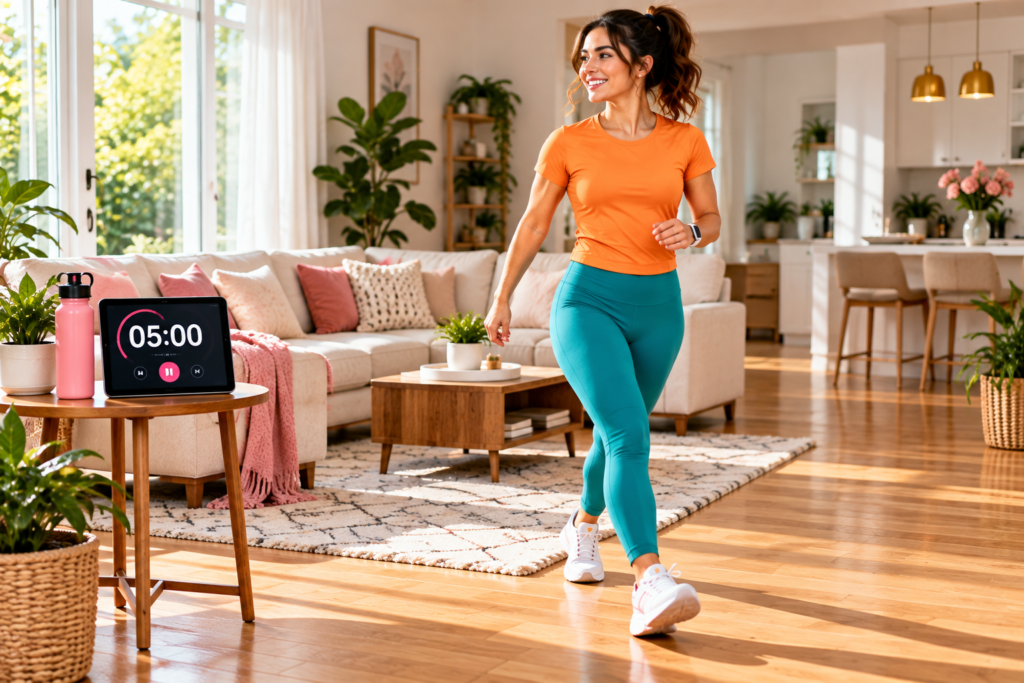
Image Description: Modern open living room with pale wooden floors, soft beige sofa, white walls, and a digital timer displayed on a small side table. A woman in a vivid orange athletic top and teal leggings walks briskly through the room. Bright natural light, subtle greenery, clean lines, and energetic Pinterest fitness photography.
Five minutes can feel much more manageable when broken into simple walking targets. Set a timer and focus on completing as many comfortable laps as you can without rushing. After the timer ends, take a short recovery break before deciding whether you want another round.
Start with a gentle pace for the first minute, then increase your rhythm slightly. I’ve noticed that countdowns can make short indoor sessions feel more purposeful because there is a clear stopping point. Keep your turns controlled and avoid chasing a specific lap number if it causes you to lose good posture.
Color-Coded Route
Image Description: Spacious home interior with light oak flooring, cream walls, and colorful removable floor markers creating a simple walking path. A woman wearing a mint athletic top and coral leggings follows the route. Bright natural daylight, soft shadows, minimal furniture, cheerful accents, and clean Pinterest fitness photography.
- Blue marker: Walk at an easy pace for one lap.
- Yellow marker: Increase your pace slightly for the next lap.
- Green marker: Return to a comfortable rhythm and focus on posture.
- Pink marker: Slow down for recovery before repeating the route.
Color cues turn an ordinary room into a simple visual walking circuit. Use removable markers that will not slide under your feet, and place them far enough apart for comfortable steps. The changing colors provide reminders to adjust your pace without constantly checking a timer. Keep the route uncluttered and easy to follow.
Morning Room Walk
Image Description: Sunlit bedroom opening into a bright hallway, with warm oak flooring, cream walls, white bedding, and a small green plant. A woman in a soft peach athletic top and sky blue leggings walks through the space. Gentle morning sunlight, airy textures, uncluttered furniture, fresh Pinterest fitness photography.
A few minutes of movement after waking can help you begin the day with activity already completed. Start with an easy pace while your body warms up, then gradually lengthen your stride or increase your rhythm. Keep the first few minutes comfortable rather than treating the session like an intense workout.
Walking between rooms can become a simple morning routine before breakfast, work, or household tasks begin. I’ve noticed that attaching movement to an existing habit makes it easier to remember. Keep water nearby, wear supportive footwear if needed, and stop if you feel pain, dizziness, or unusual discomfort.
TV Commercial Walks
Image Description: Cozy family room with a neutral sofa, warm wooden flooring, television on a simple media console, and soft ambient lighting. A woman in a bright yellow athletic top and forest green leggings walks briskly during a television break. Warm evening glow, subtle decor, clear floor, realistic lifestyle photography.
- Start during a break: Begin walking as soon as the commercial or pause starts.
- Use the room perimeter: Follow a clear route around furniture rather than weaving between objects.
- Keep the pace comfortable: Focus on steady movement instead of rushing to fit in more steps.
- Stop when the program resumes: Treat each break as a short movement opportunity.
Short television breaks can provide natural reminders to stand and move. Several brief walking periods throughout an evening may feel easier than scheduling one longer session. Keep your viewing area clear enough for safe turns, and avoid stepping backward while watching the screen. Your eyes should stay on the walking path whenever possible.
Desk-to-Door Routes
Image Description: Modern home office connected to a hallway, featuring a light wood desk, cream chair, pale flooring, and a white doorway. A woman wearing a lavender workout top and bright coral leggings walks between the desk and door. Natural window light, minimal decor, soft textures, and crisp Pinterest lifestyle photography.
Quick Tip: Use your desk and doorway as two fixed points for short movement breaks. After every focused work period, walk between them for several minutes before returning to your chair. Keep cables tucked away and avoid carrying drinks, laptops, or other objects while moving.
This simple route fits naturally into a work-from-home routine. Instead of waiting for a long free period, use brief breaks to add movement between tasks. A few minutes can help break up prolonged sitting. I’ve found that fixed destinations make indoor walking easier to remember because the route requires almost no planning.
Laundry Basket Circuits
Image Description: Bright utility room with white cabinets, light gray flooring, and a neatly placed woven laundry basket. A woman wearing a turquoise athletic top and peach leggings walks around the open floor area without carrying anything. Soft natural daylight, warm neutral textures, clean surfaces, realistic Pinterest fitness photography.
Before: Laundry tasks often involve repeated trips between rooms, but they may happen in short, scattered bursts without a consistent movement rhythm. Carrying a heavy basket can also make walking less comfortable.
After: Leave the basket safely in place and use the surrounding clear space for short walking circuits. Complete several controlled laps while waiting for the next laundry task.
Separating the walking from the lifting makes this routine easier to control. Walk for three to five minutes while clothes are washing or drying, then return to your household task. Keep the floor dry and the route free from clothing, cords, and baskets. The goal is steady movement, not speed.
Clockwise Counterclockwise
Image Description: Open-plan living room with pale wood flooring, beige sofa, soft blue accent chair, and large windows. A woman in a coral athletic shirt and emerald green leggings walks around the room perimeter. Bright natural daylight, gentle shadows, minimal decor, clean walking path, polished Pinterest fitness photography.
- Begin clockwise: Walk around the room perimeter at an easy, controlled pace.
- Maintain your rhythm: Keep your shoulders relaxed and your steps comfortable.
- Reverse direction: After several minutes, switch to a counterclockwise route.
- Finish gradually: Slow your pace for the final minute before stopping.
Changing direction can add variety to an otherwise repetitive indoor route. The movement pattern stays simple, but reversing your turns keeps you from following exactly the same path throughout the session. Give yourself plenty of space around furniture and slow down before every corner rather than turning sharply.
Interval Step Ladder
Image Description: Spacious home workout area with light maple flooring, warm cream walls, and a small digital timer beside a water bottle. A woman in a bright magenta athletic top and cobalt leggings performs progressively faster walking intervals. Soft daylight, minimal furniture, clean background, energetic Pinterest fitness aesthetic.
| Stage | Option A: Easy Pace | Option B: Faster Pace |
|---|---|---|
| Round 1 | 1 minute | 30 seconds |
| Round 2 | 1 minute | 45 seconds |
| Round 3 | 1 minute | 60 seconds |
| Recovery | 1 minute | 1 minute |
A step ladder gradually changes the amount of faster movement instead of making every interval equally demanding. Start with the easier option if you are new to structured exercise. Keep your breathing controlled and return to a relaxed pace during recovery. Progress only when the current level feels comfortable and repeatable.
Conclusion
Daily movement does not have to be complicated or require a major change to your schedule. These walking at home ideas give you practical ways to stay active using the space, time, and routines you already have.
Start with one idea that feels comfortable, then experiment with another when you want more variety. I’ve noticed that small changes, such as adding music or changing your route, can make indoor movement feel much more enjoyable.
Save this post on Pinterest so you can return to these ideas whenever you need inspiration. Try one today, share the article with someone who could benefit, and keep building a routine that works for you.