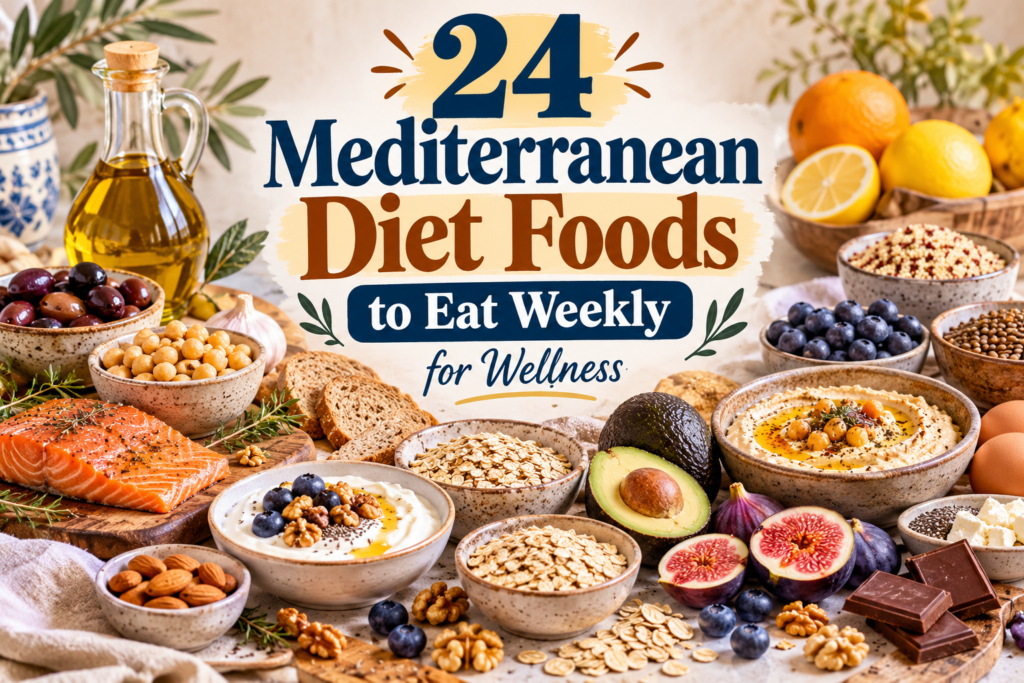
24 Mediterranean Diet Foods to Eat Weekly for Wellness
INTRODUCTION
Eating well doesn’t have to mean complicated recipes, expensive ingredients, or hours spent in the kitchen. Sometimes, a few simple food choices can make your weekly meals feel fresher, more colorful, and more satisfying.
These mediterranean diet foods to eat weekly will help you build a practical shopping list filled with nourishing ingredients you can enjoy throughout the week. From juicy tomatoes and creamy hummus to heart-healthy olive oil, whole grains, and fresh fish, each option brings something valuable to your table.
The Mediterranean diet focuses on vegetables, fruits, legumes, whole grains, nuts, seeds, and healthy fats, with fish and other protein sources included in balanced portions. I’ve noticed that keeping versatile staples ready makes everyday meal planning much easier. You can mix familiar ingredients in different ways, prepare quick lunches, and create satisfying dinners without following a strict menu. Explore these 24 food ideas, discover new combinations, and find simple ways to make nourishing meals part of your routine.
1. Extra Virgin Olive Oil
Image Description: A clear glass bottle of golden extra virgin olive oil beside a shallow ceramic bowl filled with olive oil, fresh olives, rosemary sprigs, and crusty whole-grain bread. Cream linen, warm beige stone, soft natural window light, subtle Mediterranean kitchen details, earthy neutral tones, overhead photography, realistic food styling, vertical Pinterest composition.
Extra virgin olive oil brings rich flavor and heart-healthy unsaturated fats to everyday meals. A small drizzle can make roasted vegetables, fresh salads, beans, and whole-grain dishes taste more satisfying without relying on heavy sauces. It is a staple of traditional Mediterranean eating.
Keep a bottle near your cooking area for easy access. Use it to sauté vegetables, dress salads with lemon juice, or finish a bowl of lentil soup. Since olive oil is calorie-dense, measure your portions when managing energy intake. A little often goes a long way.
2. Fresh Seasonal Vegetables
Image Description: A rustic wooden kitchen table covered with colorful seasonal vegetables, including ripe red tomatoes, purple eggplant, orange carrots, zucchini, bell peppers, and leafy spinach. Small ceramic bowls, a folded cream linen towel, warm morning sunlight, natural wood grain, fresh produce textures, overhead food photography, inviting Mediterranean farmhouse aesthetic, vertical composition.
- Tomatoes: Add fresh tomatoes to salads, sandwiches, sauces, or roasted vegetable trays.
- Spinach: Stir leafy greens into omelets, soups, pasta, or chickpea dishes.
- Bell peppers: Slice them for snacks or roast them with onions and zucchini.
- Eggplant: Bake or grill it with olive oil, garlic, and herbs.
- Carrots: Roast them as a colorful side dish or grate them into salads.
Seasonal vegetables bring fiber, vitamins, minerals, and variety to your weekly meals. Choose different colors throughout the week rather than buying only one or two types. Frozen vegetables are useful, too, especially when fresh produce is expensive or difficult to prepare. Keep washed, chopped vegetables in the refrigerator for quicker lunches and dinners.
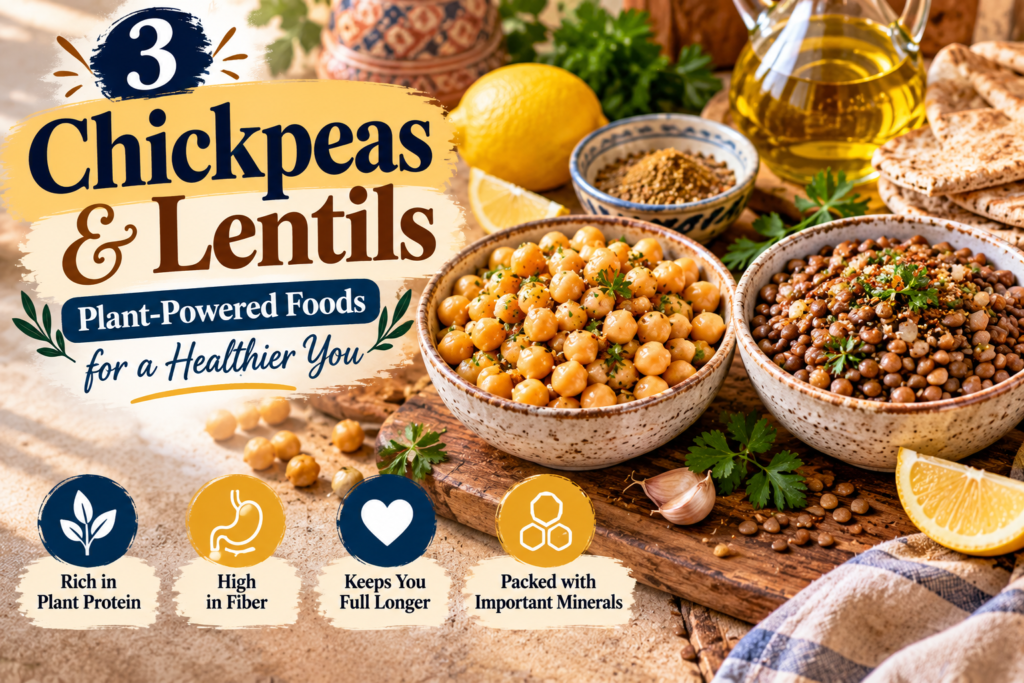
3. Chickpeas and Lentils
Image Description: Two handmade ceramic bowls filled with golden chickpeas and earthy brown lentils, surrounded by a small bowl of cumin, fresh parsley, lemon wedges, and whole-grain pita bread. Warm cream and terracotta tones, textured linen napkin, soft natural daylight, rustic wooden countertop, close-up overhead angle, realistic Mediterranean food photography, vertical Pinterest layout.
Quick Tip:
Cook a batch of chickpeas or lentils at the beginning of the week, then refrigerate them in airtight containers. Canned versions are convenient, too. Drain and rinse canned legumes to reduce excess sodium when appropriate.
Chickpeas and lentils provide plant-based protein, fiber, and important minerals. They also make meals more filling, which can help you stay satisfied between meals. Toss chickpeas into a tomato salad, blend them into hummus, or simmer lentils with onions, garlic, and spices for a comforting dinner. Pair legumes with vegetables and whole grains for a balanced plate without relying on meat every day.
4. Fresh Sardines and Salmon
Image Description: A Mediterranean-style ceramic platter holding grilled salmon fillets and golden sardines with lemon wedges, fresh parsley, sliced red onions, and roasted cherry tomatoes. A pale stone countertop, cream linen napkin, warm natural window light, subtle terracotta accents, crisp fish textures, appetizing close-up photography, realistic food styling, vertical Pinterest composition.
BEFORE
A weekly menu built around processed meats or the same chicken dishes can leave little room for fish. You might also miss out on the beneficial omega-3 fats found in oily seafood.
AFTER
Include salmon or sardines in one or two meals each week. Grill salmon with lemon, bake it with herbs, or serve canned sardines over whole-grain toast.
Both fish provide protein, while oily varieties supply omega-3 fats that support heart health. Pair them with roasted vegetables, brown rice, or a fresh tomato salad for a balanced meal. Frozen fillets and canned sardines can make fish more affordable and convenient, especially when fresh seafood is expensive or unavailable.
5. Whole-Grain Oats
Image Description: A rustic ceramic bowl of creamy oatmeal topped with sliced strawberries, blueberries, walnuts, and a light sprinkle of cinnamon. Rolled oats spill from a small wooden scoop onto a warm oak surface. Soft morning sunlight, cream linen, muted beige and berry colors, inviting Mediterranean-inspired breakfast styling, overhead realistic photography, vertical Pinterest composition.
- Choose your oats: Buy plain rolled or steel-cut oats without added sugar.
- Cook the base: Simmer oats in water or milk until creamy.
- Add fruit: Top with sliced apples, berries, or a chopped pear.
- Include healthy fats: Sprinkle walnuts, almonds, or chia seeds over the bowl.
- Flavor naturally: Finish with cinnamon instead of relying on sweetened toppings.
Whole-grain oats provide soluble fiber, including beta-glucan, which can help support healthy cholesterol levels. A warm bowl also makes breakfast easy to prepare before a busy day. For longer-lasting satisfaction, combine oats with nuts, seeds, or plain yogurt. Prepare overnight oats in the refrigerator when mornings leave little time for cooking.
6. Plain Greek Yogurt
Image Description: A white ceramic bowl filled with thick plain Greek yogurt, topped with fresh blueberries, sliced figs, chopped almonds, and a light drizzle of honey. A small glass jar of yogurt and wooden spoon sit on a cream marble countertop. Gentle morning light, soft shadows, neutral beige and purple tones, realistic close-up food photography, vertical Pinterest styling.
| Option A: Plain Yogurt | Option B: Sweetened Yogurt |
|---|---|
| Usually contains less added sugar | May contain substantial added sugar |
| Allows control over sweetness | Sweetness is set by the manufacturer |
| Pairs easily with fruit and nuts | May need fewer additional toppings |
| Provides protein and calcium | Protein and calcium vary by product |
Plain Greek yogurt offers protein and calcium in a simple, versatile food. Choose an unsweetened variety and add fresh fruit, cinnamon, or a few chopped nuts for flavor. Enjoy it at breakfast, as an afternoon snack, or as a creamy base for savory dips. Check the nutrition label because protein content and added ingredients vary between brands.
7. Almonds and Walnuts
Image Description: A small collection of rustic ceramic bowls filled with whole almonds, walnut halves, and a few crushed nuts scattered across a warm wooden table. Fresh figs, a cream linen napkin, and a glass jar add Mediterranean kitchen charm. Soft natural window light, rich brown and beige tones, detailed nut textures, overhead food photography, vertical Pinterest composition.
DO
- Portion a small handful of unsalted almonds or walnuts for a convenient snack.
- Sprinkle chopped nuts over oatmeal, plain yogurt, or fresh fruit.
- Add crushed walnuts to salads for extra crunch.
- Store nuts in airtight containers away from heat and direct sunlight.
DON’T
- Eat directly from a large bag if portion control is difficult.
- Choose heavily salted or sugar-coated varieties as everyday staples.
- Treat nuts as a replacement for vegetables or other food groups.
- Assume unlimited portions are suitable just because nuts contain healthy fats.
Almonds and walnuts provide unsaturated fats, fiber, and several important nutrients. Walnuts also contain plant-based omega-3 fatty acid ALA. Their satisfying crunch can make simple meals more enjoyable. Keep a small container in your pantry for quick snacks, but remember that nuts are energy-dense, so moderate portions work best for most people.
8. Fresh Mediterranean Fruits
Image Description: A colorful arrangement of fresh Mediterranean fruits, including oranges, red apples, purple grapes, figs, strawberries, and ripe pears in shallow ceramic bowls. A wooden cutting board, small fruit knife, and cream linen cloth rest on a light stone countertop. Bright natural daylight, warm neutral styling, vivid fruit textures, overhead realistic photography, vertical Pinterest composition.
Best For: Breakfast, snacks, and desserts
Cost: Varies by season and location
Preparation Time: About 2 to 5 minutes
Storage: Refrigerate cut fruit in covered containers
Fresh fruit adds natural sweetness, color, fiber, and vitamins to a Mediterranean-style eating pattern. Whole oranges, apples, pears, grapes, and seasonal berries are practical choices for a varied weekly menu.
Wash fruit before eating and keep easy-to-grab options visible in a bowl or refrigerator container. Pair an apple with a few almonds or enjoy berries with plain yogurt for a more satisfying snack. Choose whole fruit more often than juice because it retains its fiber and generally takes longer to eat.
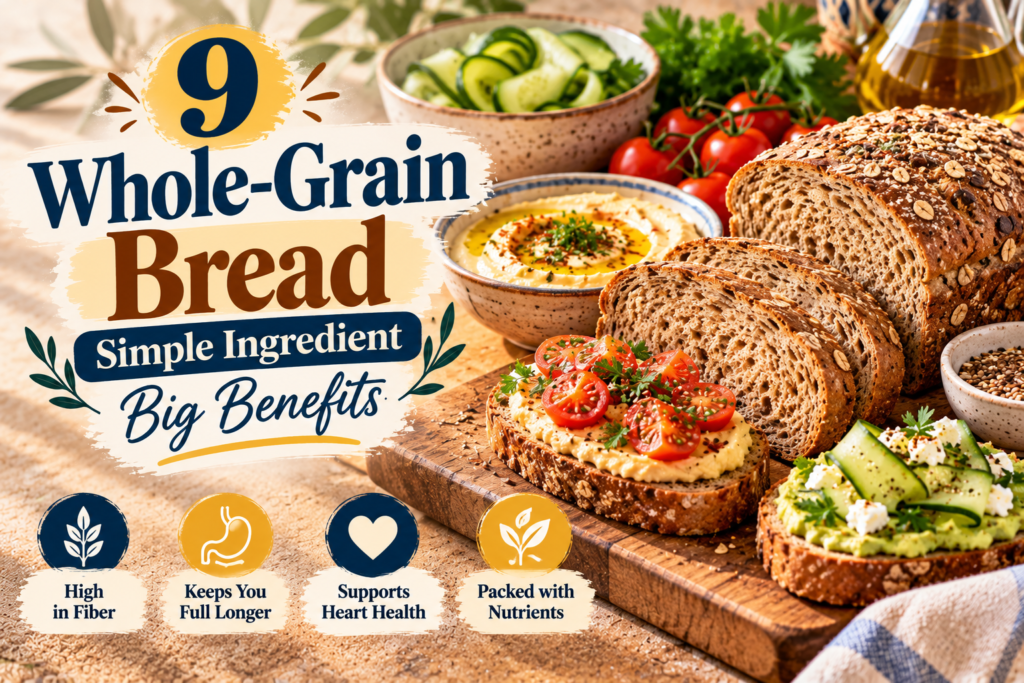
9. Whole-Grain Bread
Image Description: Several slices of hearty whole-grain bread arranged on a wooden cutting board beside a small bowl of hummus, ripe tomatoes, cucumber ribbons, and fresh parsley. A folded beige linen towel and ceramic plate complement the rustic setting. Soft morning sunlight, warm brown and cream palette, visible bread texture, close-up photography, vertical Pinterest composition.
A slice of whole-grain bread can turn a few simple ingredients into a satisfying meal. Look for bread listing whole wheat or another whole grain as the first ingredient, rather than relying on a brown color or a label that simply says multigrain.
Whole grains provide fiber and other nutrients that refined grains may contain in smaller amounts. Top toast with mashed chickpeas, sliced tomatoes, or sardines for a quick lunch. You can also serve whole-grain bread alongside vegetable soup or lentil stew. Check the sodium content when comparing packaged loaves, especially if you are limiting salt.
10. Creamy Hummus
Image Description: A shallow ivory ceramic bowl filled with creamy hummus, swirled with golden olive oil and sprinkled with paprika and chopped parsley. Crisp cucumber sticks, carrot batons, cherry tomatoes, and whole-grain pita wedges surround the bowl on a warm wooden board. Soft natural daylight, earthy beige and terracotta tones, realistic food photography, vertical Pinterest composition.
DO
- Blend chickpeas with tahini, lemon juice, garlic, and olive oil.
- Serve hummus with cucumber, carrots, and bell pepper strips.
- Spread it over whole-grain wraps instead of using heavy sauces.
- Refrigerate homemade hummus in a covered container.
DON’T
- Add excessive salt without tasting the mixture first.
- Assume every packaged variety has the same ingredients or nutrition.
- Leave hummus at room temperature for extended periods.
- Forget portion sizes when pairing it with other calorie-dense foods.
Hummus makes vegetables and whole-grain snacks more flavorful while supplying plant-based protein, fiber, and unsaturated fats. Store-bought versions can save preparation time on busy weekdays. Check the label for sodium levels and choose a variety that suits your needs. Keep a small bowl ready for an afternoon snack or a quick lunch plate.
11. Extra Virgin Olive Oil Dressing
Image Description: A clear glass cruet filled with golden olive oil beside a small ceramic bowl of lemon dressing, freshly cracked black pepper, chopped parsley, and lemon halves. A crisp green-free palette of cream, golden yellow, and warm brown decorates the rustic stone countertop. Soft window light, delicate shadows, close-up food photography, vertical Pinterest styling.
Quick Tip:
Whisk one tablespoon of extra virgin olive oil with fresh lemon juice, black pepper, and dried oregano. Taste before adding salt, then toss with enough dressing to lightly coat your salad.
Homemade dressing lets you control the ingredients while bringing bright flavor to leafy greens, tomatoes, cucumbers, and grain bowls. For a creamier texture, whisk in a little plain yogurt or mustard. Prepare only what you need for the meal, or refrigerate a small batch in a sealed container. Shake well before serving because oil and lemon juice naturally separate.
12. Garlic and Fresh Herbs
Image Description: Fresh garlic bulbs, peeled cloves, rosemary sprigs, thyme, oregano, and chopped parsley arranged on a rustic wooden cutting board with a small ceramic dish of olive oil. Warm cream linens, terracotta bowls, soft afternoon sunlight, detailed herb leaves, natural wood textures, earthy Mediterranean kitchen styling, overhead realistic food photography, vertical Pinterest composition.
BEFORE
Plain vegetables, beans, and fish can feel repetitive when every meal relies on the same seasoning. Reaching for extra salt or bottled sauces may become a habit when dishes lack fresh flavor.
AFTER
Sauté minced garlic in a little olive oil, then add chopped herbs or dried oregano. Finish roasted vegetables with parsley, or season lentils with thyme and black pepper.
Garlic and herbs help build flavor without requiring large amounts of salt. Fresh herbs bring brightness, while dried herbs are affordable pantry staples that last longer. Combine rosemary with roasted potatoes, oregano with tomatoes, and parsley with chickpeas. Small seasoning changes can make familiar ingredients feel different throughout the week.
13. Avocados and Healthy Fats
Image Description: A rustic ceramic plate holding ripe avocado halves and neatly sliced avocado arranged beside whole-grain toast, cherry tomatoes, lemon wedges, and fresh parsley. Warm wooden tabletop, cream linen napkin, soft natural morning light, creamy green avocado contrasted with golden bread and red tomatoes, detailed textures, overhead food photography, vertical Pinterest composition.
- Select ripe avocados: Choose fruit that yields slightly to gentle pressure.
- Slice or mash: Add lemon juice to brighten the flavor and slow browning.
- Build a balanced meal: Spread avocado over whole-grain toast or add it to a chickpea salad.
- Control portions: Start with a quarter or half avocado, depending on your meal and needs.
Avocados provide fiber, potassium, and mostly unsaturated fats. Their creamy texture makes simple meals feel more satisfying without needing butter-heavy spreads. Pair avocado with eggs, tomatoes, beans, or whole-grain bread for a nourishing breakfast or lunch. Because avocados are energy-dense, choose portions that fit your appetite and overall eating pattern.
14. Brown Rice and Whole Grains
Image Description: A shallow handmade ceramic bowl filled with fluffy brown rice, accompanied by pearl barley, quinoa, and whole-grain couscous in small rustic bowls. Fresh parsley, lemon wedges, and roasted cherry tomatoes decorate a light wooden surface. Warm natural window light, beige and golden-brown palette, visible grain textures, realistic overhead food photography, vertical Pinterest composition.
| Option A: Refined Grains | Option B: Whole Grains |
|---|---|
| White rice and regular couscous | Brown rice and whole-wheat couscous |
| Often contain less fiber | Generally retain more fiber |
| Can be quick to prepare | Cooking times vary by grain |
| Offer energy from carbohydrates | Provide carbohydrates plus additional nutrients |
Brown rice, barley, quinoa, and whole-wheat couscous add substance to Mediterranean-inspired meals. Whole grains generally provide more fiber than their refined counterparts, supporting digestion and helping meals feel more filling. Cook a batch ahead of time and refrigerate it promptly in shallow containers. Combine the grains with roasted vegetables, beans, or fish for convenient weekday lunches.
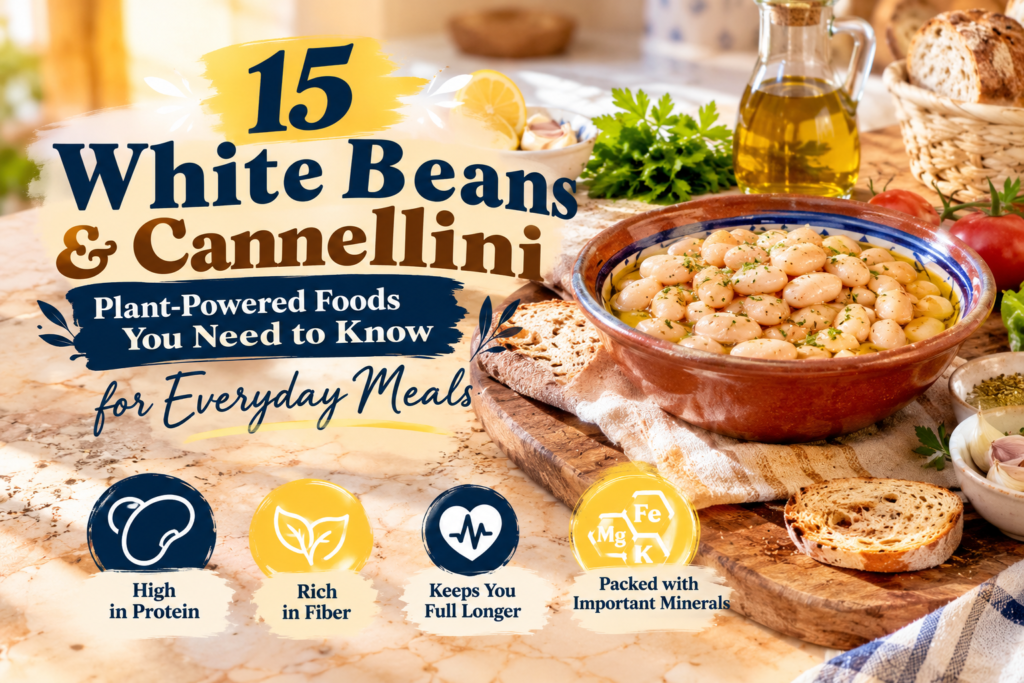
15. White Beans and Cannellini
Image Description: A rustic ivory bowl filled with creamy white cannellini beans, surrounded by fresh parsley, sliced garlic, lemon wedges, ripe cherry tomatoes, and a small glass bottle of olive oil. Warm wooden table, cream linen cloth, soft natural daylight, earthy beige and red accents, detailed bean textures, overhead Mediterranean food photography, vertical Pinterest layout.
DO
- Simmer white beans with garlic, tomatoes, and oregano for a comforting meal.
- Add rinsed canned beans to vegetable soups and leafy salads.
- Mash beans with olive oil and lemon for a creamy sandwich spread.
- Pair beans with whole-grain bread and vegetables for a balanced plate.
DON’T
- Rely on beans alone for every nutrient your body needs.
- Add large amounts of salt before tasting the finished dish.
- Leave cooked beans unrefrigerated for extended periods.
- Forget to rinse canned beans when you want to reduce excess sodium.
White beans supply plant-based protein, fiber, and minerals, making them useful staples for affordable weekly meal planning. Their mild flavor works with herbs, vegetables, and whole grains, so they fit into several dishes without much extra effort. Keep canned beans in your pantry for evenings when you need a nutritious meal without lengthy preparation.
16. Hard-Boiled Eggs
Image Description: Two perfectly cooked hard-boiled eggs cut in half on a cream ceramic plate, sprinkled with black pepper and fresh parsley. Sliced tomatoes, cucumber rounds, whole-grain toast, and a small bowl of olives complete the spread. Soft morning window light, warm beige and golden tones, natural linen texture, close-up realistic food photography, vertical Pinterest composition.
Best For: Quick breakfasts, lunchboxes, and protein-rich snacks
Cost: Generally budget-friendly
Preparation Time: About 10 to 12 minutes, plus cooling
Storage: Refrigerate cooked eggs promptly in their shells for up to one week
Hard-boiled eggs are a practical choice when you need something nourishing without cooking a full meal. They provide protein, vitamin B12, and other important nutrients. Prepare a few ahead of time and pair them with whole-grain toast, sliced tomatoes, or fruit for a balanced breakfast. Keep them refrigerated and peel just before eating for convenience.
17. Fresh Cucumbers and Tomatoes
Image Description: A large white ceramic bowl filled with chopped cucumbers, juicy red tomatoes, thinly sliced red onion, crumbled feta, and fresh parsley. Lemon wedges and a small olive oil cruet sit nearby on a rustic wooden table. Bright natural daylight, cream and terracotta accents, crisp vegetable textures, overhead Mediterranean food photography, vertical Pinterest composition.
Fresh cucumbers and tomatoes bring a refreshing crunch to everyday meals, especially on warm days when heavy dishes feel less appealing. I’ve found that keeping these vegetables washed and ready makes it easier to assemble a quick salad instead of reaching for packaged snacks.
Combine chopped cucumbers and tomatoes with parsley, lemon juice, and a little olive oil. Add chickpeas for fiber and plant-based protein, or sprinkle a modest amount of feta over the top. Serve the salad alongside grilled fish, lentils, or whole-grain bread. For the best texture, add dressing shortly before serving.
18. Feta and Other Cheeses
Image Description: A rustic ceramic plate displaying crumbled feta cheese, small mozzarella balls, and thin slices of aged cheese beside ripe tomatoes, Kalamata olives, fresh basil, and whole-grain crackers. Warm wooden surface, cream linen napkin, gentle natural window light, soft white and terracotta palette, detailed cheese textures, realistic Mediterranean food photography, vertical Pinterest composition.
| Option A: Large Cheese Portions | Option B: Modest Cheese Portions |
|---|---|
| Cheese dominates the plate | Cheese complements vegetables and grains |
| May contribute more saturated fat and sodium | Makes it easier to moderate both |
| Leaves less room for other ingredients | Encourages greater meal variety |
| Can make dishes quite salty | Allows herbs and lemon to add flavor |
Cheese can fit into a Mediterranean-style eating pattern without becoming the main part of every meal. Feta adds a tangy flavor to tomato salads, while small amounts of mozzarella work well with fresh vegetables. Check nutrition labels because sodium and saturated fat vary between cheeses. Balance your serving with legumes, whole grains, and plenty of vegetables.
19. Sweet Potatoes and Root Vegetables
Image Description: A rustic baking tray filled with golden roasted sweet potato cubes, orange carrots, red onion wedges, and purple beetroot, lightly coated with olive oil and dried rosemary. A cream ceramic bowl and folded beige linen napkin sit nearby. Warm natural window light, caramelized vegetable edges, earthy colors, overhead realistic food photography, vertical Pinterest composition.
DO
- Cut sweet potatoes into evenly sized cubes for consistent roasting.
- Toss carrots and beetroot with olive oil, garlic, and rosemary.
- Roast vegetables at 200°C until tender and lightly browned.
- Serve with lentils, grilled fish, or chickpeas for a balanced meal.
DON’T
- Drench vegetables in oil before roasting.
- Rely on sugary glazes for flavor.
- Overcrowd the baking tray, which can cause steaming instead of browning.
- Assume sweet potatoes are the only nutritious root vegetables worth eating.
Sweet potatoes, carrots, and beetroot add natural sweetness, fiber, and valuable nutrients to weekly meals. Roasting brings out their flavor and creates appealing textures without complicated preparation. Make an extra tray for the next day’s lunch, then combine leftovers with leafy greens, beans, and a lemon dressing for a colorful grain bowl.
20. Quinoa and Bulgur Wheat
Image Description: Two handmade ceramic bowls containing fluffy quinoa and golden bulgur wheat, surrounded by diced cucumber, cherry tomatoes, chopped parsley, lemon wedges, and chickpeas. A wooden spoon and cream linen napkin rest on a light rustic countertop. Soft natural daylight, warm beige and red accents, detailed grain textures, overhead realistic food photography, vertical Pinterest composition.
Cost: Varies by grain and local availability
Cooking Time: Approximately 10 to 25 minutes, depending on the grain
Skill Level: Beginner-friendly
Best For: Grain bowls, salads, and meal preparation
Quinoa and bulgur provide useful alternatives to refined grains and bring different textures to Mediterranean-inspired meals. Quinoa contains all nine essential amino acids, while bulgur offers fiber and a pleasantly chewy bite. Prepare either grain according to its package directions, then mix with chickpeas, chopped vegetables, parsley, and lemon juice for an easy lunch.
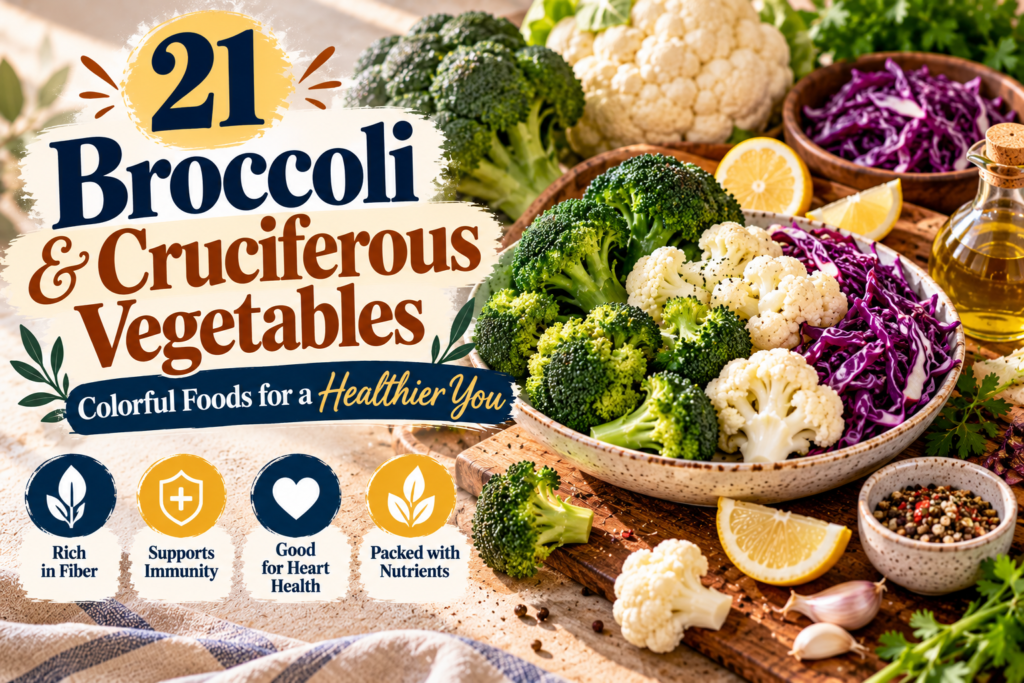
21. Broccoli and Cruciferous Vegetables
Image Description: Fresh broccoli florets arranged in a shallow ivory bowl beside cauliflower, sliced red cabbage, lemon wedges, and a small dish of olive oil. A rustic wooden cutting board, cream linen cloth, and ceramic seasoning bowl complete the scene. Soft daylight highlights the vegetable textures, with white, purple, and warm brown accents, realistic overhead food photography, vertical Pinterest composition.
Broccoli, cauliflower, and red cabbage add color, crunch, and fiber to a weekly meal plan. Their naturally varied textures help keep vegetable dishes interesting, whether served raw, steamed, or roasted.
For a quick side dish, toss broccoli florets with a little olive oil, garlic, and black pepper, then roast until the edges begin to brown. Steam cauliflower for a softer texture or shred red cabbage into a lemon-dressed salad. Pair these vegetables with beans, whole grains, or fish to create a satisfying meal with a variety of nutrients.
22. Olives and Olive Tapenade
Image Description: A rustic ceramic bowl filled with glossy black and purple-green olives beside a small dish of olive tapenade, toasted whole-grain bread, lemon wedges, and fresh thyme. A warm wooden board and cream linen napkin create a Mediterranean kitchen setting. Soft natural window light, earthy brown and purple tones, detailed textures, close-up food photography, vertical Pinterest composition.
Quick Tip:
Keep a small jar of olives in the refrigerator after opening, following the package storage instructions. Rinse them if you want to reduce some surface brine, and check the label for sodium content.
Olives provide mostly unsaturated fats and bring a salty, savory flavor to simple meals. Add a few to tomato salads, grain bowls, or homemade vegetable wraps. Tapenade, a spread made from chopped olives and other ingredients, also pairs well with whole-grain toast. Since olives can be high in sodium, moderate portions are especially useful for people watching their salt intake.
23. Chia Seeds and Flaxseeds
Image Description: Two small glass bowls filled with chia seeds and ground flaxseeds beside a creamy yogurt bowl topped with blueberries, sliced strawberries, and chopped almonds. A wooden spoon, folded cream linen towel, and light oak countertop complete the scene. Soft morning sunlight, warm beige and berry colors, crisp seed textures, realistic overhead food photography, vertical Pinterest composition.
Chia seeds and flaxseeds are small additions that provide fiber and plant-based omega-3 fatty acids. Ground flaxseed is especially useful because grinding helps your body access its nutrients more effectively than eating whole flaxseeds.
Stir chia seeds into overnight oats or mix ground flaxseed into plain yogurt, oatmeal, or a smoothie. Start with a small serving and drink enough fluids, since both seeds absorb water and add fiber to your diet. Store flaxseed in an airtight container in the refrigerator or freezer to help preserve its quality.
24. Dark Chocolate and Fresh Berries
Image Description: A cream ceramic plate holding squares of dark chocolate beside fresh strawberries, blueberries, raspberries, and a few mint leaves. A small wooden bowl of almonds and a folded beige linen napkin sit on a warm stone countertop. Soft natural afternoon light, rich chocolate brown and berry red tones, elegant minimal food styling, realistic close-up photography, vertical Pinterest composition.
BEFORE
Dessert may feel like an all-or-nothing choice, leading you to skip something enjoyable or reach for large portions of highly sweetened treats. Restrictive food rules can also make a balanced eating pattern harder to maintain.
AFTER
Serve a few squares of dark chocolate with fresh berries when you want a sweet finish. Choose chocolate with a cocoa percentage you enjoy, and compare labels for added sugar.
Berries provide fiber and beneficial plant compounds, while dark chocolate contains cocoa flavanols, although their amounts vary by product. Neither food needs to be treated as a miracle ingredient. Enjoy them in moderate portions alongside an overall varied eating pattern, making room for pleasure as well as nourishment.
CONCLUSION
Healthy eating becomes more manageable when your kitchen is stocked with versatile, flavorful ingredients. These mediterranean diet foods to eat weekly offer plenty of inspiration for colorful breakfasts, satisfying lunches, and balanced dinners without making meal planning feel overwhelming.
Start with two or three foods from this list and build meals around ingredients you already enjoy. Try a new vegetable, prepare a batch of lentils, or add olive oil and fresh herbs to your favorite dishes. Small, consistent choices can support a more balanced eating pattern over time.
Save this article on Pinterest, try an idea this week, and share it with someone who would appreciate fresh meal inspiration. Your next nourishing meal can start with one simple choice.