23 Walking 4 Miles a Day Tips for Meaningful Progress
Introduction
Four miles a day can become more than a fitness goal. It can be a simple step toward feeling stronger, building stamina, and creating a healthier daily routine.
If you have been wondering whether walking 4 miles a day is worth the effort, the answer depends on your goals, current fitness level, and consistency. The good news is that you do not need an expensive gym membership or complicated workout plan to get started. Comfortable shoes, a realistic schedule, and a route you enjoy can make walking easier to maintain.
In this guide, you will discover 23 practical walking tips covering distance tracking, comfortable footwear, daily routines, hydration, recovery, and motivation. You will also learn how to adjust your walks around busy days without losing sight of your progress. Small, manageable changes can help you build a walking habit that feels rewarding and sustainable.
1. Morning Walking Routine
Image Description: A fitness-inspired morning scene with a woman wearing pastel athletic clothing and white walking shoes on a tree-lined neighborhood path. Soft golden sunlight filters through green leaves, creating gentle shadows on the pavement. Include a smartwatch, subtle greenery, fresh morning colors, and a bright, clean Pinterest aesthetic with a natural eye-level camera angle.
Building a walking habit feels easier when it becomes part of your morning routine. Set your alarm 45 to 60 minutes earlier, prepare your walking clothes the night before, and choose a familiar route. Early walks offer a peaceful start before work, errands, and family responsibilities begin competing for your attention.
Start with a comfortable pace rather than pushing yourself to finish quickly. If four miles feels challenging initially, walk a shorter distance and gradually increase it as your stamina improves. A consistent morning schedule helps you build momentum, making daily movement feel like a normal part of life instead of another task on your list.
2. Comfortable Walking Shoes
Image Description: A pair of supportive walking sneakers in white and soft beige placed beside pastel athletic socks, a fitness watch, and a reusable water bottle. Arrange everything on a light wooden bench near a sunlit park trail. Use warm natural lighting, subtle green foliage, clean textures, and a minimalist Pinterest fitness photography style.
- Choose supportive soles: Look for comfortable cushioning and a stable fit that suits your feet and walking surface.
- Check the toe box: Your toes should have enough room to spread without rubbing against the sides.
- Shop later in the day: Feet may swell slightly throughout the day, so an afternoon fitting can help you find a better fit.
- Wear familiar socks: Use the socks you normally walk in to reduce friction and unexpected discomfort.
- Replace worn shoes: Flattened cushioning, damaged tread, or recurring discomfort can signal that your footwear needs attention.
Comfortable shoes matter even more when your daily walks cover several miles. Before committing to a long route, take a short test walk and check for rubbing, heel slipping, or pressure points. Well-fitting footwear can make longer sessions more enjoyable, although persistent pain deserves attention rather than being ignored.
3. Gradual Distance Progression
Image Description: A fitness journal opened beside a smartphone displaying a walking distance tracker, a black fitness watch, and white running shoes on a pale wooden table. A green park trail appears softly blurred in the background. Use natural daylight, muted sage and cream tones, realistic textures, and an organized wellness photography aesthetic.
Quick Tip:
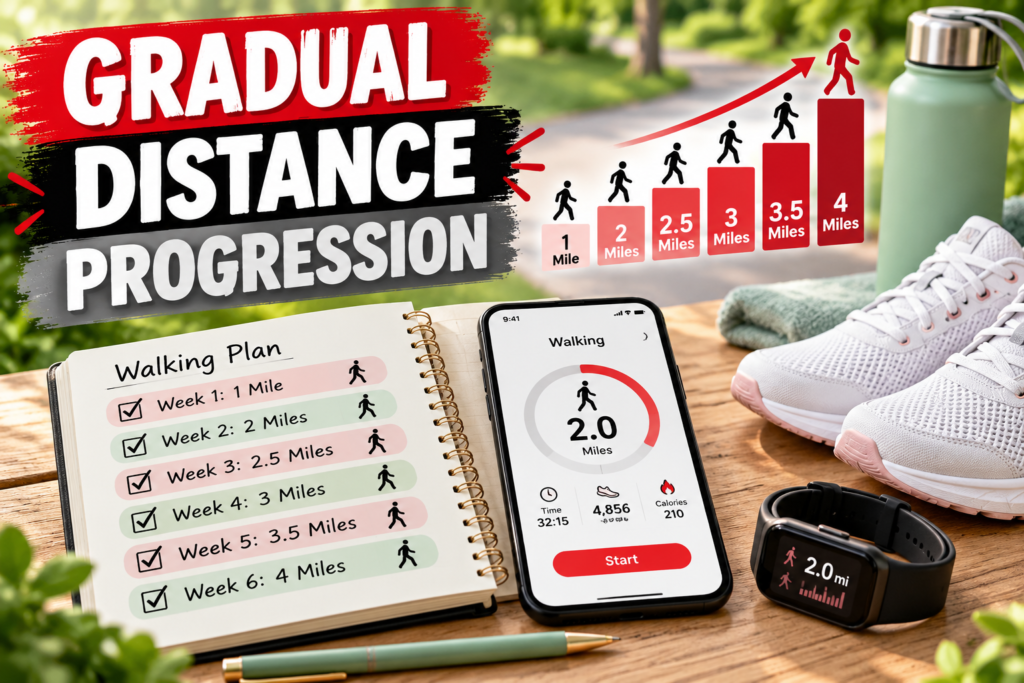
Increase your walking distance gradually instead of forcing yourself to reach four miles immediately. If you currently walk one mile comfortably, build from that starting point and increase your distance according to your recovery, energy, and comfort.
Walking four miles a day can become more manageable when your body has time to adapt. For example, you might begin with two miles and add a small amount when your current distance feels comfortable. Keep your pace conversational, and allow easier days when your legs feel unusually tired. Progress should feel sustainable, not punishing. Consistency matters more than reaching a specific distance before you’re ready.
4. Realistic Daily Schedule
Image Description: A bright fitness planning scene featuring a cream-colored weekly planner with walking times marked, a pastel green pen, white sneakers, and a glass water bottle on a light wooden desk. Soft morning sunlight streams through a nearby window. Include subtle greenery, neutral beige tones, realistic paper textures, and an uncluttered Pinterest wellness aesthetic.
BEFORE
A busy schedule makes walking feel like another obligation. Work, household chores, and unexpected errands can push exercise aside until the day is almost over.
AFTER
A planned walking window gives your routine structure. You know when to start, how much time to allow, and how walking fits around your other responsibilities.
Start by choosing a realistic time slot that you can protect most days. Four miles may take around 60 to 90 minutes, depending on your pace, terrain, and breaks. If one long session feels inconvenient, divide the distance into shorter walks. A flexible schedule helps you stay consistent without sacrificing sleep, work, or family time.
5. Short Walking Breaks
Image Description: A woman in comfortable athletic clothing taking a brisk walk along a landscaped office courtyard during a work break. She carries a small water bottle and wears neutral walking sneakers. Include modern glass windows, green shrubs, soft midday sunlight, and a clean composition with natural colors and an inviting, realistic Pinterest fitness photography style.
- Start with your morning: Walk one mile before breakfast or your first major task.
- Use your lunch break: Fit in another mile with comfortable shoes and a familiar route.
- Walk after work: Complete one mile while listening to music or a podcast.
- Finish after dinner: Take a relaxed final mile around your neighborhood when conditions are safe.
Breaking your daily distance into smaller sessions makes the goal easier to fit into a busy lifestyle. These four one-mile walks can add up to four miles without requiring one long workout. Keep track of your total distance, and adjust the timing to suit your energy, schedule, and surroundings.
6. Indoor Versus Outdoor Walking
Image Description: A split composition showing a bright home treadmill beside a large window on one side and a peaceful outdoor walking trail surrounded by green trees on the other. Include neutral workout clothing, white sneakers, warm daylight, natural wood details, and soft green accents. Use balanced lighting and a clean Pinterest fitness editorial style.
| Comparison | Indoor Walking | Outdoor Walking |
|---|---|---|
| Weather | Protected from rain and extreme temperatures | Depends on weather conditions |
| Surface | Usually predictable and even | May include hills and uneven ground |
| Convenience | Easy to fit into a home routine | Requires a suitable route |
| Scenery | Familiar indoor surroundings | Changing views and fresh air |
| Tracking | Treadmill displays distance and speed | Phone or fitness tracker can record distance |
Both options can help you work toward four miles a day. Choose a treadmill when weather or safety makes outdoor exercise difficult, and head outside when you want a change of scenery. In either setting, wear supportive shoes, maintain a comfortable pace, and use a reliable distance tracker to monitor your progress.
7. Steady Walking Pace
Image Description: A woman walking briskly along a peaceful green park path, wearing a lavender athletic top, black leggings, and white supportive sneakers. A smartwatch is visible on her wrist. Sunlight filters through leafy trees, creating soft shadows on the path. Use fresh green tones, natural morning light, and realistic Pinterest fitness photography.
DO:
- Maintain a pace that raises your breathing slightly while allowing you to speak in full sentences.
- Keep your shoulders relaxed and your arms swinging naturally.
- Take comfortable steps without deliberately overstriding.
- Slow down when you feel unusually tired or short of breath.
DON’T:
- Race through every mile to finish faster.
- Take exaggerated steps that strain your hips or knees.
- Ignore dizziness, chest discomfort, or unusual breathlessness.
- Assume a faster pace always produces better results.
A steady walking rhythm helps you cover distance without exhausting yourself too early. Start comfortably, then increase your speed when your body feels ready. You can alternate brisk intervals with easier walking to add variety. The best pace is one you can maintain safely while recovering well enough to enjoy your next walk.
8. Daily Distance Tracking
Image Description: A smartphone displaying a simple four-mile walking progress chart beside a digital fitness watch, white sneakers, and a pastel green notebook. The objects rest on a light wooden bench overlooking a sunny park. Use soft natural lighting, cream and sage colors, crisp details, and a clean, modern Pinterest wellness aesthetic.
Distance: Four miles equals approximately 6.4 kilometers.
Time: Often around 60 to 90 minutes, depending on pace and terrain.
Tools: Smartphone GPS, a fitness watch, or a treadmill distance display.
Best For: Beginners building consistency and experienced walkers monitoring progress.
Tracking your walks makes progress easier to understand. Record your distance, duration, and how you felt after each session rather than focusing only on calories burned. Devices can estimate distance differently, especially indoors or in areas with weak GPS signals. Use the same tracking method whenever possible so your weekly comparisons remain meaningful.
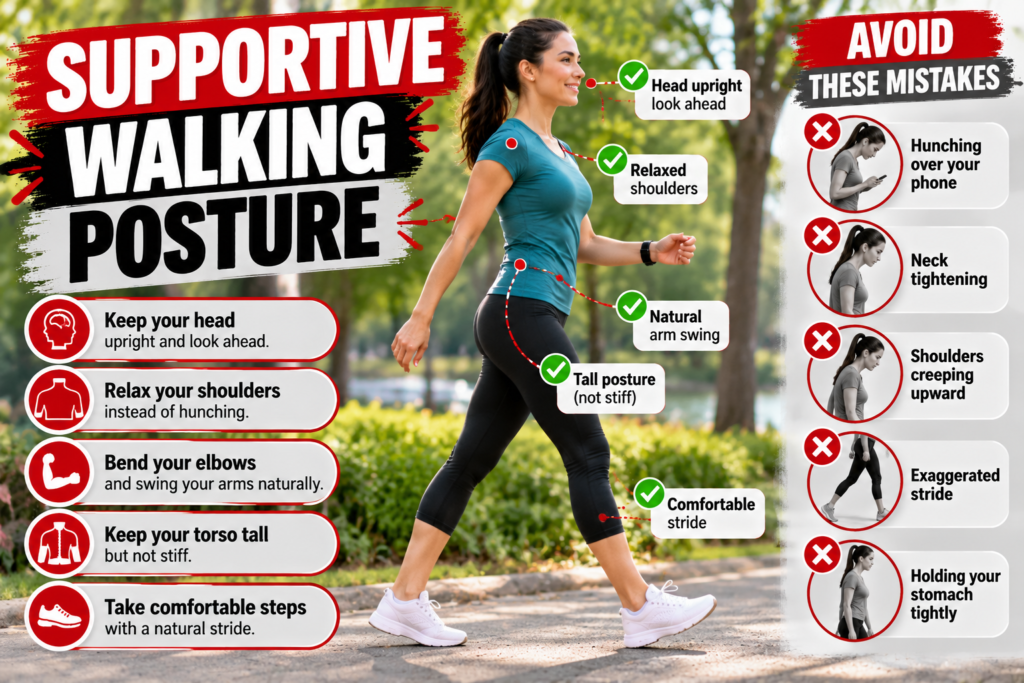
9. Supportive Walking Posture
Image Description: A full-body side view of a woman demonstrating proper walking posture on a paved park path. She wears a fitted teal athletic shirt, black leggings, and white sneakers. Show a relaxed upright spine, natural arm swing, and forward gaze. Include soft morning sunlight, leafy green surroundings, and clear, realistic fitness instructional photography.
Good posture can make longer walks feel more comfortable. Keep your head upright, look ahead, and allow your shoulders to relax instead of hunching over your phone. Bend your elbows naturally and swing your arms gently as you walk. Your torso should feel tall but not stiff, with your steps landing comfortably beneath you.
Avoid forcing an exaggerated stride or holding your stomach tightly throughout the entire walk. Small adjustments are often enough to improve comfort and balance. If you notice your neck tightening or your shoulders creeping upward, pause briefly and reset your position. A relaxed walking style helps you focus on the route instead of unnecessary tension.
10. Hydration Before Walking
Image Description: A clear glass water bottle, fresh lemon slices, a white fitness towel, and clean walking sneakers arranged on a light wooden bench beside a green park trail. Soft morning sunlight creates gentle highlights on the water. Use pale blue, cream, and sage tones, natural textures, and a bright, minimalist Pinterest fitness photography style.
- Drink water regularly throughout the day instead of waiting until you feel very thirsty.
- Have some water before leaving, especially if you have not had anything to drink for several hours.
- Carry a refillable bottle during longer walks or in warm weather.
- Take water breaks when needed, particularly on hot or humid days.
- Drink according to your thirst, activity level, and weather conditions.
Hydration supports normal body function and helps you feel more comfortable during longer walks. Your fluid needs depend on temperature, sweating, pace, and individual health factors. For an ordinary walk, water is usually sufficient. Plan your route around convenient refill points, and avoid forcing excessive amounts of water before or during exercise.
11. Pre-Walk Warm-Up
Image Description: A woman in a soft coral athletic top, charcoal leggings, and white sneakers performing gentle leg swings beside a sunny park path. Include a wooden bench, leafy trees, and a small fitness towel. Use warm morning light, natural green surroundings, realistic skin and fabric textures, and a clean, energetic Pinterest workout aesthetic.
Quick Tip:
Spend three to five minutes moving gently before increasing your walking speed. Start with an easy stroll, then add comfortable ankle movements, marching in place, or gentle leg swings.
A gradual warm-up prepares you for the work ahead without making your routine complicated. Begin the first few minutes at a relaxed pace, particularly when walking early in the morning or after sitting for hours. Once your muscles feel warmer and your movement feels natural, gradually settle into your usual rhythm. Avoid forcing deep stretches on cold muscles.
12. Weekly Recovery Days
Image Description: A peaceful home wellness corner featuring cushioned walking shoes, a rolled yoga mat, a folded cream towel, and a glass of water beside a sunlit window. A green plant adds a fresh accent. Use warm neutral colors, soft daylight, natural wood textures, and a calming minimalist Pinterest fitness photography aesthetic.
BEFORE
Walking the same distance at the same intensity every day can leave your feet, calves, or knees feeling increasingly tired. Ignoring that discomfort may make your routine harder to maintain.
AFTER
A flexible recovery plan gives your body time to adapt. Easier walks, shorter routes, and occasional rest days help you respond to fatigue instead of pushing through it.
Recovery does not mean you have failed to meet your goal. Keep some walks gentle, sleep adequately, and pay attention to persistent soreness. You do not need to reach four miles every single day to build a lasting habit. If pain worsens or changes your walking pattern, stop and seek appropriate medical advice before resuming longer distances.
13. Walking Goal Checklist
Image Description: An open cream fitness journal featuring a neatly organized weekly walking checklist, green checkmarks, a pastel pen, white walking sneakers, and a black fitness watch. Arrange the items on a light oak desk beside a bright window. Use soft natural daylight, sage green accents, subtle paper textures, and a clean Pinterest wellness aesthetic.
- Set your target: Write down your intended daily distance and choose a realistic starting point.
- Schedule your walk: Mark a convenient time on your calendar before the day becomes busy.
- Record your progress: Note your distance, walking duration, and energy level after each session.
- Review your week: Identify which days felt comfortable and where you need a more flexible plan.
A simple checklist turns your walking goal into manageable daily actions. Instead of wondering whether you are making progress, you can see your completed walks and identify patterns. Keep your tracker somewhere visible, such as beside your coffee mug or on your desk. Celebrate consistency, including shorter sessions on days when your schedule changes unexpectedly.
14. Walking Tracker Journal
Image Description: A stylish open walking journal displaying handwritten daily distances, weekly mileage totals, and small habit checkboxes. Place it beside white sneakers, a sage green water bottle, and a minimalist digital watch on a pale wooden table. Use warm window light, cream paper, muted green accents, and crisp Pinterest-style flat-lay photography.
| Tracking Detail | Basic Notes | Helpful Benefit |
|---|---|---|
| Daily distance | Miles or kilometers completed | Measures consistency |
| Walking time | Total minutes walked | Shows pace changes |
| Energy level | Low, moderate, or high | Helps identify fatigue |
| Comfort | Any soreness or rubbing | Highlights possible issues |
| Weekly total | Combined distance | Reveals longer-term patterns |
Your walking journal should make progress easier to understand, not create another demanding task. Spend two minutes recording your results after each walk. Over several weeks, you may notice that familiar routes take less time or that certain schedules help you stay consistent. Use these observations to adjust your routine without treating every slower day as a setback.
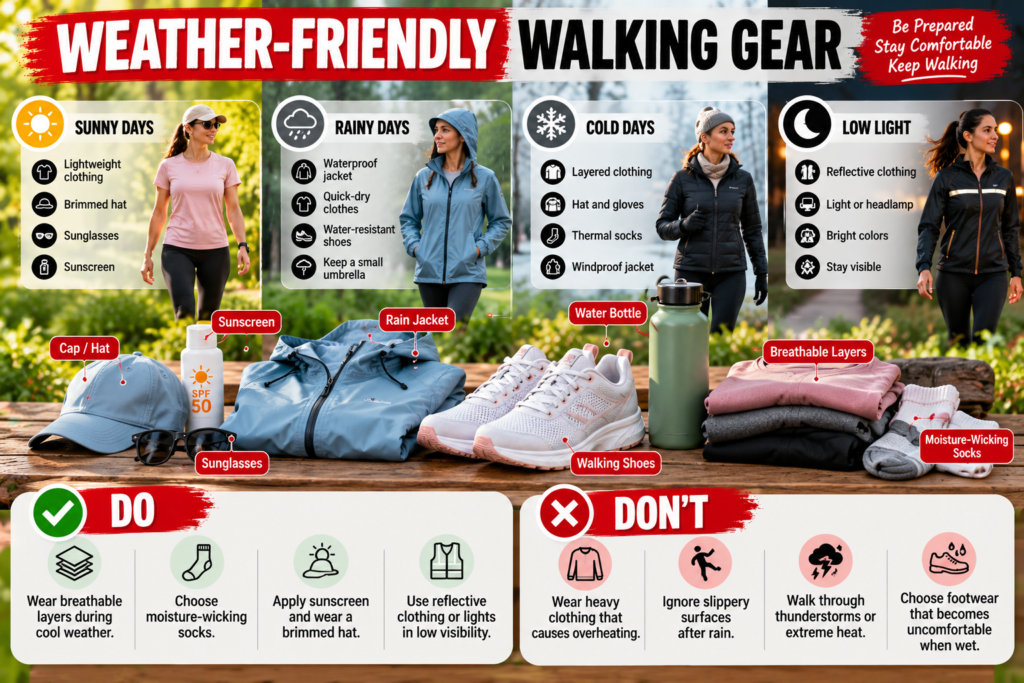
15. Weather-Friendly Walking Gear
Image Description: A neatly arranged collection of walking essentials featuring lightweight athletic layers, a breathable rain jacket, a neutral baseball cap, white walking sneakers, and a reusable water bottle. Display everything on a wooden bench near a green trail. Use soft daylight, muted blue and sage colors, realistic fabric textures, and a polished Pinterest fitness editorial style.
DO:
- Wear breathable layers during cool weather so you can adjust your clothing as needed.
- Choose moisture-wicking socks to help manage sweat and reduce friction.
- Apply sunscreen and wear a brimmed hat during sunny walks.
- Use reflective clothing or lights when walking in low visibility.
DON’T:
- Wear heavy clothing that causes overheating in warm weather.
- Ignore slippery surfaces after rain.
- Walk through thunderstorms or extreme heat to meet a distance target.
- Choose footwear that becomes uncomfortable when wet.
The right gear helps you maintain your routine across changing conditions. In hot weather, walk during cooler hours and choose shaded routes when possible. In cold conditions, layer your clothing and protect exposed skin. Check the forecast before leaving, and remember that shortening or postponing a walk is a sensible decision when conditions become unsafe.
16. Walking With a Friend
Image Description: Two women wearing coordinated pastel athletic outfits walking side by side on a tree-lined park trail. One wears a sage green top and black leggings, while the other wears a dusty pink jacket and charcoal joggers. Include white sneakers, soft morning sunlight, lush greenery, and a bright, realistic Pinterest fitness photography aesthetic.
Cost: Free when walking with a friend nearby.
Time: Flexible, from a short stroll to a full four-mile session.
Skill Level: Beginner-friendly.
Best For: People who enjoy conversation, companionship, and shared goals.
Walking with a friend can make longer distances feel less repetitive. Agree on a convenient meeting time, select a familiar route, and decide whether you want a relaxed conversation or a brisk fitness walk. Having someone expect you can also encourage consistency on mornings when motivation feels low. Choose a comfortable pace for both walkers, and adjust the distance to suit everyone’s fitness level.
17. Split Walking Sessions
Image Description: A clean fitness flat lay showing a smartphone with a walking tracker, white sneakers, a pastel green notebook listing three walking sessions, and a clear water bottle. Arrange the items on a light wooden surface with a sunny park visible through the window. Use natural daylight, cream and sage tones, and a minimalist Pinterest wellness aesthetic.
A four-mile goal does not have to happen in one session. Splitting your distance into smaller walks can make daily movement easier to fit around work, errands, and family commitments.
For example, walk 1.5 miles in the morning, one mile during lunch, and another 1.5 miles in the evening. That adds up to four miles without requiring one uninterrupted block of time. Keep track of each session, and leave enough time for meals, hydration, and recovery. This approach works particularly well for people who spend much of the day sitting.
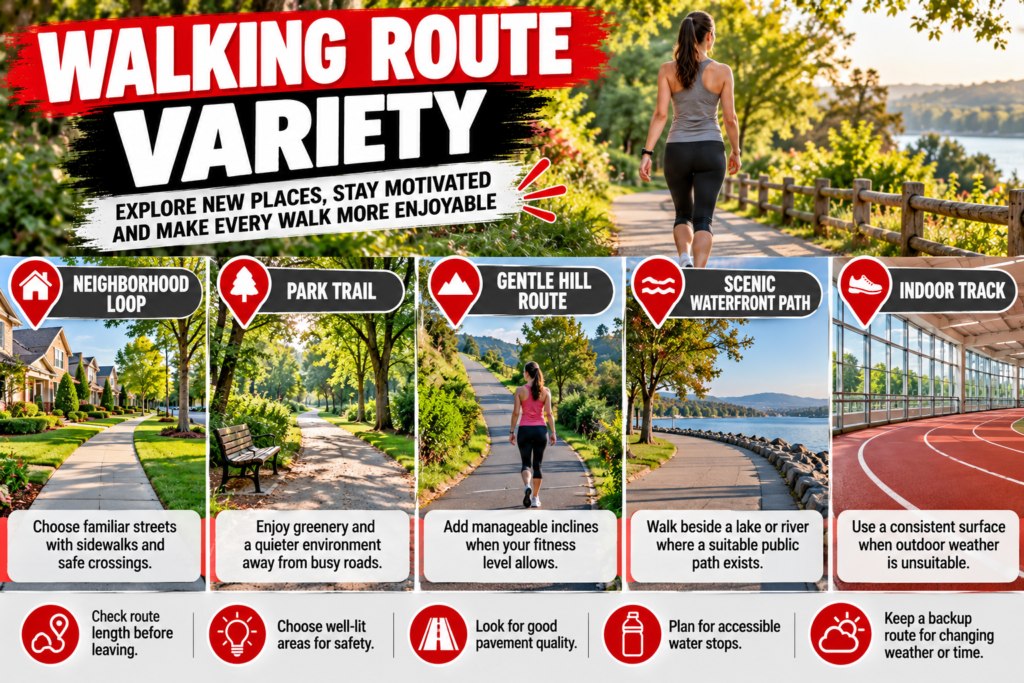
18. Walking Route Variety
Image Description: A scenic walking route with a smooth neighborhood sidewalk leading toward a leafy park, a gentle tree-lined hill, and a quiet paved garden path. Include a woman in neutral athletic clothing walking in the distance. Use fresh green foliage, soft golden-hour light, realistic textures, and an inviting Pinterest outdoor fitness photography style.
- Neighborhood loop: Choose familiar streets with sidewalks and safe crossings.
- Park trail: Enjoy greenery and a quieter environment away from busy roads.
- Gentle hill route: Add manageable inclines when your fitness level allows.
- Scenic waterfront path: Walk beside a lake or river where a suitable public path exists.
- Indoor track: Use a consistent surface when outdoor weather is unsuitable.
Changing your route can keep daily walking interesting while introducing different surroundings and terrain. Start with level paths if you are new to longer distances, then add gentle hills as your endurance improves. Check route length before leaving, and prioritize lighting, pavement quality, traffic safety, and accessible water stops. A familiar backup route is useful when weather or time changes your plans.
19. Walking for Weight Management
Image Description: A fit woman wearing a muted blue athletic shirt, black leggings, and white walking sneakers strolling along a sunlit park path. She carries a clear water bottle and wears a fitness watch. Include leafy trees, a natural paved trail, soft morning light, realistic body proportions, and a fresh, encouraging Pinterest fitness photography style.
DO:
- Maintain a consistent walking routine that fits your current fitness level.
- Pair regular movement with balanced meals and satisfying portions.
- Include protein-rich foods, vegetables, fruits, and fiber-rich whole grains.
- Track weekly habits rather than judging progress by daily scale changes.
DON’T:
- Assume walking alone guarantees weight loss.
- Skip meals to compensate for missed walks.
- Treat estimated calories burned as exact measurements.
- Push through pain just to reach a daily target.
Walking four miles a day can contribute to weight management by increasing daily physical activity. Your results will depend on factors such as food intake, pace, body size, sleep, and overall activity. Focus on sustainable habits rather than rapid changes. Walking offers benefits beyond the scale, including improved cardiovascular fitness, greater endurance, and a practical way to spend less time sitting.
20. Fitness Progress Milestones
Image Description: A minimalist fitness journal displaying weekly walking totals, a simple progress chart, handwritten milestones, and green checkmarks. Place a black fitness watch, white sneakers, and a sage water bottle beside the journal on a light oak desk. Use bright natural window light, cream and muted green tones, and polished Pinterest wellness photography.
Distance: Record completed miles each day.
Duration: Compare walking times on similar routes.
Endurance: Notice whether longer walks feel more comfortable.
Recovery: Track soreness, energy, and how you feel the following day.
Best For: Walkers who want to measure gradual improvements.
Progress often appears in small changes before you notice a dramatic difference. You might finish your usual route with less fatigue, maintain a steadier pace, or feel more comfortable walking uphill. Review your records every two to four weeks rather than comparing every session. These milestones help you recognize improvement without turning exercise into a daily performance test.
21. Comfortable Walking Clothing
Image Description: A coordinated walking outfit arranged on a light wooden bench, featuring a breathable sage green athletic shirt, black leggings, moisture-wicking socks, white supportive sneakers, and a lightweight neutral jacket. A green park and soft morning sunlight create the background. Use realistic fabric textures, balanced natural lighting, and a clean Pinterest fitness editorial aesthetic.
| Clothing Choice | Less Comfortable Option | Better Alternative |
|---|---|---|
| Tops | Heavy, nonbreathable fabric | Lightweight, moisture-wicking material |
| Bottoms | Tight clothing that restricts movement | Flexible leggings or walking pants |
| Socks | Thick seams that rub | Comfortable, well-fitting walking socks |
| Outerwear | One heavy layer | Adjustable layers for changing temperatures |
| Footwear | Shoes that pinch or slip | Supportive shoes with adequate toe room |
Comfortable clothing helps you concentrate on your walk instead of adjusting uncomfortable layers. Choose fabrics that suit the weather and allow your legs and arms to move freely. Check for rubbing around the waist, underarms, heels, and toes before setting out on a longer route. You do not need expensive workout clothes; practical pieces that fit well are enough.
Conclusion
Building a consistent walking routine does not require perfection. These 23 tips for walking 4 miles a day can help you find a comfortable pace, plan your sessions, track your progress, and make daily movement easier to maintain.
Start with one or two ideas that fit your current lifestyle. Choose supportive shoes, explore a new route, or divide your distance into shorter walks. Listen to your body and celebrate steady progress rather than rushing toward results.
Save this article on Pinterest for your next walking motivation boost, and share it with someone who wants to build healthier habits. Every step counts, so start where you are and keep moving forward!