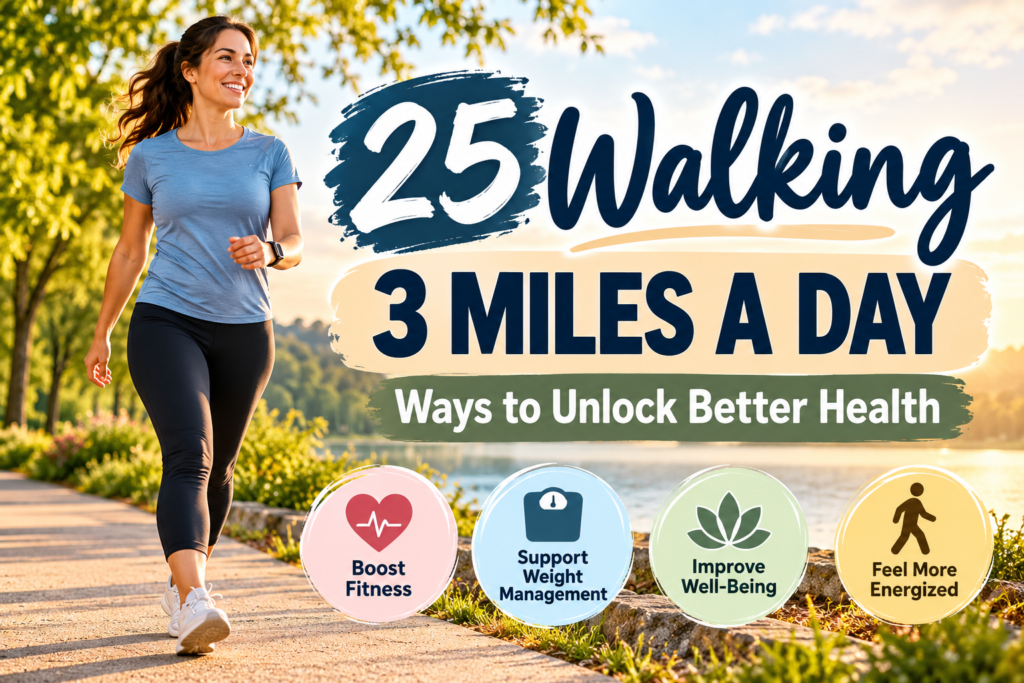
25 Walking 3 Miles a Day Ways to Unlock Better Health
Introduction
What if a simple daily walk could help you feel fitter, more energized, and more confident in your health journey? You don’t need an expensive gym membership or complicated workout plan to get started.
Walking 3 miles a day can be a practical way to build an active lifestyle, improve cardiovascular fitness, and support weight management when combined with balanced nutrition and healthy habits. Whether you’re a beginner, a busy professional, or someone looking for an enjoyable way to move more, the right walking routine can make exercise feel less overwhelming.
The secret is finding an approach that fits your schedule, energy level, and current fitness. From morning walks and treadmill sessions to walking intervals and scenic outdoor routes, these 25 ideas offer practical ways to make every mile count. Start with what feels manageable, build consistency gradually, and discover a walking routine you can enjoy for the long term.
1. Morning Walking Routine
Image Description: A fit adult walking briskly along a peaceful neighborhood path at sunrise, wearing comfortable athletic shoes, navy leggings, and a soft beige top. Golden sunlight filters through autumn trees, casting long shadows across the pavement. Include a fitness watch, leafy sidewalks, warm neutral tones, realistic photography, and a vertical Pinterest composition.
A morning walk can set a positive tone for the entire day. Starting early gives you a chance to move your body before work, household tasks, or unexpected plans take over. Walking three miles may sound challenging initially, but a steady pace and familiar route make the distance easier to manage.
Consistency matters more than speed. Begin with a comfortable pace, carry water when needed, and choose supportive walking shoes. If three miles feels too far at first, start with a shorter distance and gradually increase it. Over time, this simple routine can support cardiovascular fitness, daily movement, and a healthier schedule.
2. Brisk Walking Pace
Image Description: A realistic fitness photograph of an adult walking briskly on a paved park trail, wearing black running shoes, charcoal athletic pants, and a dusty blue sports shirt. Soft morning light highlights natural movement, with blurred trees and distant greenery in the background. Side-angle composition, crisp details, energetic atmosphere, and Pinterest-friendly vertical framing.
- Keep your posture upright. Relax your shoulders, look ahead, and allow your arms to swing naturally.
- Find a purposeful pace. Walk quickly enough to feel warmer and breathe faster without becoming excessively uncomfortable.
- Use the talk test. Aim for a pace where you can speak in sentences but would struggle to sing.
- Increase speed gradually. Start comfortably, then pick up the pace once your muscles feel warm.
- Monitor your effort. Slow down if you feel dizzy, unusually breathless, or experience chest discomfort.
Walking at a brisk pace can make each mile more challenging without requiring complicated equipment. Your ideal speed depends on your fitness level, age, terrain, and health. Rather than chasing someone else’s pace, focus on maintaining a rhythm that feels purposeful and sustainable throughout your walk.
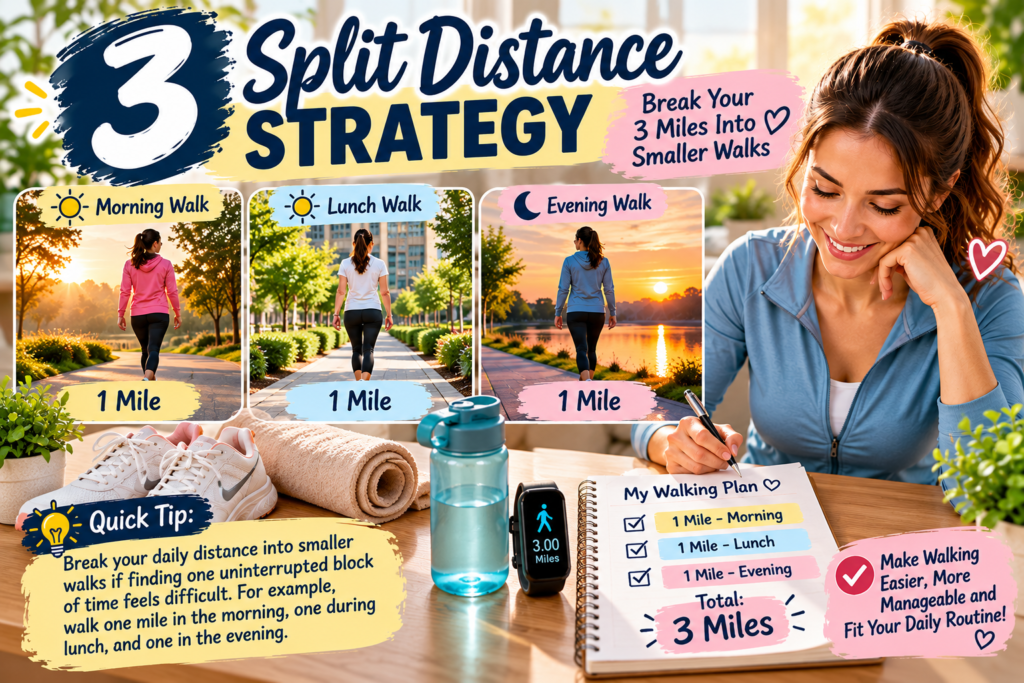
3. Split Distance Strategy
Image Description: A bright home fitness scene featuring a woman preparing for three separate walking sessions, with comfortable sneakers beside a digital fitness tracker, a reusable water bottle, and a simple daily planner on a light wooden table. Cream, dusty blue, and warm beige tones, soft window light, clean styling, realistic photography, vertical composition.
Quick Tip:
Break your daily distance into smaller walks if finding one uninterrupted block of time feels difficult. For example, walk one mile in the morning, one during lunch, and one in the evening. Adjust the schedule to fit your energy and daily responsibilities.
Splitting the distance can make a walking routine more manageable for beginners, busy parents, and people with desk jobs. Short sessions provide opportunities to move throughout the day instead of remaining seated for hours. Track each session with your phone or fitness watch, and check your total distance at bedtime to see how consistently you’re meeting your goal.
4. Comfortable Walking Shoes
Image Description: A pair of supportive white and taupe walking sneakers displayed beside a neatly folded pair of black athletic socks and a lightweight fitness jacket on a warm wooden bench. A sunlit park path with softly blurred trees fills the background. Natural golden lighting, detailed shoe textures, neutral colors, realistic fitness photography, vertical Pinterest composition.
BEFORE
Worn-out shoes can leave your feet aching before you finish your daily distance. Poor cushioning or a narrow fit may also cause rubbing, blisters, and discomfort that makes you less eager to walk tomorrow.
AFTER
Well-fitting walking shoes provide a more comfortable foundation for longer outings. Your feet have room to move, and supportive construction helps you maintain a natural stride without unnecessary distractions.
Choose shoes with adequate toe room, a secure heel, and a comfortable fit from the first wear. Walk around the store before buying, and replace footwear when the soles become uneven or the cushioning noticeably deteriorates. Comfortable shoes cannot prevent every injury, but they can make regular walking easier to maintain.
5. Weekly Distance Schedule
Image Description: An open weekly fitness planner on a cream desk beside a black fitness tracker, white walking sneakers, a glass of water, and a simple pen. The planner displays seven neatly arranged days with small walking checkboxes. Warm natural window light, beige and dusty blue palette, uncluttered styling, overhead camera angle, realistic Pinterest fitness photography.
- Choose your starting point. Estimate how far you comfortably walk now instead of immediately committing to three miles every day.
- Set gradual targets. Add distance in manageable increments as your stamina improves.
- Schedule walking sessions. Reserve specific times for morning, lunchtime, or evening walks.
- Include recovery. Take an easier day or rest when fatigue, soreness, or discomfort builds.
- Review your progress. Record distance, walking time, and how you felt after each session.
A weekly plan turns a vague fitness goal into a practical routine. Walking three miles a day may suit some people, while others benefit from building up over several weeks. Keep your schedule flexible enough for busy days, poor weather, and recovery. Progress feels more sustainable when you can repeat it consistently.
6. Treadmill Walking Sessions
Image Description: A modern home gym featuring an adult walking on a sleek black treadmill while wearing charcoal leggings, white athletic shoes, and a soft blue workout top. A digital console displays walking speed and distance, with a water bottle on a nearby shelf. Bright natural window light, cream walls, realistic fitness photography, side view, vertical Pinterest framing.
| Walking Detail | Outdoor Walk | Treadmill Walk |
|---|---|---|
| Surface | Varies with the route | Generally consistent |
| Weather | Affected by rain and heat | Protected indoors |
| Pace control | Adjusted naturally | Set directly on the console |
| Scenery | Changing outdoor views | Depends on your indoor setup |
A treadmill can help you maintain a walking routine when the weather is unpleasant or daylight is limited. Start at a comfortable speed and increase it only when your breathing and balance feel steady. Check the displayed distance, but remember that treadmill estimates can vary. Keep the safety clip attached when available, and avoid holding the rails continuously unless you need support.
7. Posture and Arm Swing
Image Description: A fit adult walking confidently along a paved park trail, shown in a full-body side view with an upright spine, relaxed shoulders, bent elbows, and natural arm movement. The person wears a navy athletic shirt, black leggings, and white walking sneakers. Soft morning sunlight, warm beige pathway, blurred trees, realistic photography, crisp details, vertical Pinterest framing.
DO
- Keep your head upright and look several feet ahead.
- Relax your shoulders and avoid tightening your neck.
- Bend your elbows comfortably and swing your arms naturally.
- Take relaxed steps that match your natural stride.
DON’T
- Stare at your phone while walking.
- Clench your fists or raise your shoulders unnecessarily.
- Force exaggerated steps to cover ground faster.
- Ignore persistent foot, knee, or back discomfort.
Good walking posture helps you move comfortably throughout longer sessions. Keep your torso relaxed, let your arms move freely, and avoid forcing your body into a rigid position. I’ve noticed that focusing on just one adjustment at a time makes technique easier to maintain. Comfort and a natural stride matter more than achieving a picture-perfect walking form.
8. Daily Step Tracking
Image Description: Close-up of a person’s wrist wearing a black fitness watch displaying daily steps, distance, and active minutes while walking on a sunlit park path. White sneakers and charcoal athletic clothing appear in the frame, with a blurred wooden bench and trees behind. Natural daylight, sharp screen details, neutral colors, realistic fitness photography, vertical composition.
Distance: Three miles often equals approximately 6,000 to 7,500 steps, depending on stride length.
Equipment: A smartphone, pedometer, or fitness watch.
Tracking Time: Check progress after each walking session.
Best For: Beginners who enjoy measurable daily goals.
Tracking your steps can make a walking habit easier to understand and maintain. Your actual step count depends on your height, stride, pace, and walking surface, so treat estimates as a guide rather than a strict rule. Record your distance over several days to establish a realistic baseline, then work toward your personal target without worrying about matching someone else’s numbers.
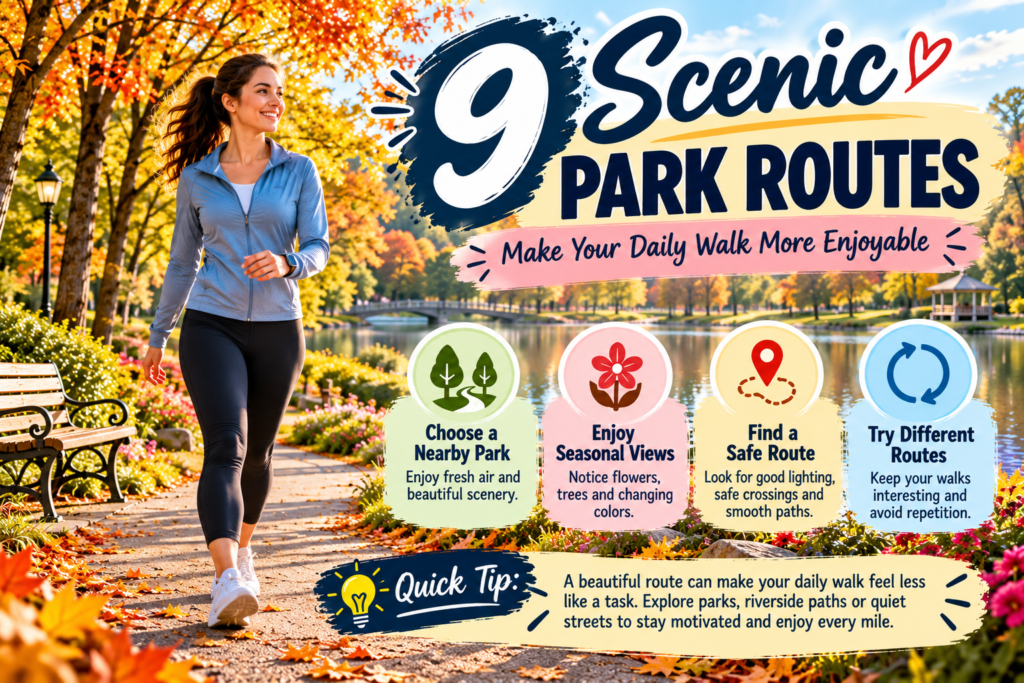
9. Scenic Park Routes
Image Description: A peaceful tree-lined park trail curving through a landscape of golden autumn leaves, tall trees, and soft sunlight. An adult in a dusty blue athletic jacket, black walking pants, and white sneakers follows the gently winding path. Include a wooden bench, distant greenery, textured pavement, warm natural lighting, realistic lifestyle photography, and a vertical Pinterest composition.
A beautiful route can make your daily walk feel less like another task on your schedule. Choose a nearby park, riverside path, or quiet residential street with safe, accessible sidewalks. Changing your scenery also gives you something new to notice, from seasonal flowers to colorful leaves, while helping break the monotony of repeating the same distance.
Before heading out, check the route for adequate lighting, safe crossings, and comfortable walking surfaces. Save a few alternative routes on your phone so you can switch locations when one feels repetitive. For longer walks, choose a loop that brings you back to your starting point without leaving you far from home if fatigue sets in.
10. Walking With Music
Image Description: A fit adult walking along a sunlit park trail wearing wireless earbuds, a dusty blue athletic shirt, black leggings, and white sneakers. A smartphone displaying a simple music playlist rests in one hand. Golden morning light, softly blurred trees, natural textures, energetic lifestyle photography, side-angle perspective, warm neutral palette, vertical Pinterest composition.
- Create a playlist with upbeat songs that match your comfortable walking rhythm.
- Download music before leaving if your route has unreliable mobile reception.
- Keep the volume low enough to hear traffic, cyclists, and people nearby.
- Use one earbud or transparency mode when extra environmental awareness is needed.
Music can make a longer walk feel more enjoyable, especially when you’re repeating a familiar route. Choose songs that help you maintain a steady rhythm without pushing you beyond a comfortable pace. If music becomes distracting near road crossings or crowded paths, pause it and focus on your surroundings instead.
11. Hydration Before Walking
Image Description: A clear reusable water bottle filled with fresh water sits on a light wooden bench beside white walking sneakers, a folded beige towel, and a black fitness watch. A sunny park path and softly blurred trees fill the background. Bright natural daylight, subtle blue and cream accents, clean composition, realistic fitness photography, vertical Pinterest framing.
Quick Tip:
Drink water regularly throughout the day instead of waiting until you feel very thirsty. For longer walks, warm weather, or heavy sweating, bring a refillable bottle and take comfortable sips as needed.
Staying hydrated supports normal body functions and helps you feel more comfortable during physical activity. Your fluid needs depend on temperature, walking intensity, duration, and individual health factors. For a moderate three-mile walk in mild weather, you may not need a sports drink. Water is generally sufficient, while hot conditions or heavy sweating may require extra attention to fluids and electrolytes.
12. Walking With Intervals
Image Description: An athletic adult walking briskly along a paved park path beside a relaxed companion, both wearing comfortable sportswear in navy, charcoal, and dusty blue. A black fitness watch shows an interval timer on the lead walker’s wrist. Morning sunlight filters through trees, creating soft shadows and a lively outdoor atmosphere, realistic photography, vertical composition.
BEFORE
Walking at exactly the same pace throughout every session can become repetitive. Beginners may also struggle to judge how much effort they should apply without a simple structure.
AFTER
Alternating comfortable walking with short, brisk intervals creates variety and gives you clear changes in intensity. You can challenge your cardiovascular fitness while keeping recovery periods built into the session.
Start with five minutes at an easy pace. Then alternate one minute of brisk walking with two minutes of comfortable walking, repeating the pattern several times. Finish with an easy cooldown. Adjust the intervals to your current fitness level, and avoid pushing through pain, dizziness, or unusual breathlessness. Even gentle changes in pace can make your routine feel more engaging.
13. Walking With a Friend
Image Description: Two adults walking side by side on a tree-lined park path, wearing coordinated navy, beige, and dusty blue athletic outfits with comfortable sneakers. Both have relaxed expressions and natural arm movements. Golden morning sunlight filters through the trees, illuminating the textured pavement and autumn foliage. Realistic lifestyle photography, candid side angle, vertical Pinterest composition.
- Choose a walking partner. Ask a friend, family member, or coworker to join you at a convenient time.
- Set a meeting schedule. Pick three or four regular walking sessions each week to establish consistency.
- Agree on a route. Select a safe path with a distance that suits both fitness levels.
- Keep the pace comfortable. Walk at a speed that allows you to talk without struggling for breath.
Walking with someone can turn exercise into a social activity you look forward to. Friendly conversation makes familiar routes feel less repetitive, while a shared schedule can encourage you to show up on days when motivation is low. Choose a partner whose pace feels comfortable, and remember that either person can shorten the walk when needed.
14. Outdoor Walking Versus Indoor Walking
Image Description: A balanced fitness comparison scene showing a bright outdoor park trail on one side and a modern indoor treadmill area on the other. White sneakers, a black fitness watch, and a clear water bottle appear in both settings. Natural daylight, cream and charcoal accents, clean visual separation, realistic photography, overhead and eye-level perspectives, vertical Pinterest layout.
| Feature | Outdoor Walking | Indoor Walking |
|---|---|---|
| Environment | Parks, sidewalks, and trails | Treadmills or indoor tracks |
| Weather | Depends on conditions | Protected from outdoor weather |
| Pace | Naturally variable | Easily controlled |
| Scenery | Changing views | Familiar surroundings |
| Accessibility | Requires a suitable route | Convenient with available equipment |
Both settings can help you build a consistent walking habit. Outdoor routes offer changing scenery and varied terrain, while indoor sessions provide greater control over speed and shelter from extreme weather. Choose the environment that fits your schedule, safety needs, and preferences. You can also combine both approaches to keep your routine flexible throughout the week.
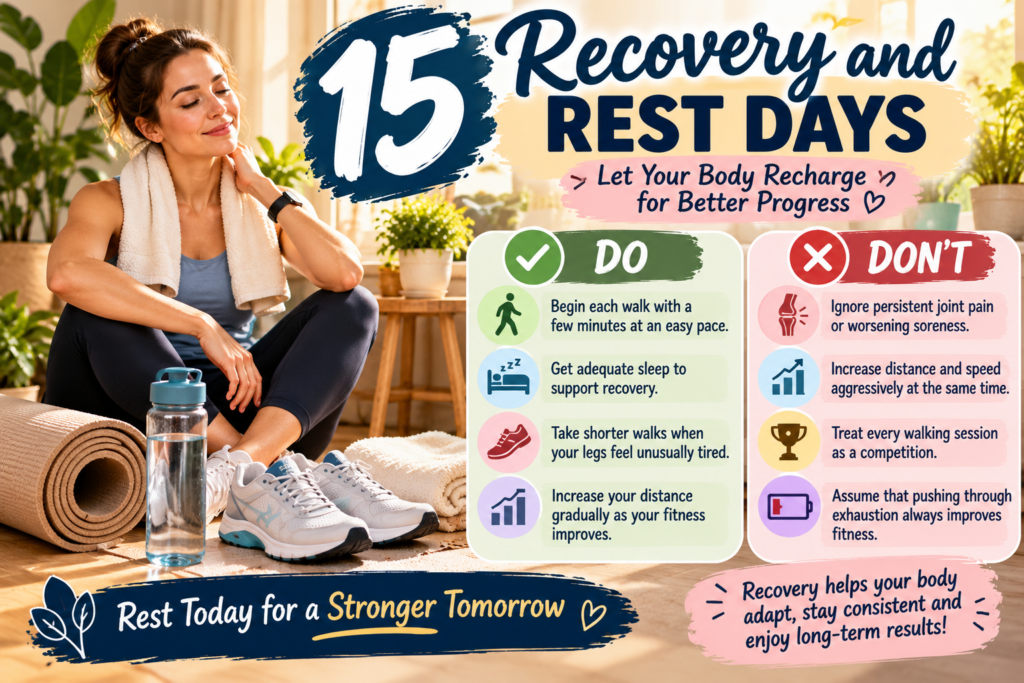
15. Recovery and Rest Days
Image Description: A calm home recovery corner featuring supportive walking sneakers, a rolled beige exercise mat, a soft cream towel, a glass of water, and a simple wooden stool beside a sunlit window. Neutral beige, dusty blue, and warm brown tones, gentle natural lighting, uncluttered composition, realistic wellness photography, overhead perspective, vertical Pinterest framing.
DO
- Begin each walk with a few minutes at an easy pace.
- Get adequate sleep to support recovery.
- Take shorter walks when your legs feel unusually tired.
- Increase your distance gradually as your fitness improves.
DON’T
- Ignore persistent joint pain or worsening soreness.
- Increase distance and speed aggressively at the same time.
- Treat every walking session as a competition.
- Assume that pushing through exhaustion always improves fitness.
Recovery helps your body adapt to regular physical activity. Walking three miles daily may be manageable for some people, but others need lighter days between longer sessions. Pay attention to changes in energy, sleep, and muscle soreness. If discomfort persists or affects your normal movement, reduce your activity and seek professional advice when appropriate.
16. Walking in Warm Weather
Image Description: An adult walking on a shaded park pathway on a sunny summer morning, wearing a breathable white athletic shirt, lightweight navy shorts, and comfortable walking sneakers. A reusable water bottle and black fitness watch are visible. Dappled sunlight filters through leafy trees, with warm beige pavement and soft blue sky tones, realistic fitness photography, vertical Pinterest composition.
Best Time: Early morning or cooler evening hours.
Clothing: Lightweight, breathable fabrics and a comfortable hat.
Hydration: Carry water and drink regularly.
Intensity: Reduce your pace when temperatures rise.
Hot weather can make a familiar walking distance feel much harder than usual. Choose cooler hours, wear breathable clothing, and use shaded routes whenever possible. Give yourself permission to shorten your walk if the heat becomes uncomfortable. If you experience confusion, faintness, severe weakness, or other signs of heat illness, stop exercising and seek urgent medical help.
17. Short Walking Breaks
Image Description: A professional adult taking a brisk walking break along a quiet office courtyard, wearing charcoal trousers, a light blue shirt, and white sneakers. A smartwatch and simple work bag add realistic details. Modern glass windows reflect soft daylight, while potted plants and a paved walkway create a clean setting. Natural lighting, neutral colors, candid photography, vertical Pinterest framing.
Small breaks can add meaningful movement to a day spent sitting at a desk. Instead of waiting for one long stretch of free time, use short opportunities between meetings, after lunch, or during work breaks.
Walk around your building for five to fifteen minutes, take the stairs when appropriate, or stroll outside during a phone call. These sessions contribute to your overall activity, although they may not always add up to the full three-mile target. Track your distance separately if that specific goal matters to you, and avoid sacrificing essential rest or work responsibilities to complete it.
18. Walking With a Fitness Watch
Image Description: Close-up of an adult’s wrist wearing a sleek black fitness watch displaying walking distance, elapsed time, and heart rate. The person wears a dusty blue long-sleeved athletic top, with white sneakers visible against a sunlit park path. Soft golden light, blurred autumn trees, crisp watch details, realistic fitness photography, neutral palette, vertical Pinterest composition.
Quick Tip:
Use your fitness watch to monitor distance and duration, but treat its calorie estimates and heart rate readings as approximations. Wear it securely according to the manufacturer’s instructions for more consistent measurements.
A wearable tracker can help you notice patterns in your walking routine. Compare your distance and pace across several weeks rather than judging progress by one session. Some devices estimate outdoor distance using GPS, while others rely on movement sensors or a combination of methods. Check your settings and use the same tracking method when comparing results for a more meaningful picture of your progress.
19. Walking After Meals
Image Description: An adult taking a relaxed walk along a quiet residential sidewalk after a meal, wearing a cream athletic top, navy walking pants, and comfortable white sneakers. Soft afternoon sunlight illuminates brick homes, small flower beds, and a tree-lined path. Warm neutral colors, natural shadows, realistic lifestyle photography, eye-level camera angle, clean vertical Pinterest composition.
DO
- Start with a comfortable five to ten-minute stroll after eating.
- Keep your pace relaxed, especially after a large meal.
- Choose a flat route with safe sidewalks.
- Build the habit around lunch or dinner when convenient.
DON’T
- Force a fast pace when your stomach feels uncomfortable.
- Start a demanding walk immediately after a heavy meal.
- Ignore dizziness, nausea, or unusual abdominal pain.
- Assume a short walk cancels out the effects of a meal.
A gentle walk after eating can help reduce prolonged sitting and may support healthier blood sugar responses, particularly for people who spend much of the day inactive. You don’t need to complete your entire daily distance at once. Start with a short stroll, notice how your body responds, and gradually establish a routine that fits your meals and energy levels.
20. Walking With Hills
Image Description: An athletic adult walking uphill on a gently sloping park trail, wearing a charcoal sports shirt, black leggings, and sturdy white walking shoes. Tall trees frame the path, with warm sunlight highlighting the incline and textured ground. A black fitness watch is visible on the wrist. Realistic outdoor fitness photography, side-angle perspective, natural colors, vertical Pinterest framing.
Cost: Free on suitable public trails.
Difficulty: Moderate to challenging, depending on the slope.
Best For: Walkers seeking greater variety and cardiovascular challenge.
Equipment: Supportive shoes and water when needed.
Uphill walking increases the effort required from your legs and cardiovascular system, so even a short incline can make your usual route more challenging. Start with a gentle slope and shorten your stride as you climb. Walk slowly enough to maintain control, especially on the way down, where steep or slippery surfaces can increase the risk of falling.
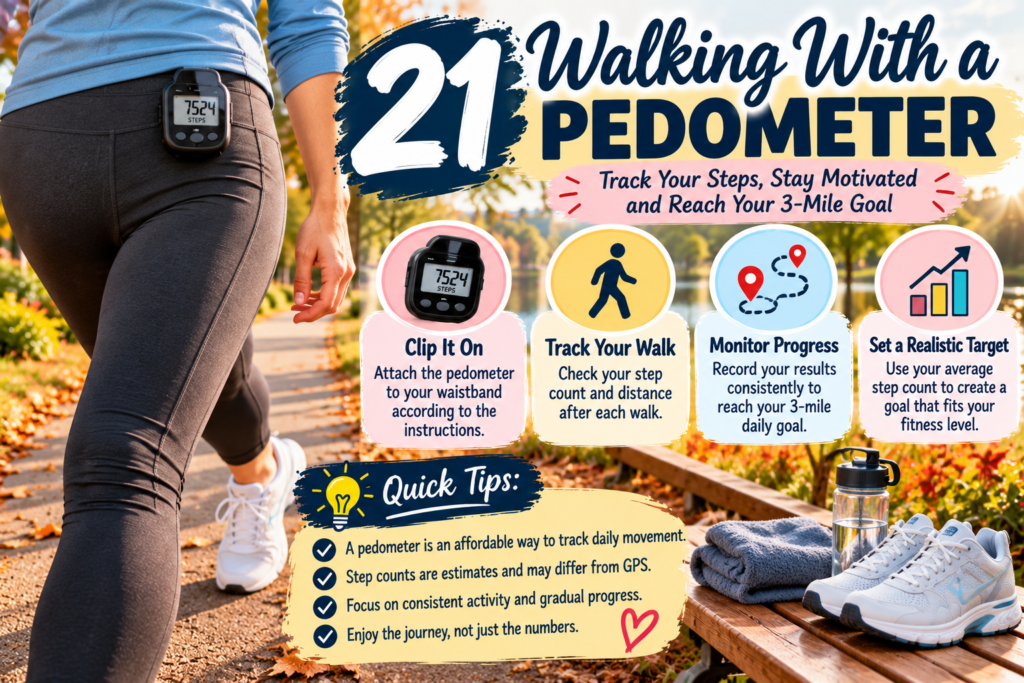
21. Walking With a Pedometer
Image Description: A close-up of a compact black pedometer clipped to the waistband of charcoal walking pants, with white athletic sneakers stepping along a smooth park path. A folded fitness towel and clear water bottle sit on a nearby wooden bench. Soft morning sunlight, blurred autumn foliage, neutral beige and navy tones, realistic photography, crisp details, vertical Pinterest composition.
A simple pedometer can help you track daily movement without needing an expensive smartwatch. Clip it securely according to the manufacturer’s instructions, then check your step count and distance after each walk. Some basic devices estimate distance from your steps and stride length, so their readings may differ from GPS measurements.
Walking three miles a day becomes easier to monitor when you record your results consistently. Check your typical step count over several sessions, then use that information to set a realistic target. Remember that step counts are estimates, not a measure of your overall health. Focus on sustainable activity, comfortable movement, and gradual progress rather than chasing a perfect number.
22. Walking With a Water Bottle
Image Description: A fit adult walking along a sunny park trail while carrying a lightweight reusable water bottle in one hand. The person wears a dusty blue athletic shirt, black leggings, and white walking sneakers. Tall trees cast soft shadows across the path, with warm sunlight highlighting the bottle and natural textures. Realistic fitness photography, vertical Pinterest composition.
- Choose a lightweight bottle. Select a comfortable size that is easy to carry throughout your walk.
- Plan refill stops. Check whether your route has drinking fountains or convenient refill points.
- Drink according to conditions. Adjust your fluid intake for temperature, sweating, and walking duration.
- Keep water accessible. Use a bottle holder or small walking bag to avoid carrying it awkwardly.
Carrying water can make longer walks more comfortable, especially during warm weather or when you sweat heavily. You may not need frequent drinks during a short, easy walk in mild conditions, but having water available is useful. Avoid forcing excessive amounts, and pay attention to thirst and your individual hydration needs.
23. Walking for Weight Management
Image Description: An adult walking briskly on a paved neighborhood trail, wearing a fitted navy athletic shirt, black leggings, and white running shoes. A fitness watch is visible on the wrist, with autumn trees and soft golden sunlight in the background. Natural body proportions, realistic fitness photography, warm neutral palette, side-angle view, vertical Pinterest composition.
Quick Tip:
Focus on consistent walking rather than trying to burn the maximum number of calories in every session. Pair regular movement with balanced meals, adequate sleep, and habits you can maintain over time.
Walking three miles a day can contribute to weight management by increasing daily energy expenditure. However, the number of calories burned varies with body weight, pace, terrain, and individual factors. Weight changes also depend on food intake, metabolism, medications, and other health influences. Track progress through sustainable habits and overall well-being rather than relying on a single calorie estimate.
24. Walking With a Safe Route
Image Description: A peaceful, well-maintained walking path through a residential park, featuring a smooth paved surface, visible pedestrian crossing, clear directional signs, and evenly spaced pathway lights. An adult in a reflective light blue athletic jacket, dark walking pants, and white sneakers walks confidently along the route. Soft daylight, green and beige surroundings, realistic photography, vertical Pinterest composition.
BEFORE
An unfamiliar route with uneven pavement, poor lighting, or busy road crossings can make a daily walk stressful. Constantly checking directions may also distract you from traffic and other hazards.
AFTER
A familiar, well-lit route with safe crossings makes it easier to concentrate on your surroundings and enjoy your exercise. Knowing the distance in advance also helps you plan your time and energy.
Before leaving, check the pavement, weather, and daylight conditions. Choose sidewalks or designated walking paths, carry a charged phone, and tell someone your route when walking alone in an isolated area. Wear visible clothing in low light, and avoid using headphones at a volume that prevents you from hearing nearby traffic.
25. Consistent Daily Walking
Image Description: An adult walking confidently along a peaceful park trail at sunrise, wearing a dusty blue athletic shirt, black leggings, and comfortable white sneakers. A fitness watch displays daily activity on the wrist, while a simple water bottle rests in a nearby backpack pocket. Golden natural light, soft autumn foliage, realistic lifestyle photography, warm neutral colors, vertical Pinterest composition.
Building a lasting walking habit starts with consistency, not perfection. Walking three miles a day can support cardiovascular fitness, help you manage stress, and increase your daily physical activity when the distance suits your current abilities. The key is creating a routine that fits your life rather than forcing yourself to follow an unrealistic schedule.
Choose a regular walking time, track your progress, and celebrate small improvements in stamina or comfort. If three miles feels difficult, begin with a shorter distance and gradually build up. Some days will be busier than others, and that’s normal. Focus on returning to your routine after interruptions, listening to your body, and making movement a sustainable part of everyday life.
Conclusion
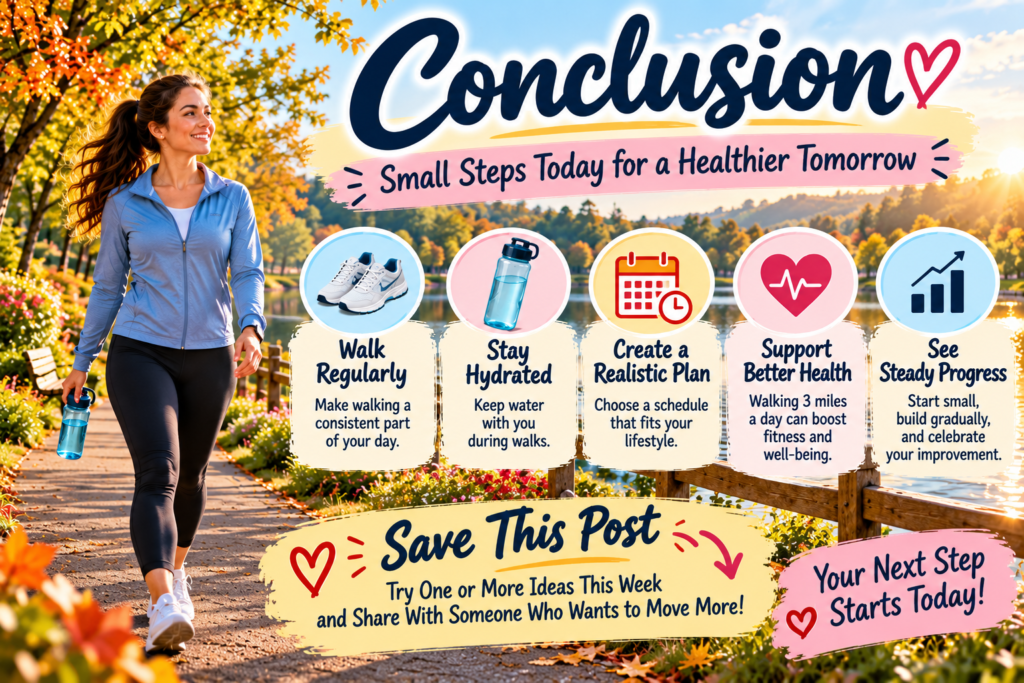
Building a healthier lifestyle doesn’t have to start with dramatic changes. Walking regularly, choosing comfortable shoes, staying hydrated, and creating a realistic schedule can help you make steady progress toward better fitness. Walking 3 miles a day may become a rewarding habit when you adjust the distance to your abilities and give yourself time to improve. I’ve noticed that simple, repeatable routines are often easier to maintain than ambitious plans that feel overwhelming. Save this article on Pinterest for inspiration, try one or two ideas this week, and share it with someone who wants to move more. Your next step starts today!